New Delhi: Bihar has positioned itself as an emerging destination for energy investment, using its role as the ‘Focus State’ at the Bharat Electricity Summit 2026 to pitch its transformation and future plans to global stakeholders.

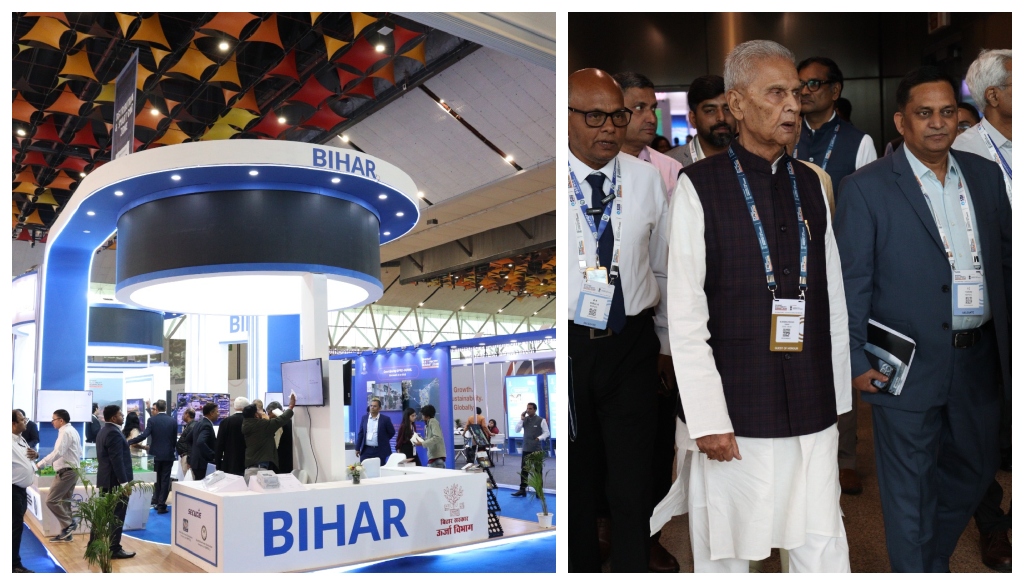
At the summit, held at Yashobhoomi in New Delhi, the state showcased its progress in power infrastructure while engaging with investors and industry leaders to explore partnerships across the energy value chain.
The Bihar pavilion drew significant attention, with officials from the Bihar State Power Holding Company Limited (BSPHCL) holding detailed discussions with domestic and international stakeholders. Delegates examined the state’s policies, infrastructure and ongoing reforms, signalling growing interest in Bihar’s energy sector.

Investment push across sectors
Central to Bihar’s pitch was an ambitiousRs81,000 crore investment plan aimed at upgrading energy infrastructure over the next five years. The roadmap includesRs38,950 crore for power generation,Rs16,194 crore for transmission, andRs22,951 crore for strengthening the distribution network, alongsideRs3,346 crore for maintenance.
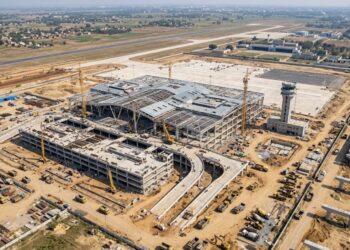
The state also highlighted major upcoming projects, including the Pirpainti power project, estimated at aroundRs30,000 crore, and the Kajra solar and battery storage initiative.
In addition, Bihar has received investment proposals worthRs13,000 crore under its pumped storage policy in recent months, reflecting rising investor confidence in the sector.
Under its Renewable Energy Policy 2025, the state has set a target of developing 24 GW of renewable energy and 6.1 GW of storage capacity by 2030, supported by incentives such as transmission charge exemptions, energy banking and single-window clearances.
Two decades of power sector transformation
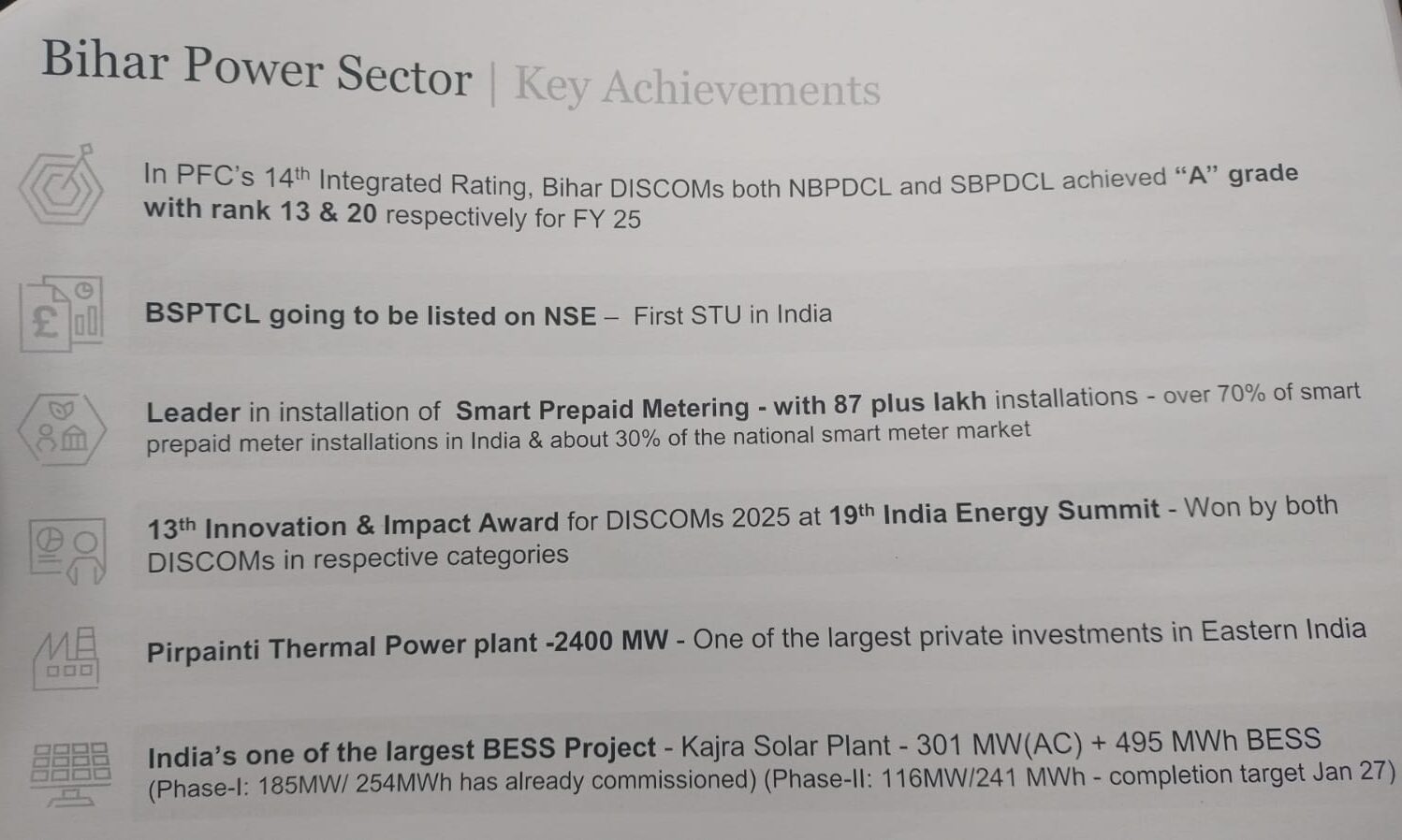
Officials pointed to a significant turnaround in Bihar’s power sector over the past two decades. From a supply of less than 700 MW in 2005, the state now meets demand exceeding 8,700 MW, with near round-the-clock electricity availability in both urban and rural areas.
More than 22 million consumers have been connected to the grid, with electricity reaching every village. Transmission capacity has expanded nearly 20-fold, while the number of grid substations has risen from 45 to 175.
Distribution companies have also improved financially, moving from losses of Rs 1,942 crore in 2021 to profits exceeding Rs 2,000 crore in 2025, alongside a reduction in AT&C losses to around 15%.
Digital systems and efficiency gains
Bihar also highlighted its push towards digitisation, with over 8.7 million smart prepaid meters installed across the state. Integrated IT systems, dashboards and command centres have been deployed to improve operational efficiency and revenue collection.
The state’s participation at the summit reflects a broader strategy to position Bihar as a credible player in India’s energy transition, combining infrastructure expansion with policy reforms and digital innovation.
Officials said the engagement with global investors was aimed not only at showcasing progress but also at building long-term partnerships to support future growth in the sector.