New Delhi/Patna: The central government is exploring a proposal to expand the number of seats in the Lok Sabha and state legislative assemblies by 50% as part of efforts to implement Women’s Reservation Act 2023, potentially reshaping political representation in states such as Bihar.

Under the proposal, which is being discussed with both allied and opposition parties, the increased number of seats would allow for one-third reservation for women without waiting for the completion of the ongoing Census and subsequent delimitation exercise.
If implemented, Bihar’s representation in the Lok Sabha could rise from 40 to 60 seats, while the strength of the state assembly could increase from 243 to 365 members. Of these, around one-third — approximately 20 MPs and 122 MLAs — would be reserved for women.

The plan involves amending the Nari Shakti Vandan Adhiniyam, 2023 to use 2011 Census data as the basis for seat expansion and reservation, thereby accelerating implementation. Under the existing law, women’s reservation is linked to a future delimitation exercise after the completion of the Census, which has delayed its rollout.
Union home minister Amit Shah has initiated consultations with political parties on the proposal, with the government aiming to build consensus and potentially introduce amendments during the current parliamentary session.
Officials indicated that the objective is to implement women’s reservation from the 2029 Lok Sabha elections, followed by state assembly elections, including Bihar’s 2030 polls.
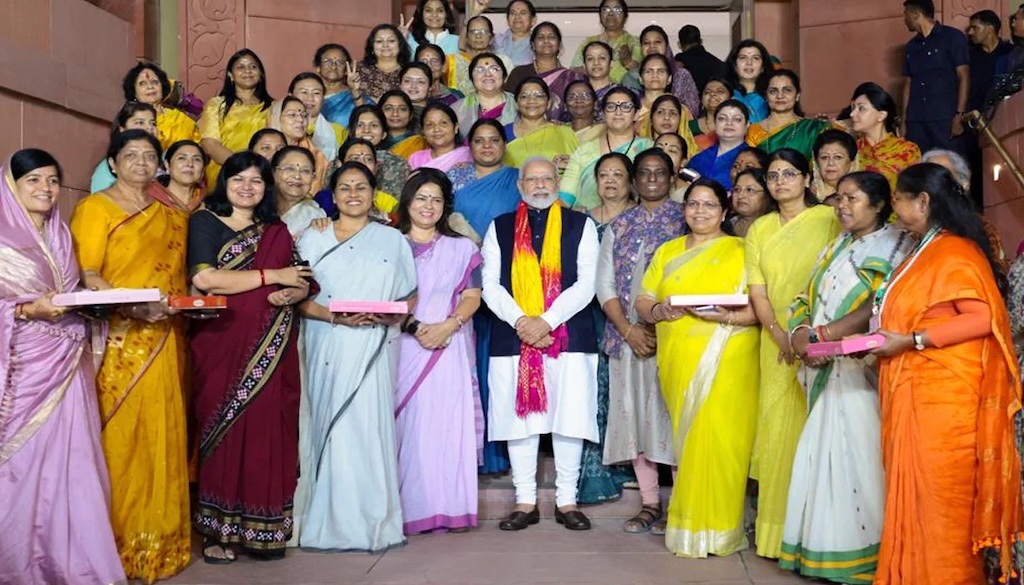
The move is expected to significantly increase women’s participation in electoral politics. However, questions remain over whether the benefits will extend to grassroots candidates or largely remain within established political families.
In Bihar, women have been a central focus of political mobilisation, particularly through self-help group networks such as Jeevika. Yet, representation at higher levels has remained limited. At present, the state has five women MPs, all of whom are related to prominent political figures.
Political observers note that recent elections have also seen a growing presence of candidates from political families, raising concerns that increased reservation could reinforce existing dynastic trends rather than broaden participation.
The proposed changes, if implemented, would mark one of the most significant shifts in India’s electoral structure in recent decades, with implications for representation, party strategy and gender balance in politics.