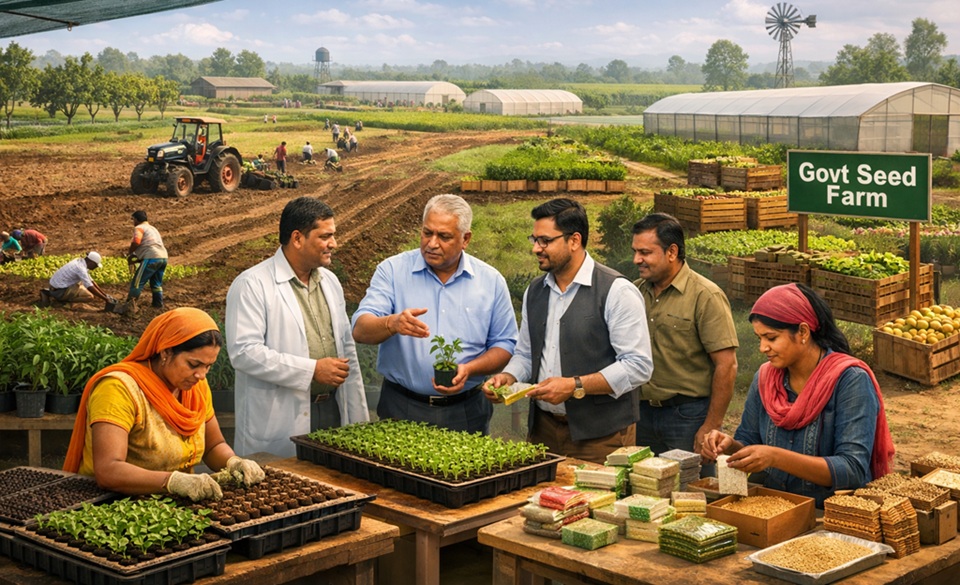
Patna: In a major push towards agricultural self-reliance, the Bihar government has decided to open more than 300 state-run nurseries and 60 government agricultural farms to private seed-producing agencies. The move aims to reduce the state’s dependence on other regions for vegetable and fruit planting materials.

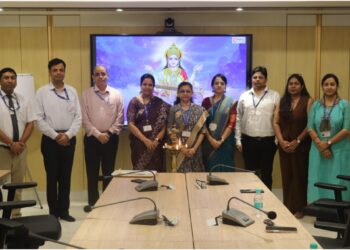
The decision was taken during a high-level meeting held at Krishi Bhavan on Friday under the chairmanship of Principal Secretary Narmdeshwar Lal. Officials discussed a strategy to develop horticulture planting material under the Public-Private Partnership (PPP) model.
Addressing the meeting, the Principal Secretary said that quality seeds form the foundation of higher farm income and emphasised the government’s goal to make Bihar self-reliant in seed production.

Horticulture Director Abhishek Kumar highlighted that the state already has a strong infrastructure of over 300 nurseries and 60 farms, which can be leveraged to deliver high-quality planting materials to farmers through private sector participation. The meeting was attended by Agriculture Director Saurabh Suman Yadav, along with other officials and scientists from Varanasi Vegetable Research Institute and agricultural universities in Pusa and Sabour.
At present, Bihar procures nearly 80 percent of its seeds and planting materials from other states, including West Bengal, Maharashtra, Karnataka, Andhra Pradesh and Uttar Pradesh. Due to long transportation distances, farmers often face higher costs and inconsistent quality.
With the new initiative, leading seed companies are expected to set up research and production facilities within Bihar. This is likely to ensure the availability of affordable, high-quality seeds suited to local climatic conditions, delivered in a timely manner.
The government plans to implement a hub-and-spoke model, where large government farms will function as hubs and local nurseries will act as spokes. A digital tracking system will be introduced to monitor seed supply and quality, ensuring transparency. The move is also expected to eliminate transportation costs, making seeds more affordable for farmers.
Additionally, the initiative is likely to generate employment opportunities for local nursery operators and Farmer Producer Organisations (FPOs), enabling them to collaborate with major seed companies.
Bihar already has Centres of Excellence under the Indo-Israel Agriculture Project in Desari for fruits and in Chandi, Nalanda for vegetables, aimed at promoting high-tech cultivation and early availability of saplings. However, farmers often face delays in accessing seeds, forcing them to depend on other states. The new policy is expected to address these gaps and strengthen the state’s agricultural ecosystem.