
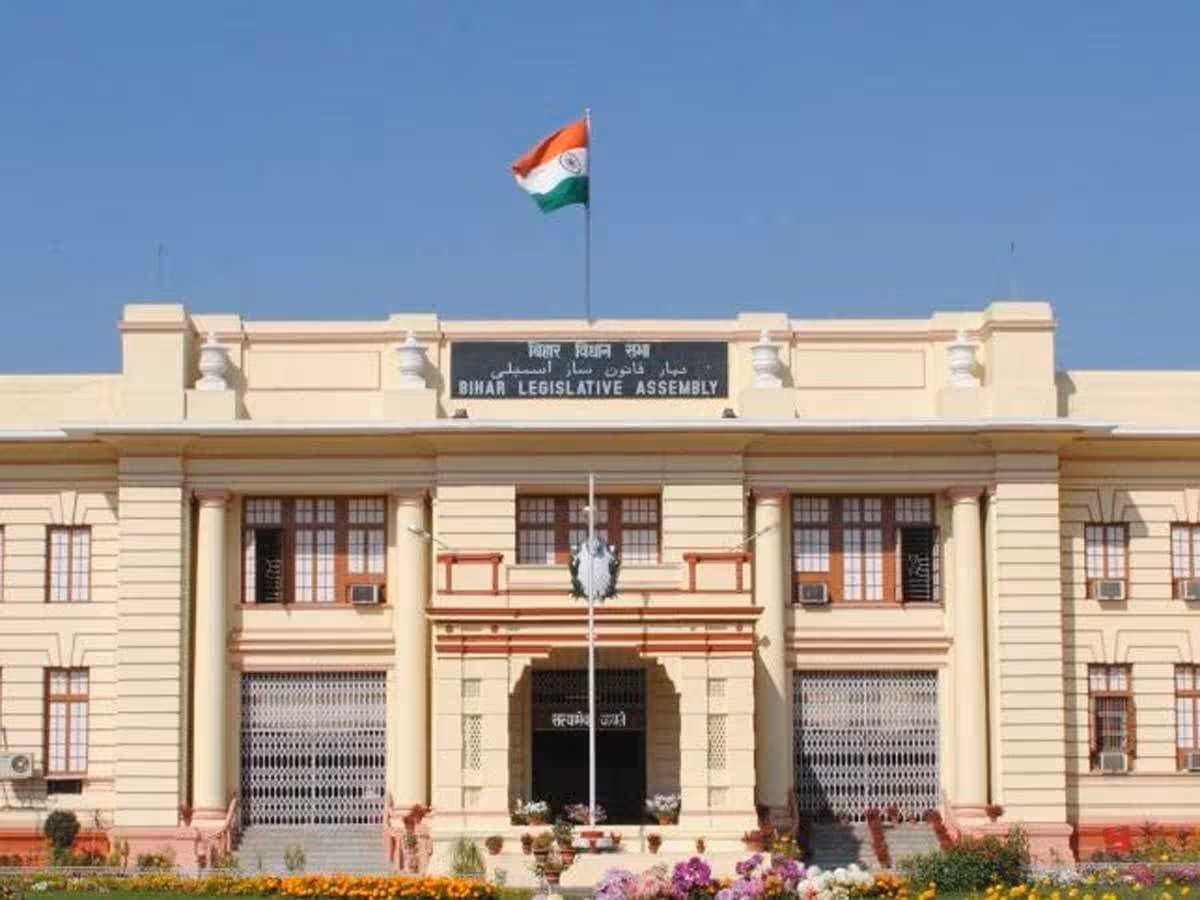
Patna: The Bihar government is preparing to introduce legislation that could significantly alter the governance of higher education across the state. The proposed Bihar State University Act-2026, expected to be tabled during the monsoon session of the Bihar Legislative Assembly beginning July 20, seeks to transfer the administrative control of 481 government degree colleges from state universities to the Higher Education Department.

If the Bill is approved by both Houses of the Legislature and receives the Governor’s assent, it will replace the Bihar State University Act-1976 and the Patna University Act-1976, creating a new administrative framework for public higher education.
What the Bill Proposes

According to the proposal, undergraduate government colleges will no longer be administered by their affiliated universities. Instead, they will come under the direct supervision of the Higher Education Department.
Universities, meanwhile, will continue to oversee postgraduate education, research, examinations and other academic functions. The proposed legislation does not abolish the university system but redefines its responsibilities by separating the administration of undergraduate colleges from academic oversight.
The government has described the proposal as an effort to streamline governance and improve the functioning of government colleges.
Why the Government Wants the Change
According to officials, the government believes the existing administrative structure has limited its ability to improve standards in government colleges despite funding their operations.
Officials have pointed to concerns including irregular classroom teaching, low student attendance and uneven academic quality across institutions. They argue that because universities and the Chancellor currently exercise administrative authority over colleges, the Higher Education Department has limited control over day-to-day management, even though it bears expenditure on salaries and infrastructure.
By bringing colleges under direct departmental control, the government says it expects to accelerate decisions related to recruitment, transfers, monitoring and institutional accountability.
Universities’ Role Would Change
One of the most significant changes proposed in the Bill concerns the role of universities.
At present, universities administer affiliated government colleges and handle matters such as faculty transfers, promotions and institutional administration. Under the new framework, those responsibilities would move to the Higher Education Department.
Universities would instead focus primarily on postgraduate education, research, curriculum development and other advanced academic activities.
Changes to Teachers’ Service Conditions
The proposed legislation would also shift responsibility for appointments, transfers, promotions and other service matters relating to teachers in government degree colleges from universities to the Higher Education Department.
According to the proposal, teachers employed in government colleges would be treated similarly to other state government employees for service administration.
The government is also considering changes to the recruitment process for Assistant Professors. Under the proposal, a postgraduate degree along with qualification in the National Eligibility Test (NET) could become the minimum requirement, while the existing mandatory PhD qualification may be reviewed.
The final eligibility criteria would depend on the provisions adopted in the legislation and any subsequent rules framed by the government.
District-Level Monitoring Planned
The Bill also envisages the appointment of a Higher Education Officer in every district.
According to the proposal, these officers would oversee academic activities, teacher attendance, administrative functioning and overall performance of government colleges within their districts.
Officials say stronger district-level monitoring is intended to improve institutional accountability and create a more consistent academic environment for students.
Debate Over University Autonomy
The proposed legislation has prompted discussion within academic and political circles ahead of the Assembly session.
Several members of the Bihar Legislative Council have raised concerns about the implications of shifting administrative authority away from universities. They have argued that such a wide-ranging reform should be preceded by consultations with universities, teachers, student organisations and other stakeholders.
Critics of the proposal contend that reducing universities’ administrative role could have long-term implications for institutional autonomy and the governance of higher education in Bihar.
What It Means for Bihar’s Colleges
If enacted, the legislation would directly affect all 481 government degree colleges in Bihar.
While administrative control would shift to the Higher Education Department, universities would continue to conduct postgraduate programmes, research activities and other academic responsibilities.
The proposal therefore represents a restructuring of governance rather than the dismantling of the existing university system.
What Happens Next
The future of the proposal now depends on the monsoon session of the Bihar Legislature, which begins on July 20.
If the Bihar State University Act-2026 is passed by the Legislative Assembly and the Legislative Council and receives the Governor’s approval, it would mark one of the most significant changes to the administration of higher education in Bihar in decades. The debate in the Assembly is expected to focus on how the reforms could affect college governance, faculty administration, institutional autonomy and the academic experience of students across the state.