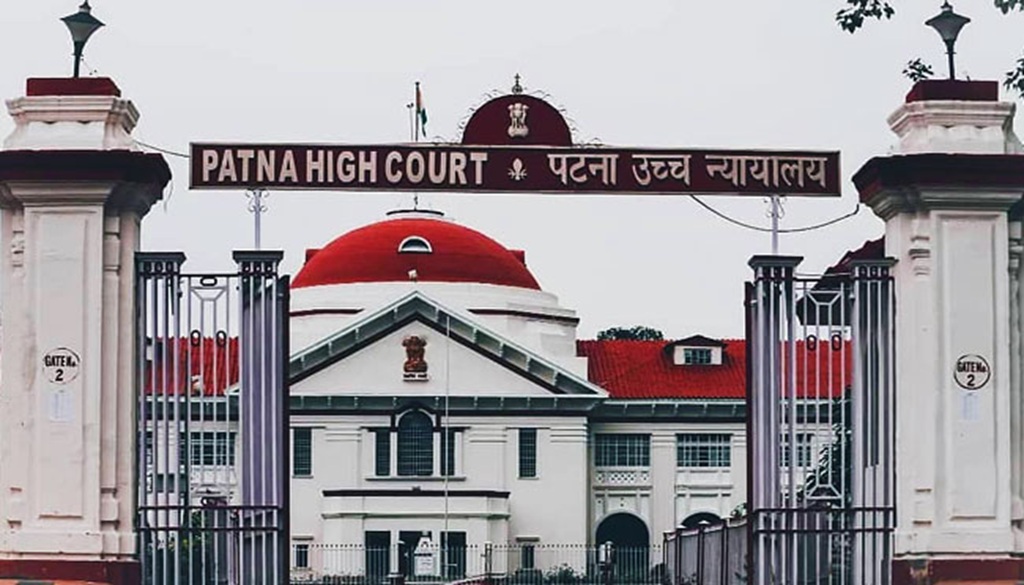
Patna: A voter list entry or an order granting maintenance cannot, by itself, establish the validity of a Hindu marriage, the Patna High Court has ruled, stressing that the essential ceremonies required under Hindu law must also be proved.

A division bench comprising Justice Bibek Chaudhuri and Justice Rana Vikram Singh made the observation while dismissing an appeal filed by Durgawati Devi. The bench upheld a Siwan Family Court order that had refused to recognise her as the legally wedded wife of Sachita Chaudhary.
Court Seeks Proof Of Marriage Rituals

The High Court said a marriage must be shown to have been solemnised in accordance with the applicable Hindu customs and essential ceremonies. Where rituals such as Saptapadi — taking seven steps around the sacred fire — are customary, evidence that the ceremony was performed is important.
The court found that Durgawati Devi had failed to provide clear details about the date, place or ceremonies associated with her alleged second marriage to Sachita Chaudhary.
Her witnesses were similarly unable to clearly state when or where the marriage had taken place or which rituals had been performed. No witness provided clear evidence regarding ceremonies such as Saptapadi or Sindurdan.
The bench also noted inconsistencies in the witnesses’ statements concerning the identity of the priest who allegedly conducted the marriage.
Dispute Over Second Marriage
According to the case record, Durgawati Devi had married Suresh Chaudhary, the elder brother of Sachita Chaudhary, on May 22, 1990. Suresh died in 1997.
Durgawati subsequently claimed that she married Sachita, Suresh’s younger brother, with the consent of the family and under pressure. She said the two thereafter lived together as husband and wife.
She had earlier initiated maintenance proceedings and was awarded Rs 1,000 a month.
Sachita, however, denied that the second marriage had taken place.
The Siwan Family Court rejected Durgawati’s claim on February 26, 2020, refusing to recognise her as Sachita’s legal wife.
Voter Records Not Conclusive
The High Court also considered electoral records cited by Durgawati in support of her claim.
She was recorded as Sachita’s wife in the 2004 voter list. However, the 2009 voter list described her as the wife of her first husband, Suresh Chaudhary.
The bench held that such an entry could not, on its own, be treated as conclusive evidence of a valid marriage.
The court similarly rejected reliance on the earlier maintenance order, observing that proceedings under Section 125 of the Criminal Procedure Code primarily concern maintenance and do not necessarily constitute a final determination of marital status.
Essential Ceremonies Must Be Established
The bench said the essential ceremonies prescribed under Section 7 of the Hindu Marriage Act must be performed for a Hindu marriage to be valid.
It also clarified that merely registering a marriage cannot cure the absence of the required solemnisation. The marriage must first have been duly solemnised in accordance with the applicable law and customs.
After examining the evidence, the High Court found no grounds to interfere with the Family Court’s decision and dismissed Durgawati Devi’s appeal.