
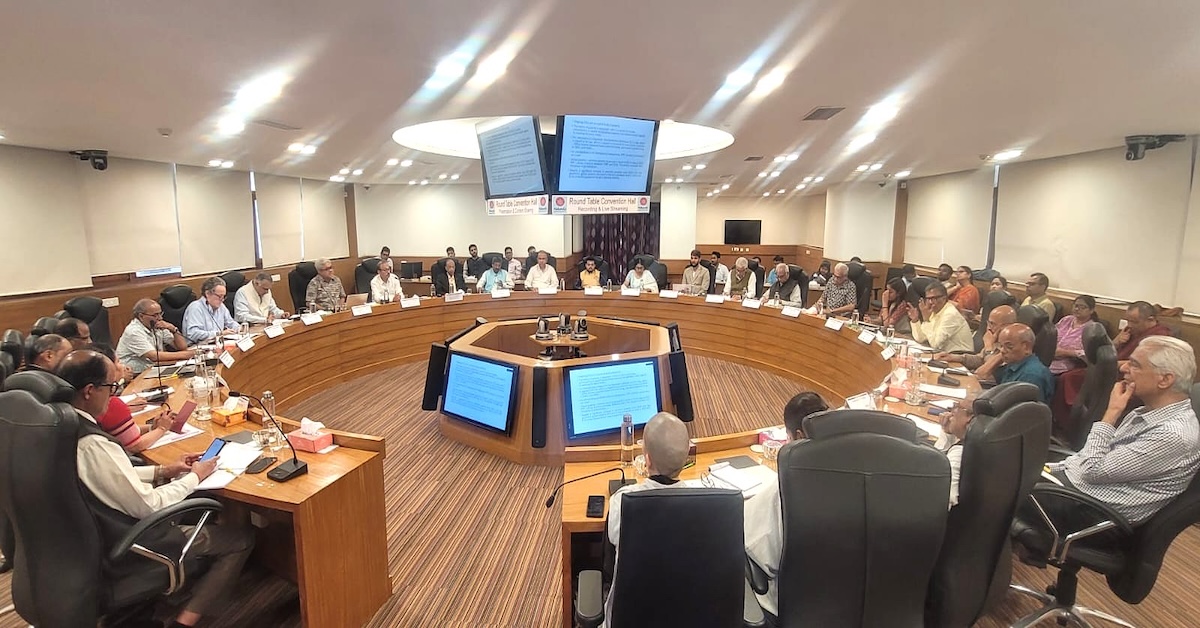
Rajgir: Nalanda University hosted an international symposium on Thursday to examine the continuing relevance of global justice in a world confronting climate change, technological disruption, global health challenges and growing demands for more equitable governance.

The symposium, titled “Rethinking Global Justice: A Symposium in Honour of Professor Thomas Pogge”, was held at the university’s Roundtable Conference Hall and brought together scholars and experts from academic, research and policy institutions.
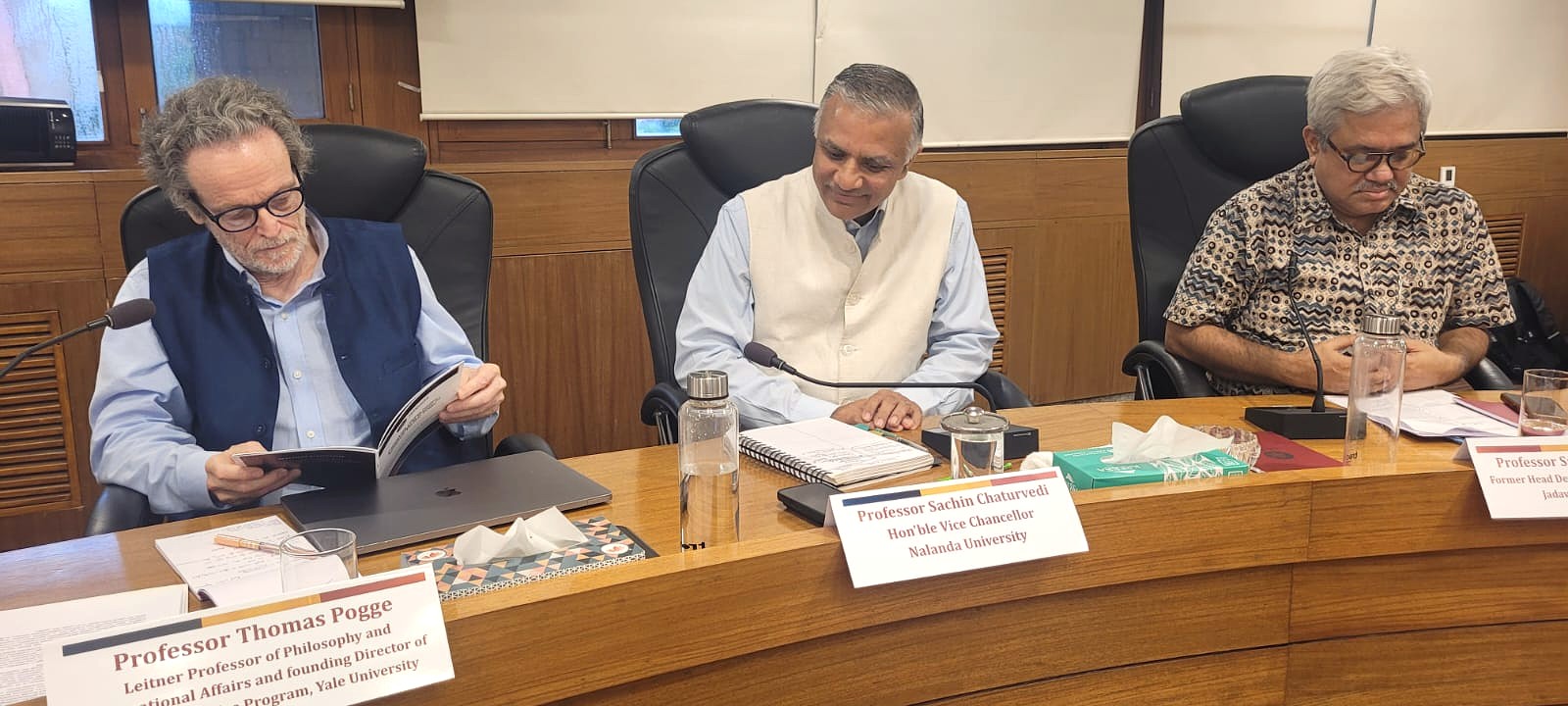
In his opening remarks, Nalanda University Vice-Chancellor Professor Sachin Chaturvedi highlighted the wide-ranging influence of Pogge’s scholarship, which draws on philosophy while engaging with economics, social justice, international relations and political science.

He said Pogge’s work brings questions of international law and justice into conversation with the continuing Global North-South divide, while encouraging researchers to explore possible pathways towards addressing these challenges.
Chaturvedi also stressed the importance of co-producing knowledge and developing country-specific and discipline-specific research that can contribute to the wider global knowledge ecosystem.
Pogge Calls For A Closer Look At Poverty And Inequality
Professor Thomas Pogge, Leitner Professor of Philosophy and International Affairs and founding director of the Global Justice Program at Yale University, used his address to question how progress against poverty and inequality is measured.
Pogge said he was pleased to be at Nalanda and described India as an important part of his intellectual journey. He expressed concern over the limited progress made in addressing poverty and argued that progress should not be assessed simply by measuring whether poverty has declined.
He said greater attention must also be paid to inequality and the distribution of economic gains, particularly whether improvements reach the most disadvantaged sections of society.
Pogge argued that a reduction in poverty alone should not be considered sufficient evidence of progress. The institutions and measurements used to assess poverty, inequality and global justice, he said, also need closer scrutiny.
Three Themes At The Symposium
The deliberations were organised into three thematic sessions:
- Poverty, Development and Global Justice
- Ethics, Global Governance and Institutional Accountability
- Intellectual Property Rights, Innovation and Global Public Goods
The sessions were followed by a valedictory discussion.
The symposium featured academics and researchers from institutions including the University of Delhi, Jadavpur University, Council for Social Development, Christ University, Adamas University, University of Leipzig, Gulati Institute of Finance and Taxation, Research and Information System for Developing Countries (RIS) and the Institute for Human Development.
Among those participating were Professor Ashok Acharya, Professor Saikat Sinha Roy, Professor SK Mohanty, Professor Nitya Nanda, Professor Jose Nandhikkara, Dr Soumyadeep Chowdhury, Syed Arsalan Ali, Professor Arvind Kumar, Professor KJ Joseph, Professor Seshadri Chari, Dr B Chengappa, Dr Sabyasachi Saha and Professor Alakh Sharma.