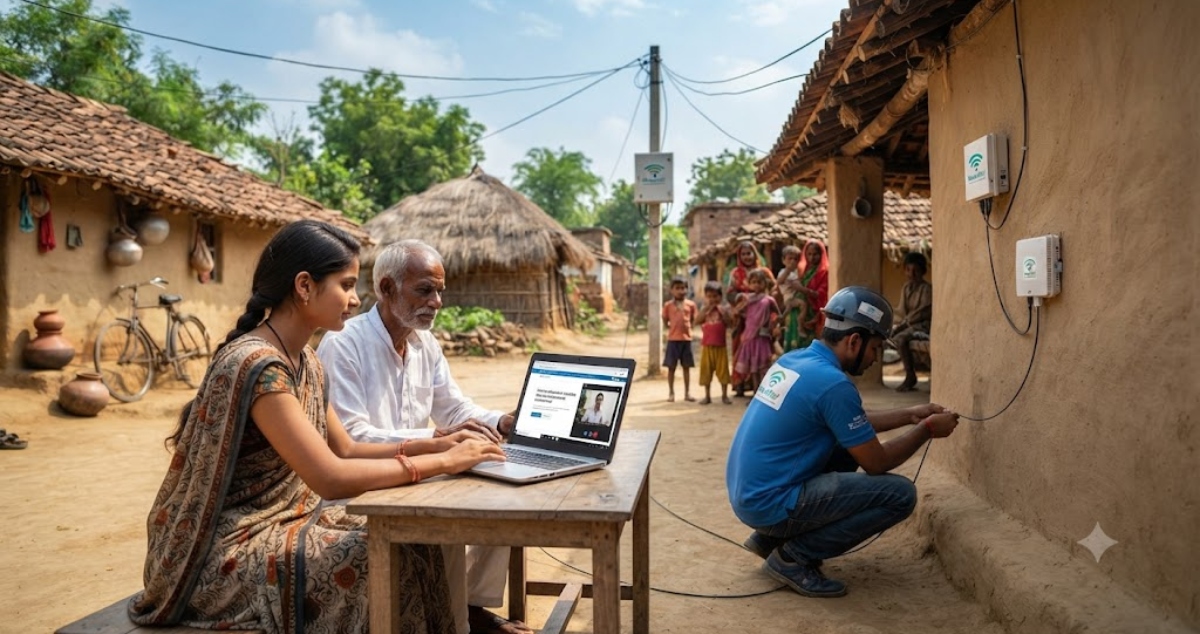
Patna: Internet connectivity in Bihar’s villages is set to move beyond panchayat buildings, with the Centre’s revised BharatNet plan preparing to strengthen rural networks and provide direct fibre connections to government institutions and households.

Changes are being made to the existing agreement between the state government and the Centre to facilitate the expansion. The Information Technology Department has started work in this direction, with the network expansion exercise expected to begin by the end of the year.
BharatNet to Focus on Reliable Rural Connectivity

The revised version of BharatNet places greater emphasis on making rural internet networks more reliable. A target of around 99% network uptime has been set, with modern technology and a ring topology proposed for the network.
Under this system, if a technical fault affects one part of the network, internet services can continue through an alternative route, helping reduce disruptions and improve reliability.
Schools, Health Centres and Other Institutions to Get Fibre
At the gram panchayat level, several public institutions are planned to be connected through fibre. These include schools, police stations, anganwadi centres, post offices, health centres, cooperative institutions and Krishi Vigyan Kendras.
The expansion is expected to improve digital access for institutions that increasingly depend on reliable internet connectivity for education, administration and public services.
Fibre-to-Home Connectivity for Rural Families
The revised plan will also focus on Fibre to the Home (FTTH) connections, taking internet services directly to individual rural households.
Better connectivity could make it easier for people in villages to access online education, government services, healthcare facilities and other digital services without having to depend on distant locations for internet access.
With the proposed network expansion and stronger infrastructure, Bihar’s rural areas are expected to gain wider access to digital services. The focus on direct fibre connections and higher network uptime could also help bridge the digital gap between villages and urban areas.