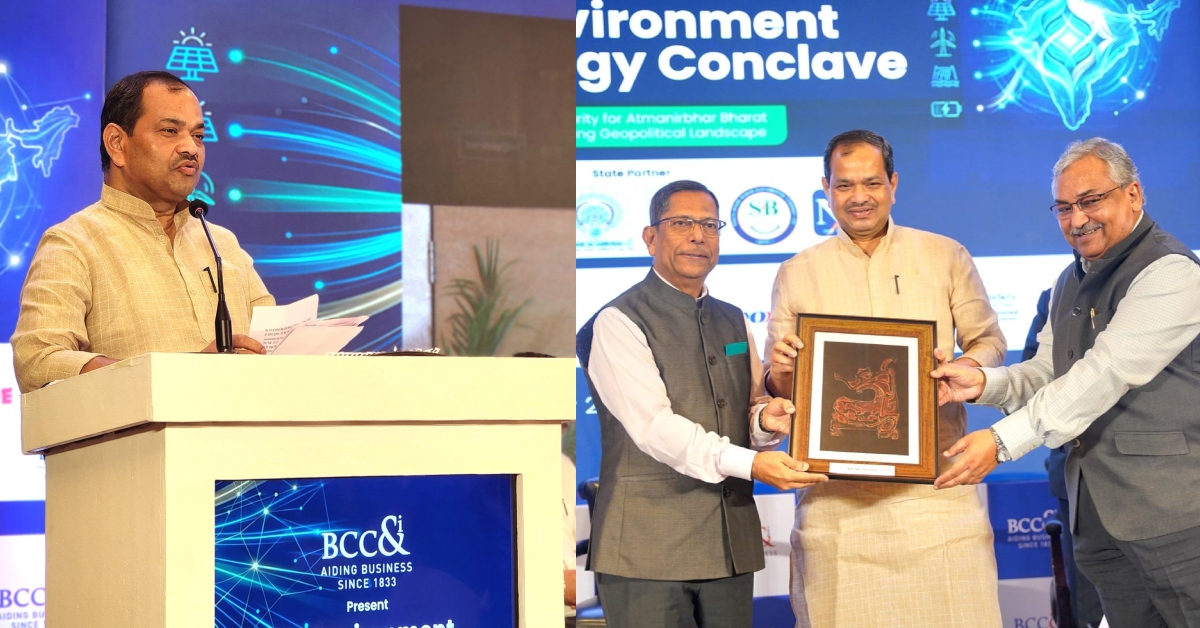
New Delhi/Patna: Bihar has set a target to provide 1 kW rooftop solar systems to 2.5 lakh families below the poverty line by the end of October, Energy Minister Shailesh Kumar said while outlining the state’s rural electrification and clean-energy plans at the 19th Environment and Energy Conclave in New Delhi on September 10.

Bihar was the State Partner for the conclave, organised by the Bengal Chamber of Commerce and Industry (BCCI) at Le Meridien, New Delhi. The event was held around the theme “Energy Security for Atmanirbhar Bharat in a Changing Geopolitical Landscape.”
Bihar Highlights Rural Electrification Push

Addressing the session on “Har Ghar Bijli: Bihar’s Rural Electrification Story”, Kumar spoke about the state’s progress in expanding electricity infrastructure and improving access to power in rural and urban areas.
He said Bihar has invested in power generation, transmission and distribution infrastructure, including the expansion of electricity grids, substations and transmission lines.
According to the minister, the state now has power availability for both rural and urban consumers around the clock. Peak power demand has reached approximately 9,475 MW, reflecting the growing requirement for electricity as Bihar’s economy and infrastructure expand.
“Bihar’s journey in the power sector reflects what sustained investment and political will can achieve,” Kumar said, adding that energy security would remain important to the state’s growth and self-reliance.
Rooftop Solar Plan For 2.5 Lakh BPL Families
A major part of Bihar’s clean-energy strategy is focused on expanding rooftop solar among economically weaker households.
Under the state initiative, 1 kW rooftop solar systems are being provided to 2.5 lakh BPL families, with the government targeting completion of the current programme by the end of October.
The state plans to subsequently double the coverage, extending the solar initiative to another 2.5 lakh BPL households, according to the minister.
The programme is intended to increase the use of renewable energy while improving access to electricity among low-income households.
2,560 Agriculture Feeders To Be Solarised
Bihar is also focusing on the use of solar power in the agriculture sector.
The government has set a target to solarise 2,560 agriculture feeders across the state. According to the Energy Minister, around 2,000–2,200 agriculture feeders have already been solarised.
The initiative is aimed at providing farmers with more affordable and reliable electricity while increasing the use of clean energy in agricultural operations.
Solarisation of agriculture feeders is also expected to reduce dependence on conventional sources of electricity and support the state’s broader renewable-energy transition.
Bihar Seeks Investment In Energy Sector
Kumar said the Bihar government is planning further investments to strengthen the state’s energy infrastructure and meet rising electricity demand.
He also invited investors and industry partners to participate in Bihar’s energy-sector expansion, assuring government support for new investments and initiatives.
The minister said opportunities were emerging across the state’s energy sector as Bihar continues to expand its infrastructure and plan for long-term development.
Energy And Industry Experts Attend Conclave
The conclave brought together officials, energy-sector experts and industry representatives.
Those present included Shri Krushna Chandra Panigrahi, Director General of the Bureau of Energy Efficiency; Dr Ajay Mathur, former Director General of the International Solar Alliance; Vijay Goel, Executive Director, Dispute Resolution Cell, NTPC Ltd; and Abhishek Chatterjee, Vice President, Regulatory and Power Sale, JSW Energy.
Representatives from Bangladesh, Norway and Denmark also participated in the event.
Bihar’s participation as State Partner gave the state an opportunity to present its electricity infrastructure expansion and ongoing plans for rural electrification, rooftop solar and agricultural feeder solarisation to national and international stakeholders.