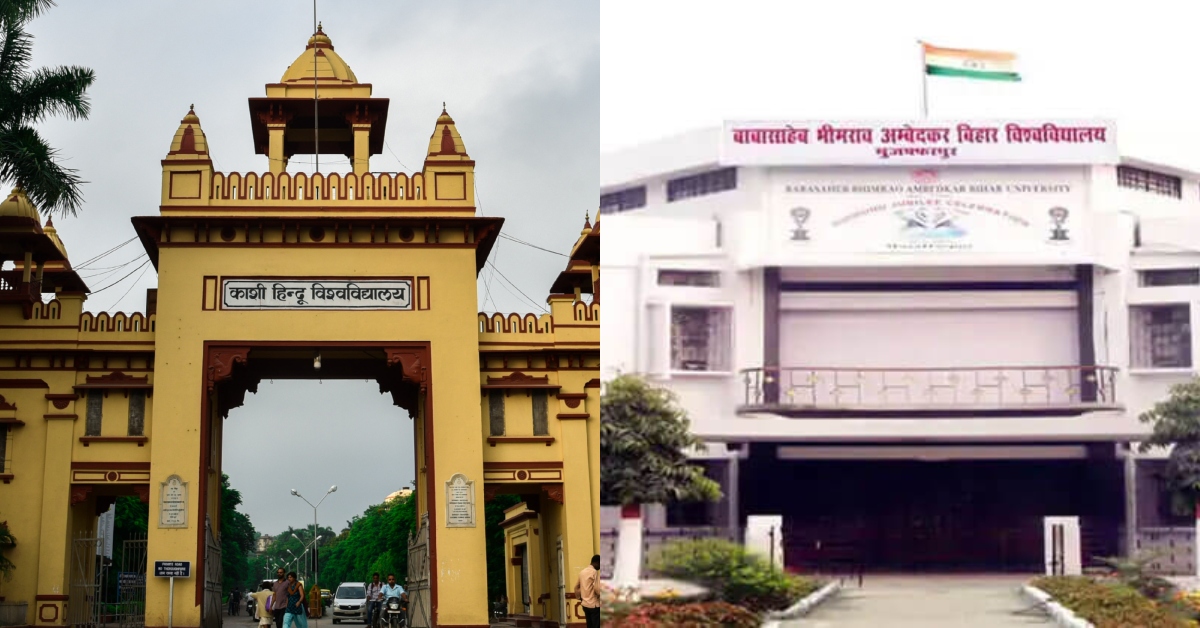
Varanasi/Muzaffarpur: A research team from Banaras Hindu University (BHU) has secured an Indian patent for a novel composite antacid tablet combining milk protein and aloe vera.

The patent, numbered 597350, was granted by the Patent Office, Government of India, against application number 202311057324.
The invention was developed at the Department of Dairy Science and Food Technology, Institute of Agricultural Sciences, BHU.

The research team was led by Prof Dinesh Chandra Rai, senior professor at BHU and currently Vice-Chancellor of Babasaheb Bhimrao Ambedkar Bihar University (BRABU).
Focus On Milk Protein And Aloe Vera
The patented formulation combines milk protein with aloe vera to develop a composite antacid tablet aimed at managing acidity-related digestive discomfort.
According to the research team, the formulation represents an effort to combine dairy-based value addition with natural ingredients in a potential digestive-health product.
Researchers said the patent could provide a basis for further work, including clinical validation, large-scale production and possible commercialisation.
Potential For Further Research
Experts involved in the research described the patent as a step towards developing products that combine food-based ingredients with potential health applications.
The work could also support further research into dairy-derived formulations and the use of indigenous ingredients in value-added products.
The researchers said the innovation reflects wider efforts to promote indigenous research, dairy value addition and evidence-based applications of traditional knowledge.
Research Team
The patent lists Prof Dinesh Chandra Rai, Prof Raj Kumar Duary, Dr Arvind, Dr Ruchi Chawla, Ridhi Pandey and Krishna Kumar as inventors.
The development also highlights the research activities of BHU’s Department of Dairy Science and Food Technology, which focuses on food technology, dairy science and related areas of applied research.
Academic Community Welcomes Patent
The patent has drawn congratulations from members of the academic community and alumni associated with the two university communities.
Academic colleagues and researchers welcomed the development as a recognition of the research team’s work and its potential for further scientific development.
The patent is now expected to provide a foundation for additional research and assessment of the formulation before any wider application or commercial use.