
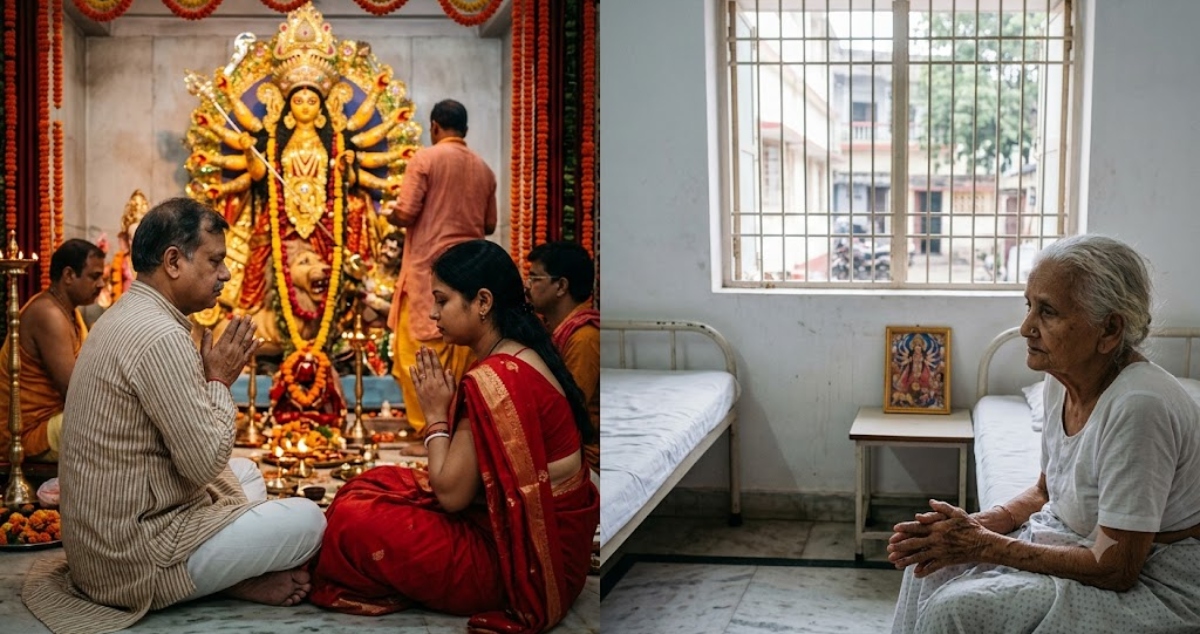
Patna: As devotees worship Goddess Durga during Navratri, the experiences of elderly women living in old-age homes offer a painful reminder that some mothers spend their later years separated from their families.

In a Patna old-age home, women have recounted experiences of abandonment, verbal abuse and fear involving their own children. Some say they spent years working to raise their families but were left without support when they grew old or lost their husbands.
According to the report, around 90 per cent of the women living in old-age homes across Bihar are widows. For many, the loss of a spouse was followed by a breakdown in family relationships and the loss of a home they once considered their own.

Shanti Devi Raised Her Children by Selling Toddy
Shanti Devi, who has been living in a Patna old-age home for five years, has a physical disability affecting her legs. She lost her mother during childhood and later faced the loss of her husband.
To support her family, she sold toddy and raised her son and daughter. However, she alleges that when she grew older and needed support, her son and daughter-in-law verbally abused her and forced her to leave the house.
Despite the experience, Shanti Devi says she continues to miss her children.
Her account reflects the emotional conflict faced by elderly parents who experience rejection from their families but remain attached to their children.
95-Year-Old Munna Devi Still Longs for Home
Munna Devi, aged 95, has reportedly been living in an old-age home for six years.
She worked in other people’s homes, cleaning floors and washing utensils, to help raise her three sons. According to the report, one of her sons is a police personnel and another is a teacher.
Munna Devi now struggles with a fading memory and a weakened voice. Yet, she continues to long for her home and family.
Her story highlights the loneliness experienced by elderly people who, despite spending much of their lives supporting their children, find themselves living away from them in old age.
Kalawati Devi Says Son Threatened to Kill Her
For 62-year-old Kalawati Devi, leaving home was reportedly a matter of personal safety.
After her husband’s death, she alleges that her son began verbally abusing and harassing her, including over her conversations with her daughter.
When she approached the police with a complaint, she says her son threatened to kill her. Fearing for her safety, Kalawati Devi left her home and sought shelter in an old-age home.
According to the report, she is now keeping her identity concealed while living there.
Her account illustrates how alleged threats within a family can leave an elderly person feeling unsafe in her own home.
Girja Devi Says Family Relationships Changed After Husband’s Death
Girja Devi, 88, has been living in an old-age home for four years.
She says relations with her son and daughter-in-law changed after her husband died. While family life had been comfortable during her husband’s lifetime, she alleges that respect and affection gradually disappeared after his death.
Feeling increasingly isolated in her own home, she eventually moved to an old-age home.
Her experience reflects the vulnerability some older women face after losing a spouse who may have been their main source of emotional and family support.
Elderly Women Need Dignity, Safety and Care
The experiences shared by these women raise questions about the treatment of elderly parents, particularly widows who may have limited financial resources or family support.
Old-age homes can provide shelter to people who have nowhere else to turn, but the accounts also underline the importance of emotional support, financial security and protection from abuse.
Family disputes and allegations of mistreatment require attention, and elderly people who face threats or violence should have access to appropriate support and legal protection.
A Reminder Beyond Navratri
Navratri is associated with the worship of the feminine divine and the celebration of the power of women. The experiences of elderly mothers living away from their families invite reflection on how society treats women in their later years.
For these women, the longing is often not for material comforts but for dignity, safety, affection and the reassurance that they have not been forgotten.
Their stories serve as a reminder that respect for mothers must extend beyond religious celebrations and be reflected in everyday care, responsibility and compassion.