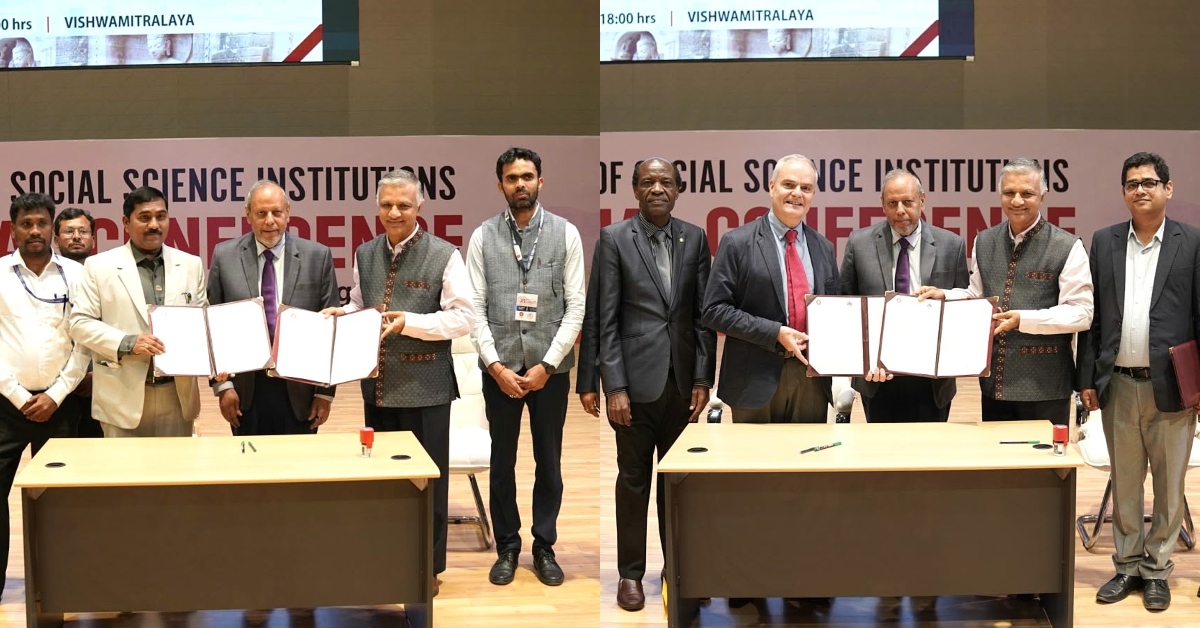
Rajgir/Patna: Nalanda University has signed Memoranda of Understanding (MoUs) with HARI University in Hyderabad and the University of the West Indies (UWI), Cave Hill Campus, to strengthen academic cooperation, joint research and international knowledge exchange.

The agreements were signed on the sidelines of the 25th Annual Conference of the Indian Association of Social Science Institutions (IASSI), being held at Nalanda University’s Rajgir campus from October 25 to 28, 2026.
The four-day conference has brought together scholars, researchers, policymakers and academic leaders to discuss contemporary development challenges, including economic development, health and nutrition, culture, public policy and the role of empirical research in policymaking.

Nalanda University expands research partnerships
The MoU with HARI University, or the Heartfulness Academy of Research and Innovation, was signed by Nalanda University Vice-Chancellor Professor Sachin Chaturvedi and HARI University Vice-Chancellor Professor Narsireddy Malgireddy.
The partnership provides for joint research supervision, teaching programmes, postdoctoral research, academic conferences and publications. It also envisages exchanges of faculty members, research fellows and students, alongside the sharing of academic literature and resources across disciplines.
The agreement with the University of the West Indies, Cave Hill Campus, was signed by Professor Chaturvedi and Professor R. Clive Landis, Pro Vice-Chancellor and Principal of the campus.
The partnership will facilitate interdisciplinary research, teaching, humanities, cultural studies and collaboration in the creative and performing arts. Faculty and student exchanges and joint academic initiatives are also included.
Professor S. Mahendra Dev, Chairman of the Economic Advisory Council to the Prime Minister (EAC-PM), attended the occasion.
The UWI delegation included Professor David Akombo, Dean of the Faculty of Culture, Creative and Performing Arts, and Terrence Inniss, Deputy Dean (Outreach) of the Faculty of Humanities and Education at Cave Hill Campus.
Panel examines Indian approaches to social sciences
A special panel titled “Indian Methodologies for Issues Before Social Sciences” was chaired by Professor Chaturvedi, who is also Chairman of IASSI.
S. Gurumurthy, Chairman of the Vivekananda International Foundation and editor of Thuglak, delivered the keynote address. The panel also featured Saurabh Garg, Secretary of the Union Ministry of Statistics and Programme Implementation (MoSPI), and Professor Ravindra H. Dholakia, former professor at IIM Ahmedabad. Professor Dev was also present.
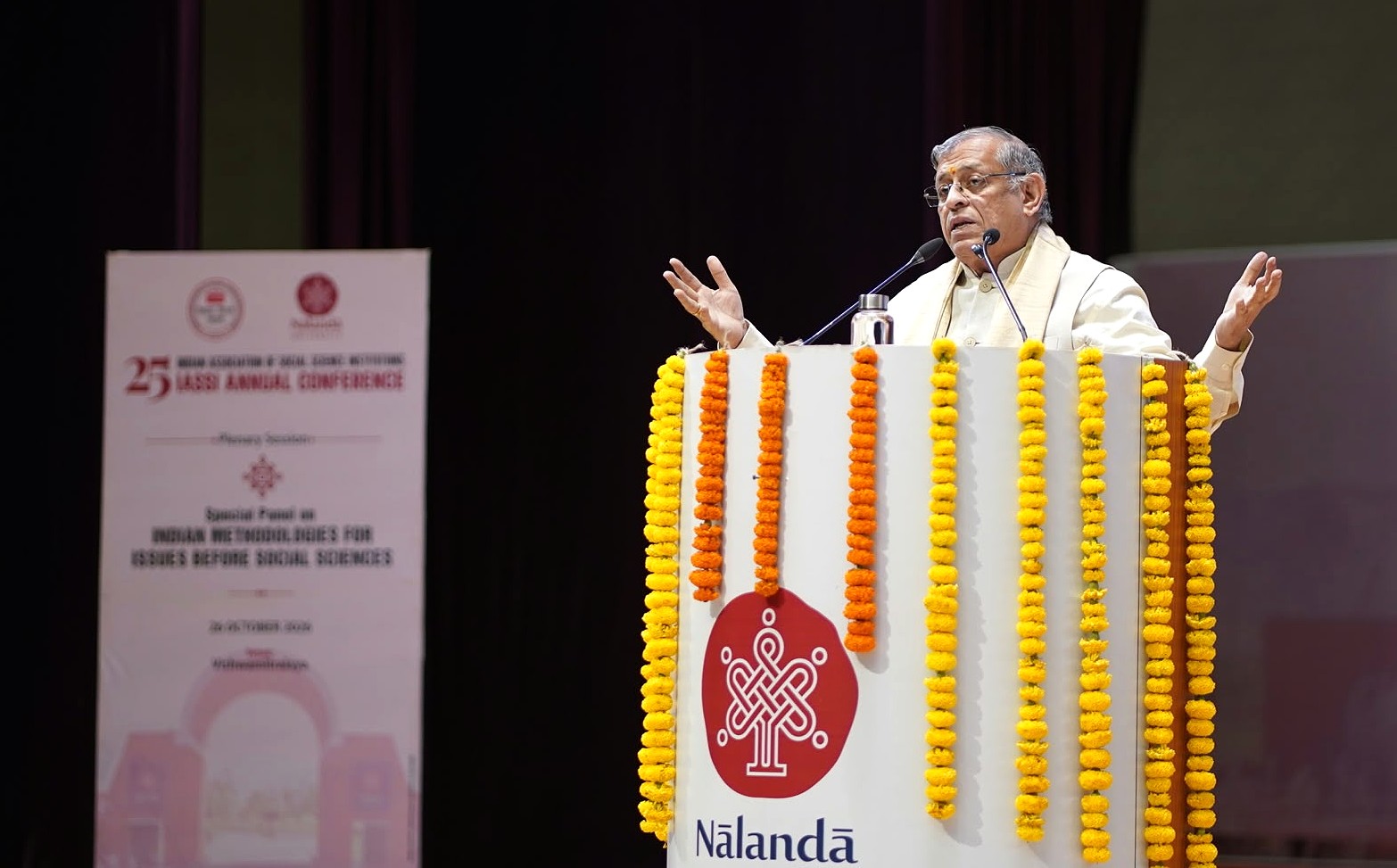
Gurumurthy emphasised the importance of examining Indian society through its historical experiences, cultural traditions and empirical realities. He drew connections between social structures, knowledge transmission, family systems, food security and community life, calling for greater engagement with indigenous experiences when developing social science frameworks.
He also encouraged scholars to explore how knowledge embedded in everyday practices and community institutions could inform contemporary understanding of society and development.
Lecture highlights role of data in development
Garg delivered the Tarlok Singh Memorial Lecture on “Data for Development: Strengthening the Evidence Base for Viksit Bharat @ 2047”.
He highlighted the importance of reliable official statistics, timely and detailed data, technological innovation and empirical research in understanding socio-economic changes and informing public policy.
Garg outlined efforts to modernise India’s statistical system, including the use of administrative and alternative data sources, improvements in survey methodologies and stronger statistical capacity.
He emphasised the complementary roles of statistics and social science research: reliable data can help identify development gaps, while research provides the analytical tools to understand them.
“The statistical system must do more than measure; it must help us understand the nation as it is becoming,” Garg said.
The lecture highlighted the need to strengthen the evidence base for inclusive development and India’s long-term ambitions under Viksit Bharat @ 2047.
Conference to conclude on October 28
Other sessions at the conference have examined India’s development priorities, including health and nutrition, culture and development, public policy and social transformation.
Discussions have brought together interdisciplinary perspectives on evidence-based research, institutional effectiveness, community well-being and the need to understand India’s diverse social realities.
The conference will conclude on October 28 with a valedictory session featuring Bihar Governor Lieutenant General (Retd.) Syed Ata Hasnain, who is scheduled to deliver the concluding address.