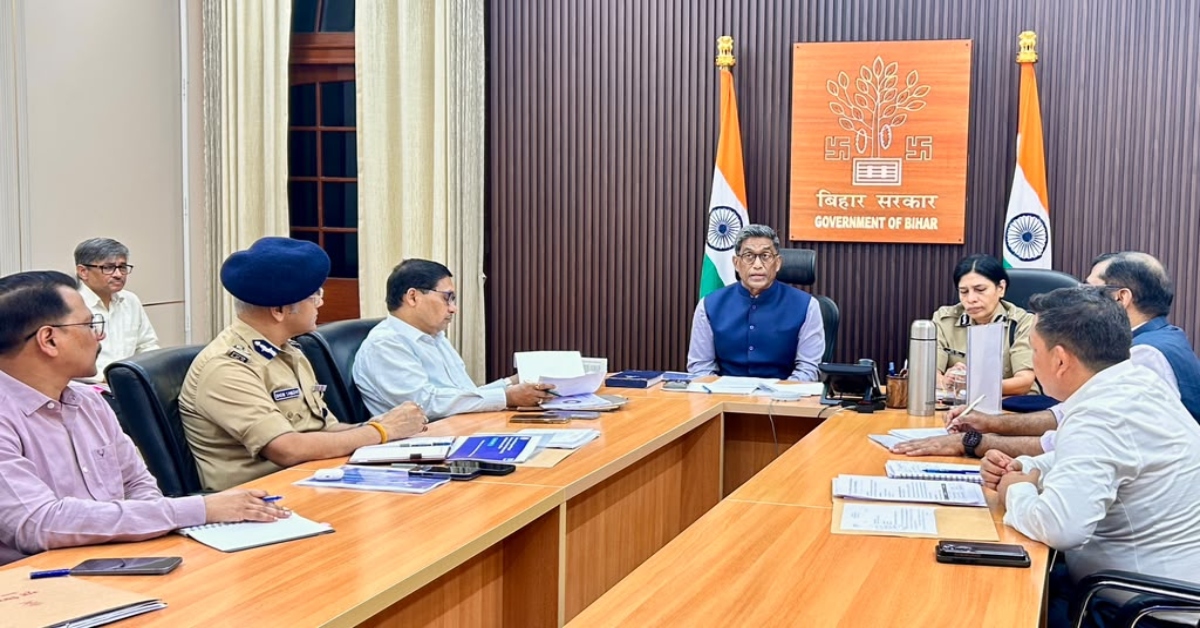
Patna : Bihar Chief Secretary Pratyaya Amrit reviewed the state’s anti-narcotics campaign on Wednesday, examining enforcement figures, drug seizures, convictions and measures to curb the illegal drug trade. The review meeting highlighted a significant increase in registered cases and arrests in 2026, alongside expanded action against drug trafficking and illegal opium cultivation.

According to figures presented at the meeting, 4,232 cases were registered under the NDPS Act and 6,104 people were arrested up to October 27, 2026. In comparison, 2,583 cases and 3,562 arrests were recorded during the whole of 2025.
Between 2023 and October 27, 2026, Bihar registered a total of 11,347 NDPS cases and arrested 13,543 people.

The meeting was attended by Director General of Police Preety Verma, Home Department Principal Secretary Pankaj Kumar, Additional Director General of Police (Law and Order) Ratn Sanjay, Home Department Special Secretary Kshatranil Singh and officials from the Prohibition Department and State Narcotics Control Bureau.
25,247 Kg Of Confiscated Narcotics Destroyed In 2026
The review highlighted an increase in the destruction of confiscated narcotic substances. During 2026, authorities destroyed 25,247 kg of seized narcotics, approximately 10.1 times the quantity destroyed in 2025.
The figures presented at the meeting also detailed the quantity of drugs seized up to October 27 this year:
- Ganja: 46,549.95 kg
- Heroin, brown sugar and smack: 149.696 kg
- Intoxicating tablets and capsules: 11,56,380
- Narcotic injections: 4,92,870
- Codeine-based cough syrup bottles: 5,11,988
The seizures indicate the range of narcotic substances targeted during enforcement operations across the state.
Araria, Supaul And Madhubani Record Major Ganja Seizures
District-wise figures showed that Araria recorded the highest quantity of ganja seizures among the districts highlighted during the review, with 10,573 kg seized.
Supaul followed with 8,813 kg, while Madhubani recorded seizures of 4,483 kg.
In heroin-related seizures, Patna accounted for 24.1 kg, followed by Purnia with 20 kg.
The figures were presented to assess the scale and geographical spread of narcotics enforcement across Bihar.
Illegal Opium Cultivation Destroyed Across 512 Acres
Action against illegal opium cultivation was another major focus of the review.
During the 2025–26 period, authorities registered 37 cases and identified 198 accused in connection with illegal opium cultivation. A total of 512.235 acres of opium crops was destroyed.
Gaya district accounted for 508.755 acres of the destroyed cultivation, making it the largest area covered by the reported action.
The enforcement measures are aimed at preventing illegal cultivation and disrupting the supply chain at its source.
Special Courts Secure Convictions In 1,652 NDPS Cases
Bihar has established 10 special courts to deal with cases registered under the NDPS Act.
Between 2021 and August 2026, proceedings in 1,652 cases resulted in the conviction of 2,225 accused, according to the figures presented at the meeting.
Officials also reviewed action under the Prevention of Illicit Traffic in Narcotic Drugs and Psychotropic Substances (PIT-NDPS) Act. A total of 132 proposals were received, following which the Home Department issued three detention orders.
Financial investigations are also underway into the assets of 417 accused persons involved in 231 cases related to commercial quantities of narcotics. The exercise is intended to examine assets linked to suspected drug-trafficking activities.
MANAS Portal Receives 3,718 Inputs
The meeting reviewed the use of the MANAS portal as part of efforts to gather information and support action against narcotics-related activities.
The portal received 3,718 inputs, on the basis of which 138 FIRs were registered.
The mechanism is intended to facilitate the sharing of information about suspected drug-related activities and help enforcement agencies initiate investigations.
Nasha Mukt Bihar Campaign To Continue Until November 26
The state is observing Nasha Mukt Bihar Abhiyan 2026 from October 27 to November 26, with awareness activities planned to discourage drug use and promote a drug-free environment.
As part of the campaign, educational institutions have been directed to designate the area within a 500-metre radius of their premises as a drug-free zone.
The initiative is intended to strengthen prevention efforts around schools, colleges and other educational establishments while increasing awareness among students and communities.
Chief Secretary Directs Monthly Reviews And De-Addiction Facilities
During the meeting, Chief Secretary Pratyaya Amrit directed officials to maintain regular monitoring of anti-narcotics enforcement and strengthen coordination among the departments concerned.
The directions included:
- Holding monthly meetings of district-level Narcotics Coordination Centre (NCORD) committees.
- Ensuring regular review of anti-drug measures at the Chief Minister’s level.
- Establishing dedicated de-addiction wards in all medical colleges and hospitals.
- Providing specialised training to police personnel involved in narcotics-related investigations.
- Strengthening prosecution to improve the handling of NDPS cases.
The emphasis on dedicated de-addiction facilities is intended to complement enforcement with access to treatment and support for people affected by substance dependence.
Enforcement And Prevention To Remain Key Priorities
The review brought together data on arrests, seizures, destruction of confiscated substances, illegal cultivation and court convictions to assess the state’s response to narcotics-related offences.
The directions issued during the meeting place emphasis on stronger police action, financial investigations, regular district-level monitoring and improved treatment facilities.
The administration’s next challenge will be to translate these measures into sustained enforcement, effective prosecution and wider access to de-addiction services across Bihar.