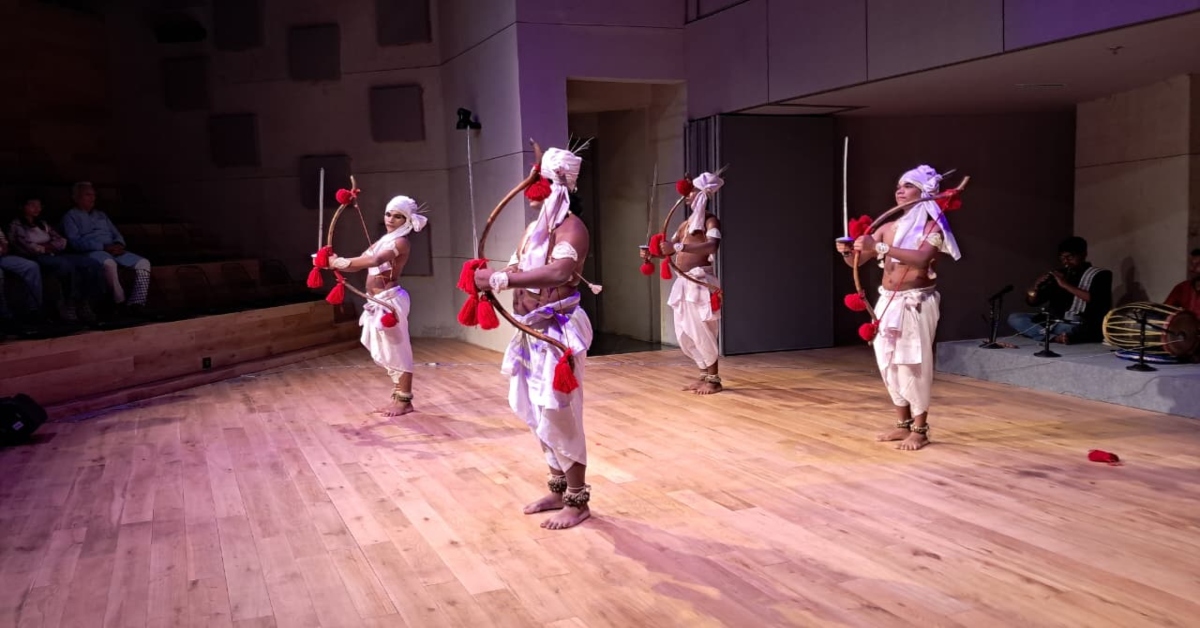
Patna : Audiences at Arthshila Patna experienced the artistic and martial traditions of Odisha through a performance of Mayurbhanj Chhau by artists from Mayur Art Centre, Bhubaneswar, on Thursday.

The presentation featured energetic movements, leaps, intricate choreography and expressive storytelling, bringing together themes from mythology, history and traditional life. Four dance compositions explored different aspects of the cultural and artistic heritage associated with the Chhau dance tradition.
The programme highlighted the distinctive character of Mayurbhanj Chhau, a form known for combining martial movements with graceful choreography and expressive performance.

Four Dance Compositions Explore Mythology And Tradition
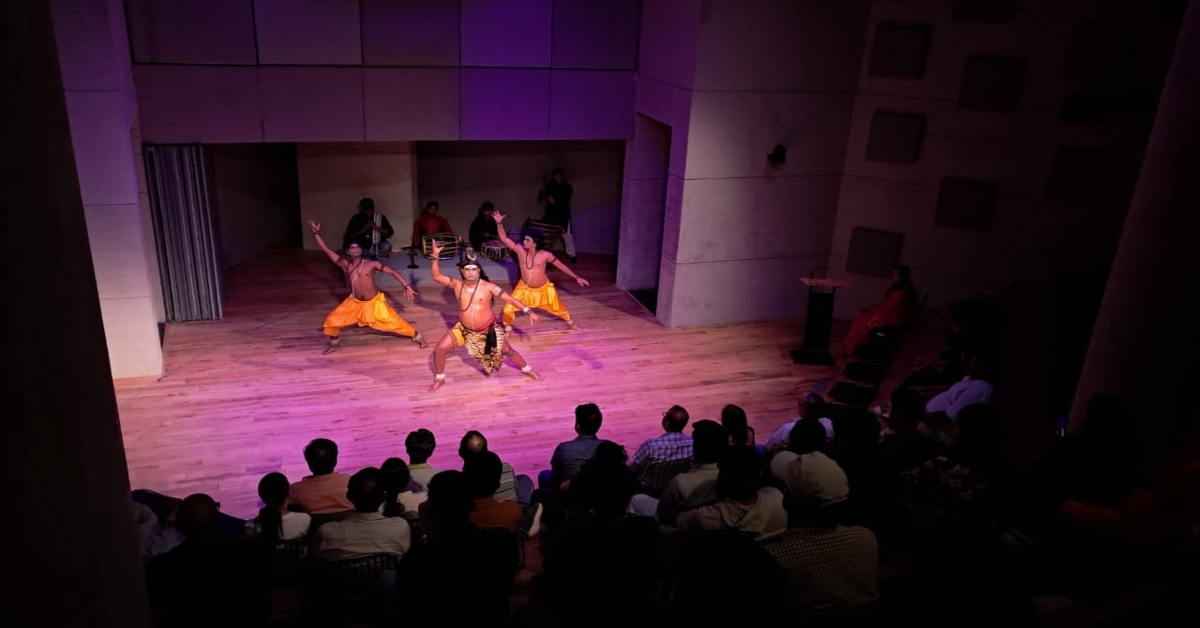
The performance opened with Shiva Tandav, a composition portraying Lord Shiva as the cosmic dancer. Through vigorous movements and yogic postures, the presentation depicted the interconnected processes of creation, preservation and destruction.
The second composition, Kshatriya, celebrated the courage, strength and martial spirit of warriors, drawing on India’s ancient warrior traditions.
This was followed by Shavara, which portrayed the hunting traditions and way of life of Odisha’s Shavara tribal community, historically associated with the worship of Lord Jagannath.
The final presentation, Chakravyuha, drew from the Mahabharata and depicted Abhimanyu’s entry into the complex military formation created by the Kaurava warriors. Through dramatic choreography and dynamic movements, the performance portrayed his courage and resistance against the seven Kaurava warriors.
Mayurbhanj Chhau Distinguished By Its Maskless Style
Chhau is practised in three major styles in eastern India — Mayurbhanj, Seraikela and Purulia. Mayurbhanj Chhau is distinguished by its maskless presentation, unlike the other two styles, which traditionally use masks.
The absence of masks allows performers to communicate through facial expressions as well as body movements, giving the dance form a distinctive expressive quality.
Mayurbhanj Chhau developed under the patronage of the Maharajas of the erstwhile Mayurbhanj princely state for more than a century. Rooted in the region’s martial arts traditions, it combines powerful movements with graceful choreography.
Over time, the form also incorporated elements from local folk and tribal dances, bringing together classical, traditional and folk influences.
Mayur Art Centre Promotes The Dance Form Across India And Abroad
Established in 1980, Mayur Art Centre in Bhubaneswar works towards the training, preservation, performance and research of Mayurbhanj Chhau.
The institution maintains a repertory group of dancers and musicians trained under eminent Gurus. Over several decades, its artists have represented the dance form at festivals and cultural events across India and on international platforms.
With support from the Indian Council for Cultural Relations (ICCR), New Delhi, the group has performed in Portugal, Spain, the Netherlands and Italy. It has also participated in the Festival of India in France and Germany and toured Sri Lanka, Tanzania, Zanzibar and Mozambique.
Arthshila Patna Hosts Traditional Performing Arts
The performance offered audiences in Patna an opportunity to experience the movement, storytelling and cultural significance of one of Odisha’s distinctive dance traditions.
The programme also reflected Arthshila Patna’s efforts to bring India’s diverse cultural and performing arts traditions to local audiences and create opportunities for their appreciation and preservation.