
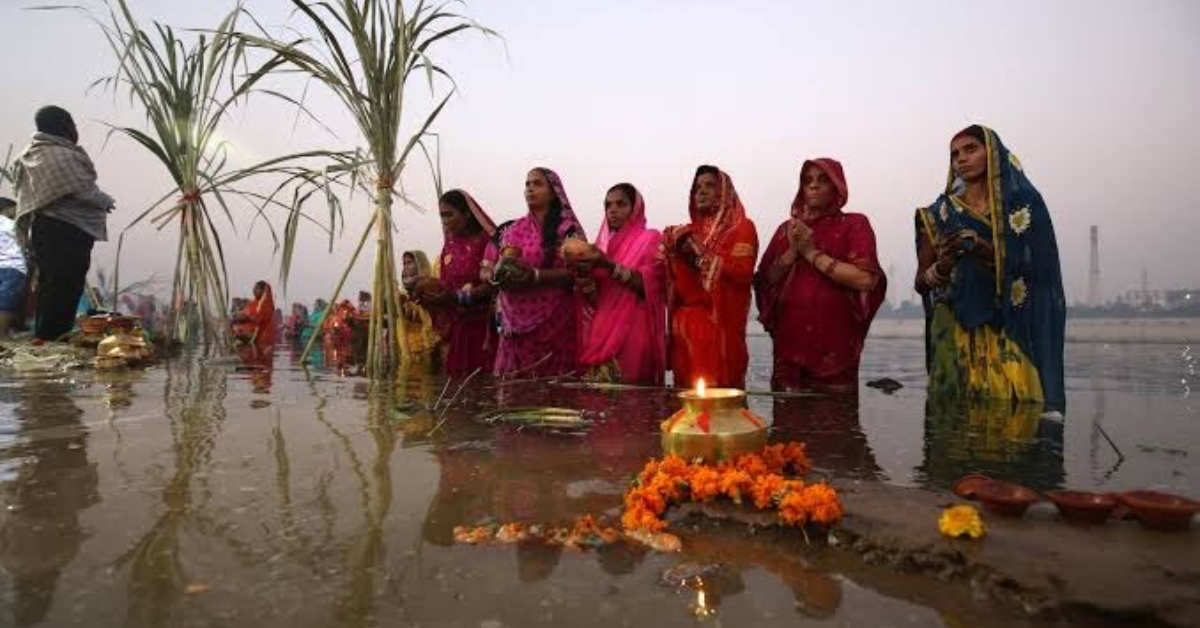
Patna: The four-day Chhath Mahaparv, dedicated to the worship of the Sun God and Chhathi Maiya, began on Friday with the Nahay-Khay ritual. On Saturday, November 14, devotees are observing Kharna, the second day of the festival, which marks the beginning of the challenging 36-hour nirjala fast.

On the first day, devotees took holy dips in the Ganga and other water bodies before preparing traditional food offerings, including rice, chana dal, bottle gourd curry and amla chutney.
In Patna, devotees gathered at several Ganga ghats, including Digha Ghat, Janardan Ghat, Kali Ghat and Gandhi Ghat, to take ritual baths and offer prayers to the Sun God. Chhath songs and the presence of devotees created a festive and devotional atmosphere along the riverfront.

Kharna Rituals: A Day-Long Fast Followed by Traditional Prasad
On Kharna, devotees observe a fast throughout the day without consuming food or water. In the evening, they prepare a special offering of jaggery-based kheer and roti.
According to astrologer Rakesh Jha, the kheer is traditionally cooked with jaggery, milk and unbroken rice in a clean environment, using mango wood in an earthen stove. The offering is first presented to the Sun God and Chhathi Maiya before devotees consume the prasad.
After the Kharna prasad, devotees begin their 36-hour nirjala fast, abstaining from both food and water. The fast continues through the evening and morning offerings to the setting and rising Sun.
Kharna Prepares Devotees for the Rigorous Fast
Kharna is considered an important stage of the Chhath observance, as the prasad consumed in the evening is the final meal before the extended waterless fast.
The ritual is associated with discipline, purity and devotion. Families maintain cleanliness while preparing the offerings and performing the prayers. Devotees then dedicate themselves to the worship of the Sun God and Chhathi Maiya until the conclusion of the festival.
Chhath Songs and Traditional Preparations Fill Homes
The evening of Kharna brings together devotion and folk traditions. Families prepare prasad while singing traditional Chhath songs that praise the Sun God, invoke Chhathi Maiya’s blessings and express wishes for the well-being and prosperity of loved ones.
The aroma of jaggery kheer and freshly prepared roti, cooked over a traditional earthen stove, is an integral part of the festival’s cultural atmosphere.
Thekua, Sugarcane and Other Offerings Hold Special Significance
Preparations for the remaining rituals include traditional items such as bamboo baskets and soops, coconuts, sweet potatoes, sugarcane with leaves, ginger, turmeric, betel leaves, areca nuts, camphor, vermilion, rice, lamps, ghee and Ganga water.
Thekua, made with wheat flour, jaggery and ghee, is among the most important offerings associated with Chhath Puja.
After Kharna, devotees will prepare for Sandhya Arghya on Sunday, November 15, when prayers will be offered to the setting Sun. The four-day festival will conclude on Monday, November 16, with Usha Arghya to the rising Sun.
Chhath Puja 2026: Kharna and Arghya Timings
| Ritual | Date | Timing |
| Kharna Puja | November 14 | 5:22 PM to 7:46 PM |
| Sandhya Arghya (setting Sun) | November 15 | Around 5:24 PM |
| Usha Arghya (rising Sun) | November 16 | After 6:07 AM |