
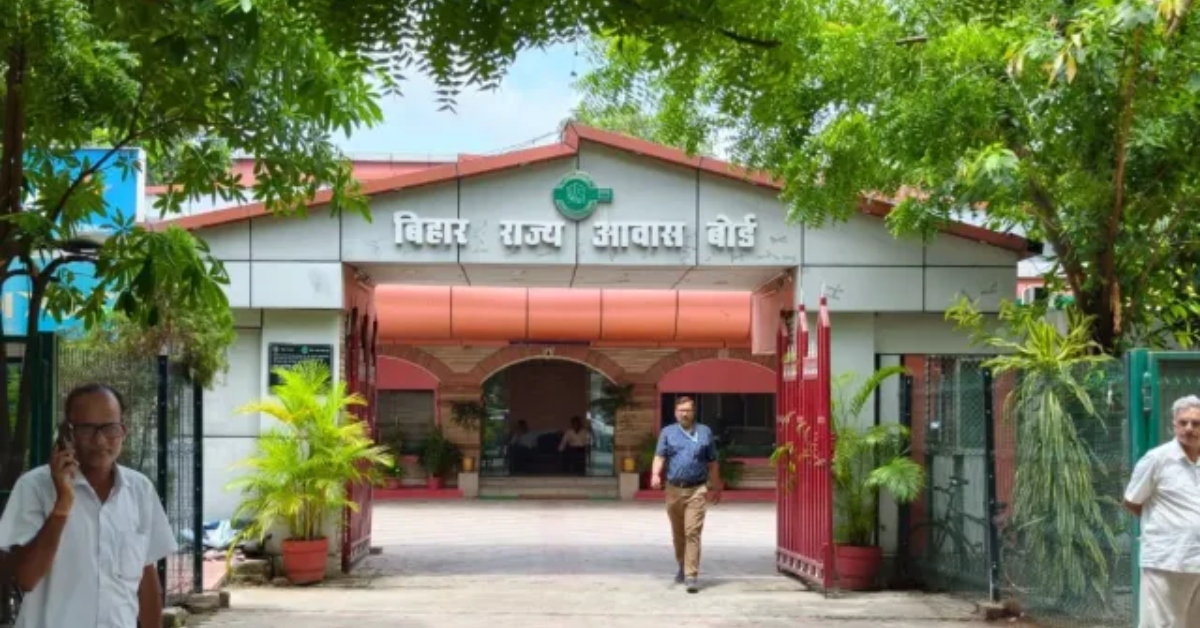
Patna: The Bihar State Housing Board is planning to bring vacant and underutilised land parcels and ageing residential and commercial properties into productive use by attracting private investment. The initiative aims to expand housing options, particularly for economically weaker, low-income and middle-income families, while creating opportunities for residential and commercial development.

As part of the exercise, the Board has initiated the process of appointing a strategic consulting firm for a 24-month assignment. The selected firm will advise the Board on land utilisation, redevelopment of older properties, affordable housing strategies and policy reforms, besides assisting in their implementation.
The Board owns approximately 2,887 acres of land across 10 districts of Bihar. These land parcels are at different stages of development. Some face encroachment or legal disputes, while others lack basic infrastructure such as roads, electricity and water supply. Several older residential and commercial properties are also not being fully utilised.

GIS Mapping To Create Digital Land Records
The first step will involve a detailed survey of the Board’s land assets and the creation of digital records using Geographic Information System (GIS)-based mapping.
The database will capture details of each plot, including its area, ownership status, current use, encroachments, legal status and availability of basic infrastructure. The possibility of developing a web-based GIS dashboard will also be explored to provide consolidated information on the actual status of the land.
The proposed system is expected to help prospective investors assess the development potential of individual plots and make land selection and investment-related decisions more transparent.
The consultant will also assess the market value of each plot, surrounding development activities and demand for residential and commercial space. Based on the findings, the Board will be advised on possible development models, including outright sale, long-term leasing, joint development, revenue sharing and Public-Private Partnerships (PPP).
Land parcels will be classified according to their readiness for development. Those that can be developed within six months will fall under the short-term category, while plots requiring six to 18 months will be classified as medium-term. Land requiring 18 to 36 months of preparation will be placed in the long-term category.
Redevelopment Of Old Colonies And Buildings
The assignment will also cover an assessment of the Board’s existing residential colonies, multi-storey buildings, commercial complexes and staff housing.
The assessment will examine the structural condition of buildings, occupancy status, vacant and allotted units, repair requirements and the potential for redevelopment.
Where feasible, the consultant will explore options such as adding floors, improving residential amenities and integrating commercial activities. The available Floor Area Ratio (FAR) under existing building regulations will also be assessed.
Detailed financial feasibility reports will be prepared for three priority redevelopment projects. These will cover construction costs, projected revenue from sales or leases and the potential for private investment.
The interests of existing residents will be considered during the redevelopment process. A strategy will be prepared to address their consent, temporary relocation, rehabilitation rights and the establishment of a grievance redressal mechanism.
District-Wise Affordable Housing Strategy
The consultant will assess district-wise housing requirements among families belonging to the Economically Weaker Section (EWS), Low-Income Group (LIG) and Middle-Income Group (MIG).
The assessment will also cover demand for rental housing and accommodation for families with special needs. Suitable land parcels with access to roads, electricity, water and transport facilities will be identified for affordable housing projects.
Recommendations will be made on the size, pricing, amenities and construction density of housing units for different income groups.
The Board will also explore the possibility of integrating its initiatives with existing central and state government housing schemes, subsidies and financial assistance programmes. Models such as PPP, rental-based housing and cross-subsidisation will be considered.
Under the cross-subsidisation model, revenue generated from residential or commercial units developed at market rates could be used to reduce the cost of affordable housing units.
Review Of Housing Board Act And Procedures
The consultant will review the Bihar State Housing Board Act, 1982, and its associated rules to identify changes required to streamline the Board’s functioning.
The exercise will examine procedural bottlenecks in housing allotment, auctions, registration, payments, issuance of No Objection Certificates (NOCs), property mutation, conversion of leasehold properties to freehold and grievance redressal.
Recommendations will also be made to improve transparency in digital allotment and beneficiary selection. The proposed reforms are intended to reduce delays and limit the need for allottees to make repeated visits to government offices.
Consultancy Assignment To Run For 24 Months
The selected consultancy team will work from the Board’s headquarters in Patna and visit districts as required. It will include experts in real estate planning and investment, housing, policy and regulation, and organisational capacity building.
The assignment will be undertaken in two broad phases. The first will focus on assessing land and existing assets and formulating a strategy for their utilisation. The second will involve facilitating project development and supporting investment-related processes.