
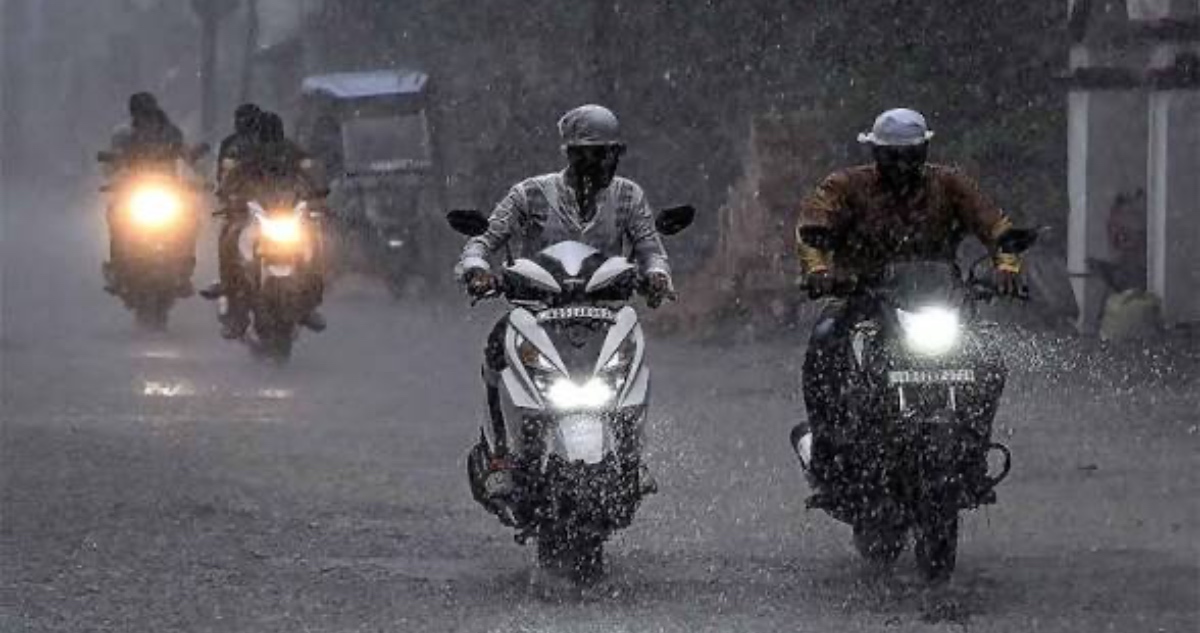
Patna: Bihar may witness a change in weather conditions as Cyclone Akvan advances over the Bay of Bengal. The India Meteorological Department (IMD) has forecast heavy rainfall at isolated places in Bhagalpur and Katihar districts on November 21.

Continuous rainfall could lead to waterlogging in low-lying areas, affecting road traffic and causing inconvenience to commuters. Accumulated rainwater may also disrupt the movement of vehicles in affected areas.
Cyclone Akvan Advances Over the Bay of Bengal

According to the IMD’s weather bulletin issued on November 19, Cyclone Akvan was positioned over the west-central Bay of Bengal and moving northwards at approximately 12 kmph over the preceding six hours.
On November 19, the system was located around 440 km from Narsapur in Andhra Pradesh and Kakinada. It was approximately 580 km from Chennai, 530 km from Gopalpur in Odisha and 590 km from Puri.
Storm May Pass Between Andhra Pradesh and Odisha on November 20
The IMD indicated that the cyclone could move between Narsapur and Puri on November 20, potentially affecting coastal areas of north Andhra Pradesh, Yanam and southern Odisha.
Wind speeds during the system’s passage could reach 90–100 kmph, with gusts reaching up to 110 kmph.
How Could the Weather System Affect Bihar?
Rainfall and strong winds could create difficulties in several parts of Bihar. Lightning may pose risks to people and livestock, while strong winds could damage trees, temporary structures, tin roofs and weak houses.
Waterlogging in low-lying areas could disrupt daily commuting, while rainfall may also affect road conditions and vehicle movement.
Farmers Face Crop Damage Concerns
The anticipated rainfall and strong winds could increase concerns among farmers, particularly those with standing and mature crops.
Strong winds may cause crops to flatten, while fruit-bearing trees, including mango and litchi, could also sustain damage. Fields may experience waterlogging, potentially affecting crops ready for harvesting.
Paddy and other harvested produce stored in open areas could get wet and suffer damage. Farmers may therefore need to take precautions to protect their ready-to-harvest crops and stored produce.
Residents, commuters and farmers in the affected districts should follow the latest IMD weather updates and local administration advisories.