Patna: Bihar is aiming to become a major milk hub, with the state government setting a target of producing one crore litres of milk every day by 2030. The current daily production is around 48 lakh litres.

To achieve the target, the government will provide financial support to livestock farmers purchasing high-quality cows and buffaloes. Under the Mukhyamantri Godhan Vikas Loan Scheme, the state will pay the interest on eligible loans, helping farmers expand their dairy activities.
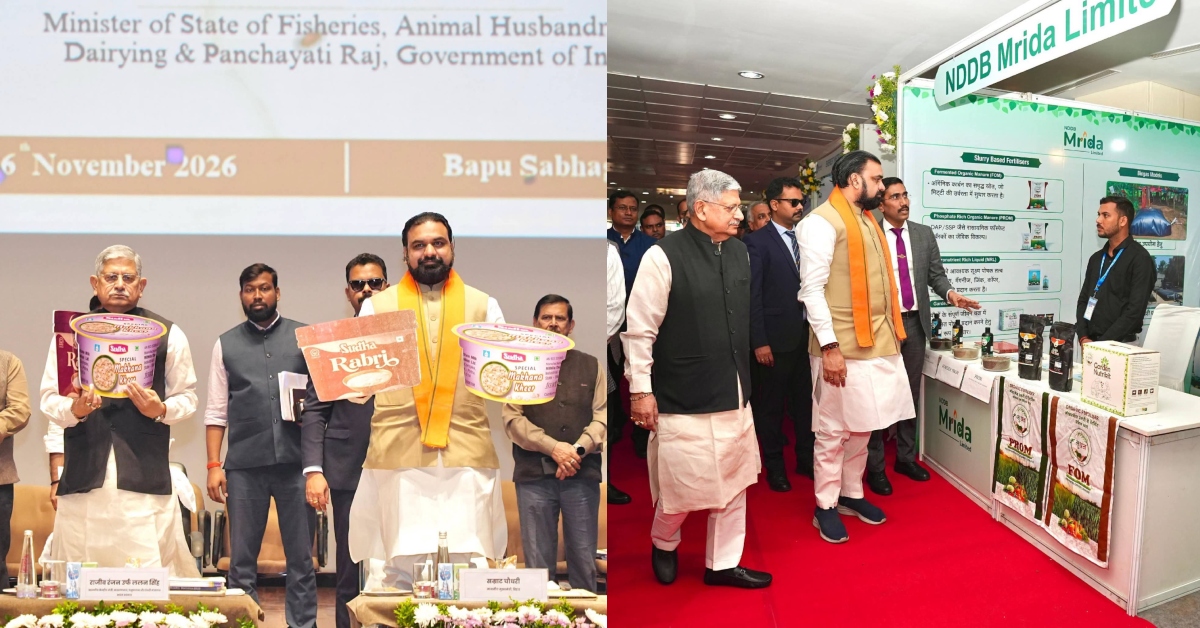
Chief Minister Samrat Choudhary announced the initiatives while inaugurating a National Milk Day programme at Bapu Sabhagar in Patna on Thursday.

He said animal husbandry could play a significant role in strengthening rural livelihoods and increasing farmers’ incomes. The government plans to focus not only on milk production but also on dairy processing, value-added products and market expansion.
Sudha Expands Milk Production And Processing Outside Bihar
The chief minister said Sudha had increased its milk production by more than one lakh litres over the past six to seven months.
The dairy brand is expanding its operations beyond Bihar. A processing unit with a capacity of one lakh litres per day has been established in Assam, while another unit with the same capacity is planned in West Bengal.
The government aims to develop Sudha into a major national dairy brand and strengthen its presence in markets outside Bihar.
Sudha To Introduce Makhana Kheer And Premium Rabri
Sudha has announced the launch of two new products — makhana kheer and premium rabri.
The initiative is aimed at combining Bihar’s makhana with dairy products and taking value-added offerings to wider markets.
The chief minister also announced that Sudha would begin selling goat milk. The state has set a target of making one lakh litres of goat milk available daily for the initiative.
The move is expected to bring small farmers and goat rearers into the dairy business and create additional income opportunities through livestock-based activities.
Sudha Sales Centres To Reach Panchayats
The government plans to expand Sudha sales centres to the panchayat level, improving access to dairy products in rural areas.
Animal medicine sales centres will also be established in every block so that livestock owners can obtain medicines locally.
Mineral mixture production units are proposed at the Patna and Tirhut milk unions to support animal nutrition and improve livestock health.
One Crore Women To Become Lakhpati Didis By 2030
Samrat Choudhary said around 1.87 crore women had been connected with the state’s women’s employment scheme, with nearly 50 lakh having become Lakhpati Didis.
The government has set a target of enabling one crore women to become Lakhpati Didis before 2030.
Women will also be connected with animal husbandry through the training and deployment of Pashu Sakhis. They will assist livestock owners with animal care, milk production and the use of animal-based products.
Around 50 Proposals Received For Compressed Biogas Plants
Bihar has introduced a Compressed Biogas (CBG) policy to connect animal husbandry with clean energy and organic farming.
The chief minister said the government had received around 50 proposals for setting up gas plants in the state. The projects are expected to use cattle dung for gas production and promote alternative energy sources.
He said livestock would contribute to the rural economy beyond milk production, including through energy generation and agricultural applications.
Dairy Farmers Honoured On National Milk Day
The programme also honoured livestock farmers selected for the National Gopal Ratna Awards.
The Basic Animal Husbandry Statistics 2025 was released, along with a roadmap for the development of the animal husbandry and dairy sector under the vision of Viksit Bharat 2047, taking climate-change challenges into account.
The chief minister praised livestock farmers in Samastipur, describing the district as a major centre of milk production in Bihar.
The government’s plans are intended to expand dairy production, strengthen processing infrastructure, improve rural market access and make animal husbandry a more reliable source of income for farmers and women-led enterprises.