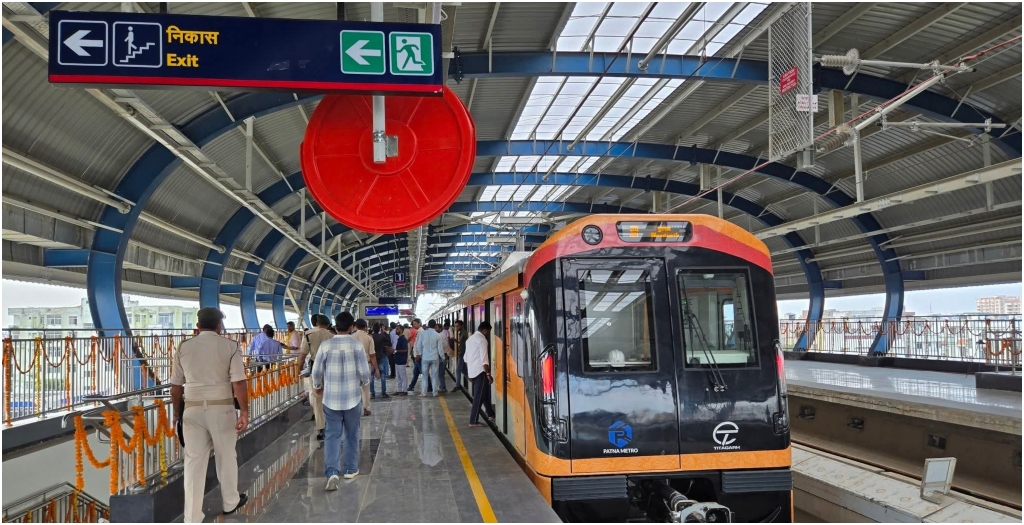
Patna: Patna Metro’s Khemnichak station is expected to open to passengers by the end of December, offering improved connectivity to residents of Khemnichak, Jaganpura and nearby areas. Construction is in its final stages, with the station expected to become the fifth operational station on the network.

Alongside metro expansion, the Road Construction Department has initiated work to widen the road between Dakbungalow Square and Rukanpura by up to three metres on both sides, aiming to ease congestion along Nehru Path.
The two projects are expected to improve public transport access and road movement in parts of the city, particularly during peak hours.

Khemnichak To Become Red-Blue Line Interchange
Khemnichak station will serve as an interchange between the Red and Blue lines, allowing passengers to switch routes without relying on road transport to connect different parts of the city.
Located between Bhootnath and Malahi Pakri stations, the station is currently functioning as a pass-through facility, with trains running through but passengers unable to board or alight because construction remains incomplete.
Patna Metro officials have said the station will open for passengers after the remaining construction work is completed.
Residents Near New Bypass To Benefit
The station is expected to provide relief to residents of Khemnichak, Jaganpura and neighbouring localities south of the New Bypass, who currently face difficulties accessing metro services.
Many commuters have to cross the bypass to reach Malahi Pakri station and then use auto-rickshaws or cycle-rickshaws for further travel. This adds to their commuting time and daily transport expenses.
Once Khemnichak becomes operational, residents will have direct access to metro services in their neighbourhood. The station is also expected to improve connectivity towards the ISBT bus terminal and Malahi Pakri area.
Metro Extension From Khemnichak To Mithapur
Work is also underway on the approximately 3km metro extension from Khemnichak to Mithapur. The stretch is expected to further expand Red Line connectivity, extending metro access to areas including Ramkrishna Nagar and Mithapur.
Residents in these localities currently depend largely on road transport for commuting to workplaces, educational institutions and markets. The extension could provide an alternative mode of transport and help reduce pressure on city roads once services begin.
Dakbungalow-Rukanpura Road To Be Widened
The Road Construction Department has started preliminary work on widening the stretch between Dakbungalow Square and Rukanpura to ease traffic congestion along Nehru Path.
Work has begun in areas where encroachments are absent and space is available. Near Patna Golf Club, workers are removing old drains, clearing the area and lifting footpath paver blocks as part of the initial construction activity.
The project is awaiting No Objection Certificates from the Forest Department, Patna Golf Club and Patna Municipal Corporation. Work is expected to gather pace after the required approvals are secured.
Project Target Set At Nine Months
The road is planned to be widened by around two to three metres on both sides, providing additional space for vehicular movement along the busy corridor.
The stretch is used daily by commuters travelling to offices, schools, colleges and hospitals. Traffic congestion frequently builds up during morning and evening rush hours, making the road-widening project significant for daily commuters.
The department has set a target of completing the project within nine months.
Metro Expansion And Road Improvements To Ease City Traffic
Patna’s transport infrastructure is being developed on two fronts, with metro expansion aimed at improving public transport connectivity and road widening intended to ease traffic movement.
The opening of Khemnichak station could provide residents near the New Bypass with better access to the metro network, while the Nehru Path widening project is expected to improve vehicle movement between Dakbungalow and Rukanpura.
The impact of both projects will depend on their timely completion and the extent to which commuters shift to public transport once the facilities become operational.