Patna: A major shift in Bihar’s political landscape appears imminent as projections suggest the Rashtriya Janata Dal (RJD) could lose all its seats in the Rajya Sabha by 2030. With the National Democratic Alliance (NDA) securing a clear majority in the 2025 assembly elections, the balance of power in the upper house is set to dramatically change.

Rajya Sabha representation is determined by the seat strength in the state assembly. A dominant NDA — driven by the BJP–JDU alliance — is poised to claim all five seats that will fall vacant in 2026 and another five in 2028, according to multiple political assessments.
If this occurs, the RJD, once central to Bihar politics under Lalu Prasad Yadav, could find itself absent from the Rajya Sabha for the first time in three decades.

A steady decline for the RJD
The RJD currently has five members in the Rajya Sabha, but each will complete their term over the next few years:
April 2026: Prem Chand Gupta and A.D. Singh
July 2028: Faiz Ahmed
April 2030: Manoj Kumar Jha and Sanjay Yadav
By 2030, unless electoral maths changes, all five positions could slip out of the party’s reach.
Analysts say this steady erosion is not just numerical. It symbolises the weakening of RJD-centric politics in a state where the party once set the tone for governance, alliances and caste mobilisation.
2026: A clean sweep likely for NDA
In 2026, the terms of five members end, including:
2 from JDU
1 from Rashtriya Lok Morcha
2 from RJD
Given the NDA’s overwhelming majority in the new assembly, political forecasts quoted by the Times of India indicate that all five seats are likely to go to the ruling alliance — a development that would remove RJD entirely from the upper house’s incoming cohort.
2028: Another round of losses for RJD
A second batch of five members will retire in 2028:
3 from BJP
1 from JDU
1 from RJD
If the assembly composition remains stable, NDA is expected to secure all five, leaving RJD without any representation and further eroding its national legislative footprint.
Could AIMIM offer a lifeline? Analysts doubt it
The AIMIM, with five MLAs in the new Bihar assembly, theoretically holds the numbers to help RJD secure one seat in 2030.
But experts say this scenario is improbable. Smaller parties typically align based on strategic, not ideological, interests — and unconditional AIMIM support to RJD appears unlikely.
As things stand, the RJD’s chances of returning to the Rajya Sabha in 2030 are described as “extremely slim.”
A symbolic turning point in Bihar politics
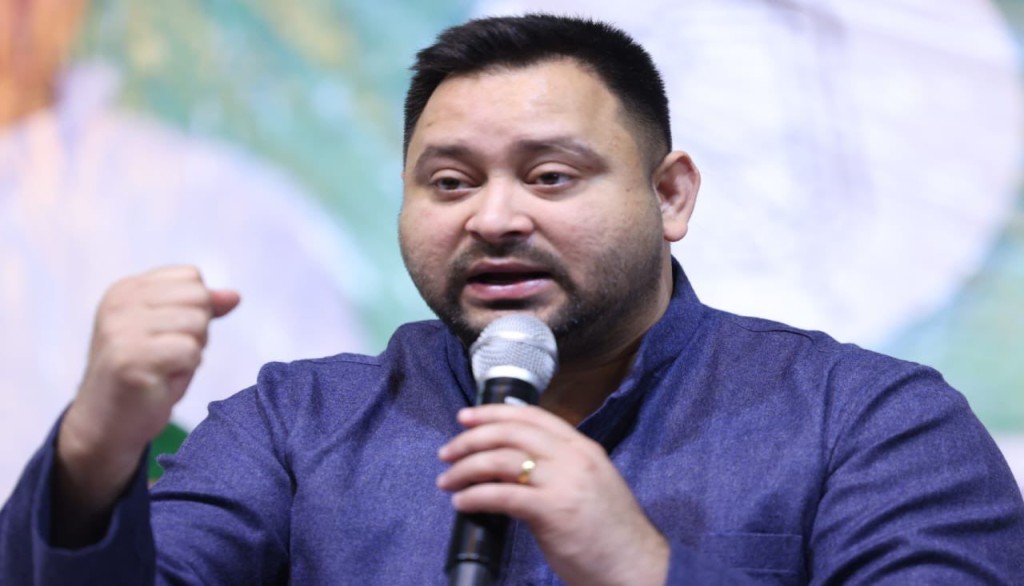
For a party that dominated Bihar’s power corridors for decades, the possibility of a zero-seat presence in the Rajya Sabha marks a dramatic political reversal. It highlights not only Tejashwi Yadav’s electoral setbacks but also the surging influence of the NDA, whose organisational strength now shapes both state and national outcomes.
Political analysts say the development underscores a broader transition: the shrinking role of RJD in Bihar’s legislative future and the consolidation of NDA’s authority.