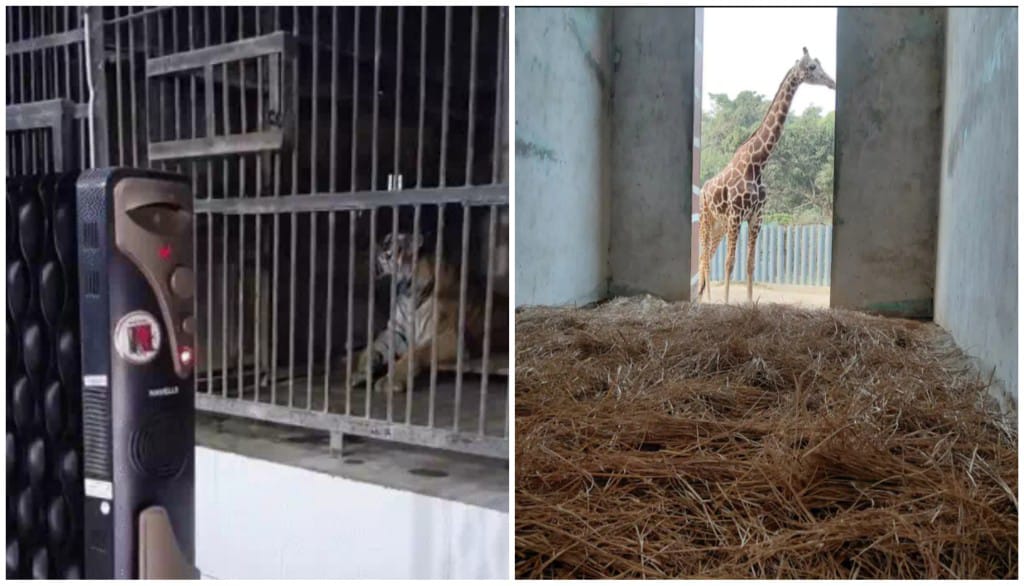
Patna: As winter settles over Bihar, Patna Zoo has begun an elaborate seasonal regimen to protect its animals from the severe cold. From heaters in lion and tiger enclosures to Chyawanprash for chimpanzees and bears, the zoo’s preparations reflect a meticulous effort to safeguard wildlife health during the chilliest months.

Heaters for Big Cats, Heat Lamps for Reptiles
Inside the carnivore enclosures, lions and tigers now rest on wooden platforms instead of cold floors, surrounded by straw-lined night houses. Zoo officials say the big cats spend their days in the sun, but rely on electric heaters during freezing nights. Their winter diet includes meat supplemented with eggs for added warmth.
Reptiles are particularly vulnerable to temperature changes, prompting the installation of high-voltage bulbs in snake enclosures. The cages have been insulated with sacks and cloth to stabilise heat levels, and blankets have also been provided where necessary.

Chyawanprash, Amla Jam and Special Diets
Beyond the big cats, other mammals are receiving tailored nutrition. Chimpanzees and bears are being served amla murabba and Chyawanprash, rich in immunity-boosting ingredients.
Open-field species such as giraffes and deer now have thick straw bedding to shield them from the cold ground. One young giraffe calf has even been fitted with a jute sack coat by its caretaker to keep it warm.
Birds Get Insulated Cages and Warm Food
Bird enclosures have been lined with cloth to reduce draughts, and each cage features a small mud-and-straw night shelter. Their winter diet includes fruits, chickpeas and peanuts, while peacocks are being fed eggs for added strength.
Warm Water and Salt for Hydration
The zoo has also arranged lukewarm drinking water for all animals, with small amounts of salt added to maintain electrolyte balance. Bathing water has likewise been warmed to ensure the animals do not risk cold stress.
A Comprehensive Winter Strategy
Zoo authorities say such preparations are essential to prevent illness during Bihar’s sharp temperature drops. The combination of heat sources, modified diets, insulated shelters and warm water forms part of an annual protocol designed to ensure the well-being of hundreds of animals housed at the facility.