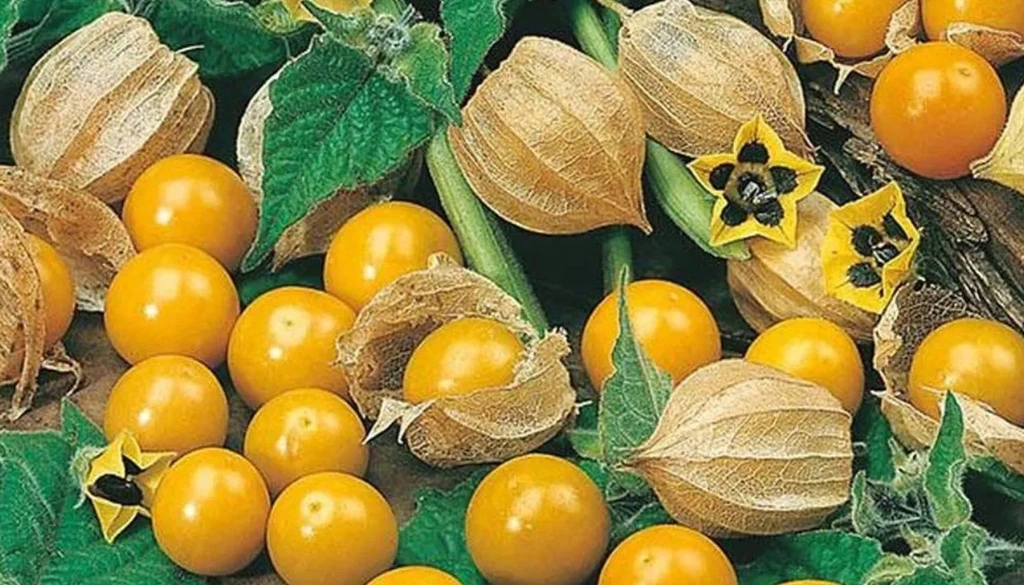
Patna/Nalanda: A South African fruit known locally as rasbhari — celebrated for its low calories and weight-loss benefits — is bringing a surge of prosperity to five villages in Bihar’s Nalanda district, where dozens of farmers have abandoned traditional crops in favour of this high-value produce.

Once known primarily for potatoes, onions and common vegetables, Nalanda is emerging as an unlikely hub of the fruit, also called makko, which is rich in antioxidants, vitamin C and polyphenols. Nutritionists say its high fibre content helps with satiety, digestion and blood-pressure control.
A new agricultural identity

The fruit is now being cultivated across the Silao block, around 7km from Bihar Sharif, in the villages of Sabbait, Rani Bigaha, Raghu Bigaha, Niyamatpur and Juafar. Farmers say the crop has reshaped household incomes.
“Here in Sabbait alone, 50–60 bighas are under makko cultivation,” said farmer Mohammad Shahjad. “We earn Rs. 40,000–50,000 per season, and traders take it to Kolkata, Hyderabad, Delhi and even abroad.”
Mohammad Ahmad, who has been growing the fruit for 15 years, added: “We have one acre under cultivation and make Rs 10,000–20,000 in profit. Traders export it to Gulf countries and Bangladesh.”
A single plant bears 5–10 fruits, and the crop matures within three to four months. Farmers say that one bigha costs around Rs. 40,000 to cultivate but can earn between Rs 1 lakh and Rs 1.5 lakh in returns.
Locally, rasbhari sells for Rs 100–150 per kilo. Exporters purchase at similar rates and ship it to neighbouring countries and Gulf markets, where it can fetch the equivalent of Rs. 250–1,200 per kilo. The fruit holds well for 3–5 days after harvest and gives 200–250kg per bigha, supporting an annual multimillion-rupee trade, farmers say. Soil in these villages — described as balsundari mitti — is considered ideal for cultivation.
A crop with a story
Rasbhari first arrived in Nalanda through Asgar Ali, a farmer from Dattasarai in Islampur, who brought seeds from Chhattisgarh and planted them on five katthas of land. His unexpectedly strong profits encouraged local adoption. Although Ali is no longer alive, farmers continue to credit him for the region’s shift toward the fruit.
How the fruit is grown
Farmers wash and dry the seeds before raising seedlings, which are transplanted in April–May. Compost, nitrogen, phosphorus and potash are commonly used, and the crop requires three to four rounds of irrigation. Because rasbhari plants attract heavy weed growth, farmers must till the soil several times. The fruit thrives in temperatures of 20–25°C, though it can tolerate colder climates. Wild animals often damage the crop, prompting farmers to take turns guarding fields at night.
Health benefits and uses
According to Dr Preeti, a fruit expert at the Horticulture College in Noorsarai, the fruit is a strong immunity booster. “Rasbhari is rich in vitamin A, vitamin C, calcium and phosphorus. It supports digestion and overall health.” The fruit is also used to make jam, jelly and sauces.
Expanding across regions
Beyond Nalanda, rasbhari is grown in parts of Buxar and Gaya, as well as in Rajasthan, Uttar Pradesh, Delhi and Chhattisgarh. Internationally, it is cultivated across North America, Russia, Poland, Serbia, Ukraine, Germany and other northern regions.