Gaya: A street vendor from eastern India has found himself at the centre of national attention after an impromptu visit by Narendra Modi turned his modest snack stall into an unlikely media story.

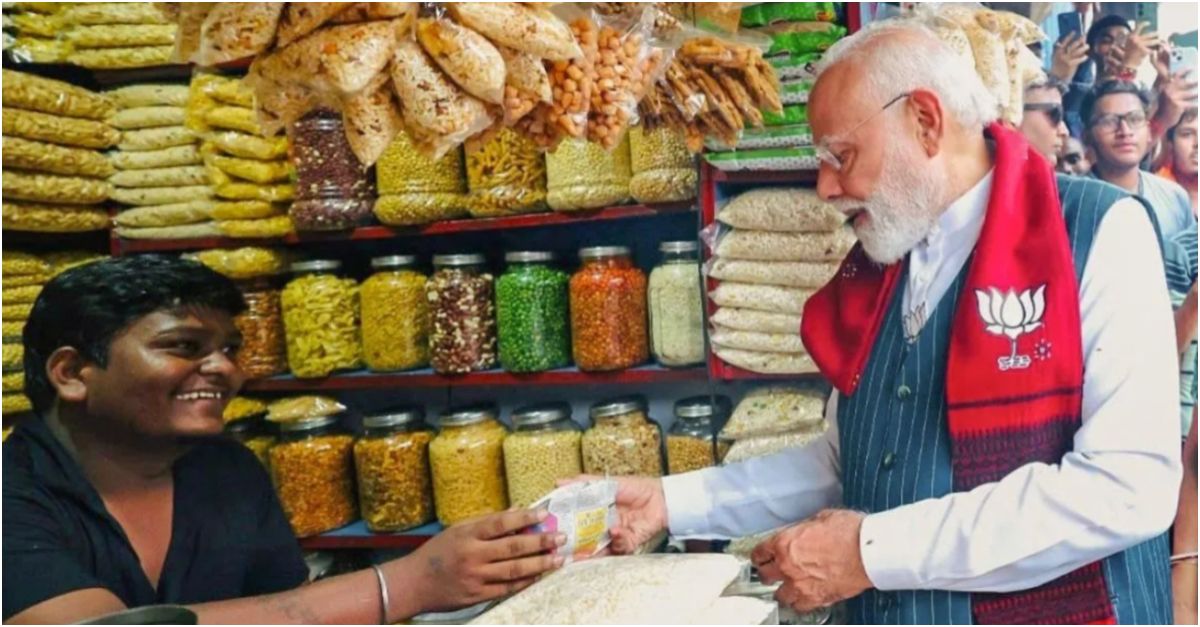
The prime minister, on a campaign visit, stopped to eat jhal muri—a popular spiced puffed rice snack—at a small roadside shop run by Vikram Saw, originally from Bihar’s Gaya district. Footage of the encounter, showing Modi seated casually at the stall and chatting with the vendor, quickly spread across social media and was picked up by news outlets in India and abroad.
According to local accounts, PM purchased a portion of the snack for Rs 10. Saw reportedly hesitated to accept payment, but the prime minister insisted, handing over the money himself. The brief exchange, widely shared online, has been framed by supporters as an example of Modi’s informal style of public engagement.

Saw, who hails from Manmadho village in Bihar, now runs his business in Jhargram, in the eastern state of West Bengal. His family has longstanding ties to the trade: his father, Uttam Saw, is said to have operated a similar stall in the region for three decades. Vikram later established his own shop around 10 years ago after assisting in the family business from a young age.
News of the visit was initially met with disbelief in Manmadho, where the family’s ancestral home remains. Residents said confirmation came only after images circulated on television and mobile phones, prompting celebrations in the village.
Local figures, including teachers and community representatives, described the moment as a source of pride, pointing to Saw’s background and years of work. Manmadho, a village of roughly 2,500 people, is known locally for its social cohesion and predominantly comprises members of historically marginalised communities.
While brief, the encounter has drawn attention not only to Saw’s story but also to the symbolism often attached to such moments in Indian political life—where gestures of accessibility and connection with ordinary citizens can resonate far beyond their immediate context.