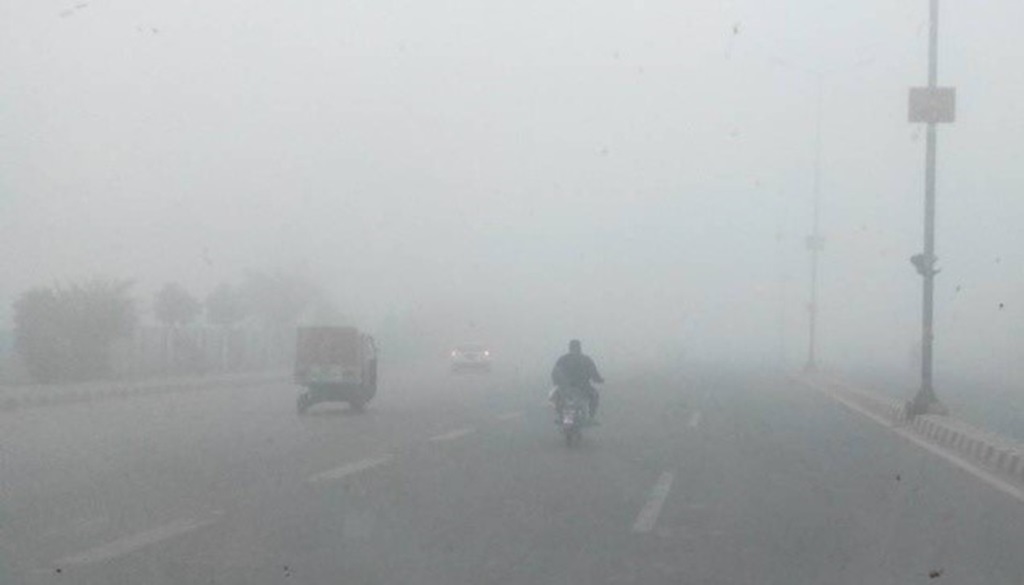
Patna: Bihar rang in the New Year amid biting cold conditions and dense fog, with chilly northwesterly winds intensifying the winter chill across the state. The Meteorological Centre has issued cold day and fog alerts for all 38 districts on January 1, warning residents to remain cautious as weather conditions disrupt daily life.

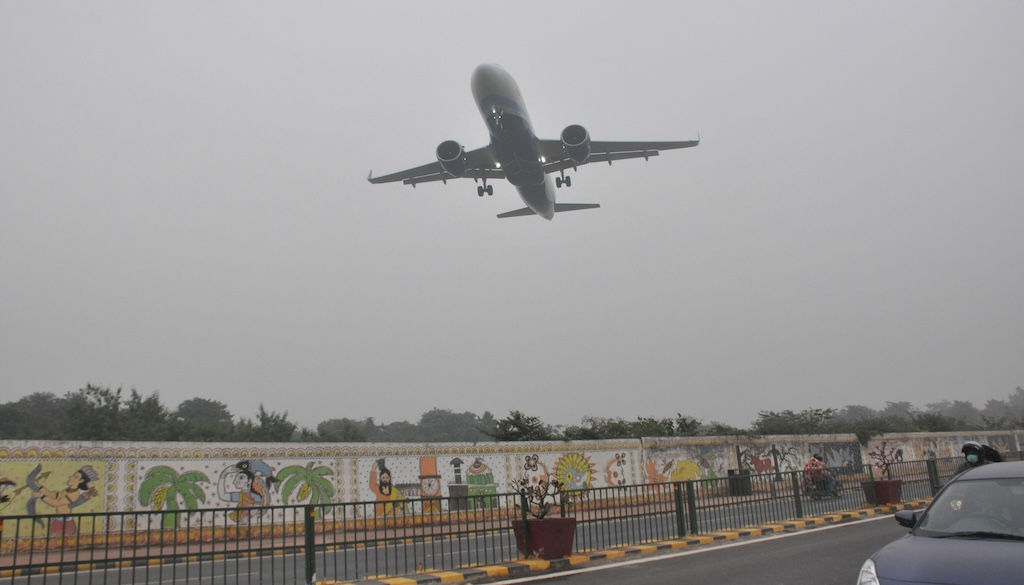
According to the weather department, 28 districts are under an orange alert for cold day conditions and dense fog, while 10 districts have been placed under a yellow alert, indicating comparatively lighter fog but continued cold winds. Poor visibility due to fog has been reported from several areas, affecting road traffic as well as rail and air operations.
The cold wave has prompted authorities to shut schools in multiple districts. In Saran, schools up to Class 10 will remain closed till January 4. In Darbhanga, Jehanabad and Nalanda, schools up to Class 8 have been closed till January 3 as a precautionary measure.

Transport Services Affected, Train Timings Revised
Dense fog has also led to changes in train schedules. From January 1, the timings of 89 trains, including Tejas Rajdhani and Garib Rath services operated by East Central Railway, have been revised. Tejas Rajdhani (12309) will now arrive at Danapur at 7:43 pm and depart at 7:45 pm. Garib Rath (13128) will depart Danapur at 7:08 pm instead of 7:20 pm. Patliputra–Mumbai Express (12142) will now leave at 10:40 am instead of 11:05 am, while Purva Express (12304) will depart Danapur at 6:24 am.
Why Is the Cold Intensifying Despite Sunshine?
Weather experts explained that even in areas receiving sunshine, the cold is being felt more sharply due to a phenomenon known as radiational cooling. With clear skies, heat escapes rapidly from the earth’s surface during the night, causing temperatures to drop significantly by morning. This has led to persistent cold conditions, particularly in southern Bihar, despite daytime sunshine.
Several districts continue to experience cold day conditions, with low daytime temperatures and chilling winds.
Weather Outlook
The Meteorological Department has forecast that cold conditions will persist across Bihar till January 5. Dense fog is likely during early mornings and nights in many districts, with cold day conditions continuing at several places. Slight relief is expected from January 6 onwards, as temperatures may gradually rise and fog intensity decrease.
On January 1, cold day conditions are expected mainly in northern districts, while fog is likely across north-central, north-western and southern regions. On January 2, dense fog may prevail at isolated locations in north-central and western Bihar.
Patna Weather Update
The state capital Patna is also witnessing severe cold. Dense fog is expected during morning hours, leading to reduced visibility. Although sunshine is likely during the day, cold winds will keep temperatures low. The minimum temperature is expected to remain below normal.
On Wednesday, Patna recorded a minimum temperature of 9.4 degrees Celsius, while the maximum temperature rose by two degrees to 18.3 degrees Celsius. Cold day conditions with dense fog were observed in north-western and southern Bihar, with temperatures in 13 cities dropping below 10 degrees Celsius.
Bihar Weather in 2025: A Year of Extremes
The year 2025 witnessed extreme weather conditions across Bihar. The state experienced seven days of heatwave and one day of severe heatwave, along with five days of warm night conditions. During winter, 13 cold days and six severe cold days were recorded.
During the southwest monsoon, Bihar received 686.3 mm of rainfall, 31 percent below normal. Despite the overall deficit, instances of extreme rainfall were reported, with heavy rainfall at 74 locations, very heavy rainfall at 60 locations, and extremely heavy rainfall at 24 locations.
Temperature variations remained unusual throughout the year. The highest maximum temperature of 44.6 degrees Celsius was recorded at Dehri on April 27, 2025, while the lowest minimum temperature of 5.0 degrees Celsius was recorded at Gaya on December 31, 2025. Lightning incidents were reported on 149 days, impacting public life, agriculture and infrastructure across the state.