Patna: The Bihar government is accelerating preparations to attract new industries, with agreements being signed with industrialists at the state level. To ensure uninterrupted and quality power supply to upcoming industrial units, the Energy Department has earmarked 838 megawatts (MW) of electricity.

Officials at the state power company headquarters said the peak power demand for 2026–27 is projected to reach 9,602 MW, while overall availability is estimated at 10,440 MW. The additional capacity is expected to support both existing consumption and the power needs of new industries.
Expansion of transmission network

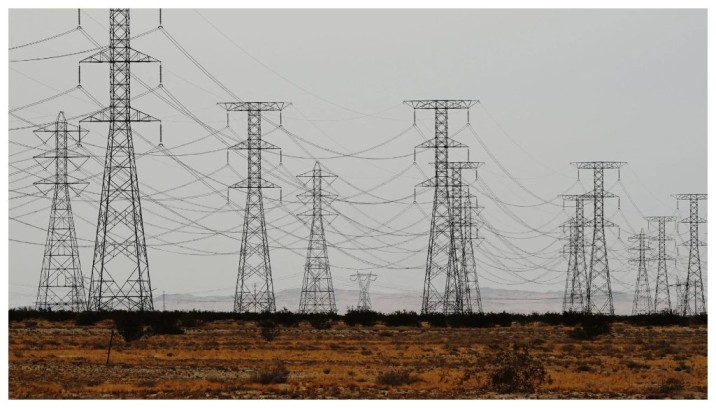
To provide smooth electricity supply to industrial clusters, the state is expanding its transmission and distribution infrastructure. Most large industries draw power at 33 kV and 11 kV levels, prompting the government to strengthen transmission network capacity.
At present, electricity is supplied through 175 grid substations connected by a transmission network spanning 21,165 circuit kilometres. To enhance capacity, construction of 16 new grid substations is underway. Additionally, work has begun on 2,369 circuit kilometres of new transmission lines to reinforce supply reliability.
Rising demand, higher availability
The state’s peak demand in 2025–26 stood at 8,752 MW. For 2026–27, the peak demand is expected to increase to 9,602 MW. In comparison, power availability was 9,237 MW in 2025–26 and has increased to 10,440 MW for the current year, creating a surplus cushion to meet industrial expansion.
Major share from NTPC and renewables
Bihar is receiving 6,996 MW of power from NTPC sources, including supply from the Chausa plant. In addition, 185 MW of solar power is being generated from Kajra in Lakhisarai. A 282 megawatt-hour battery energy storage system is also set to enhance grid stability and backup capacity.
Currently, around 66 percent of Bihar’s electricity comes from thermal power plants, 12 percent from hydropower, 16 percent from solar energy, 6 percent from wind energy, and 0.004 percent from bagasse and biomass sources.
Upcoming projects
Further capacity additions are in the pipeline. The second 660 MW unit of the Chausa power plant is expected to become operational soon. Construction is ongoing for three units under Nabinagar Stage-II, with a total capacity of 800 MW. Work at the Pirpainti power project is also progressing rapidly.
New grid substations under construction
Out of the 16 grid substations currently under construction, key locations include Majhaulia and Bagaha in West Champaran; Majorganj in Sitamarhi; Mahua in Vaishali; Mairwa in Siwan; Warisnagar and Sarairanjan in Samastipur; Chausa in Madhepura; Amarpur in Banka; Halsi and Barahiya in Lakhisarai; Roh in Nawada; Mathi in Muzaffarpur; Chandi in Nalanda; PMCH in Patna; and Chhapra in Saran.
Officials said the strengthening of power infrastructure is aimed at ensuring reliable electricity supply to support Bihar’s industrial growth and rising consumer demand in the coming years.