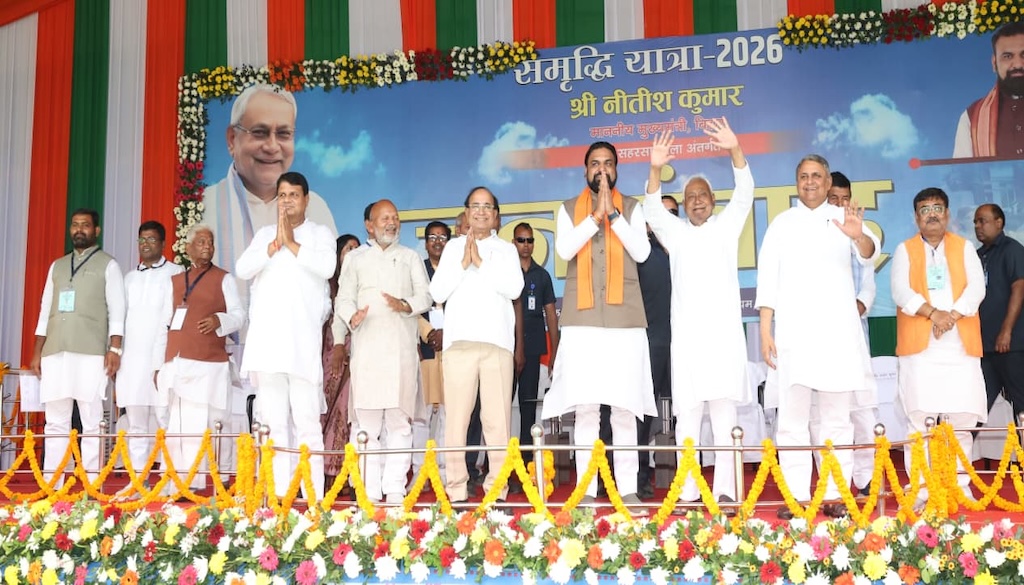
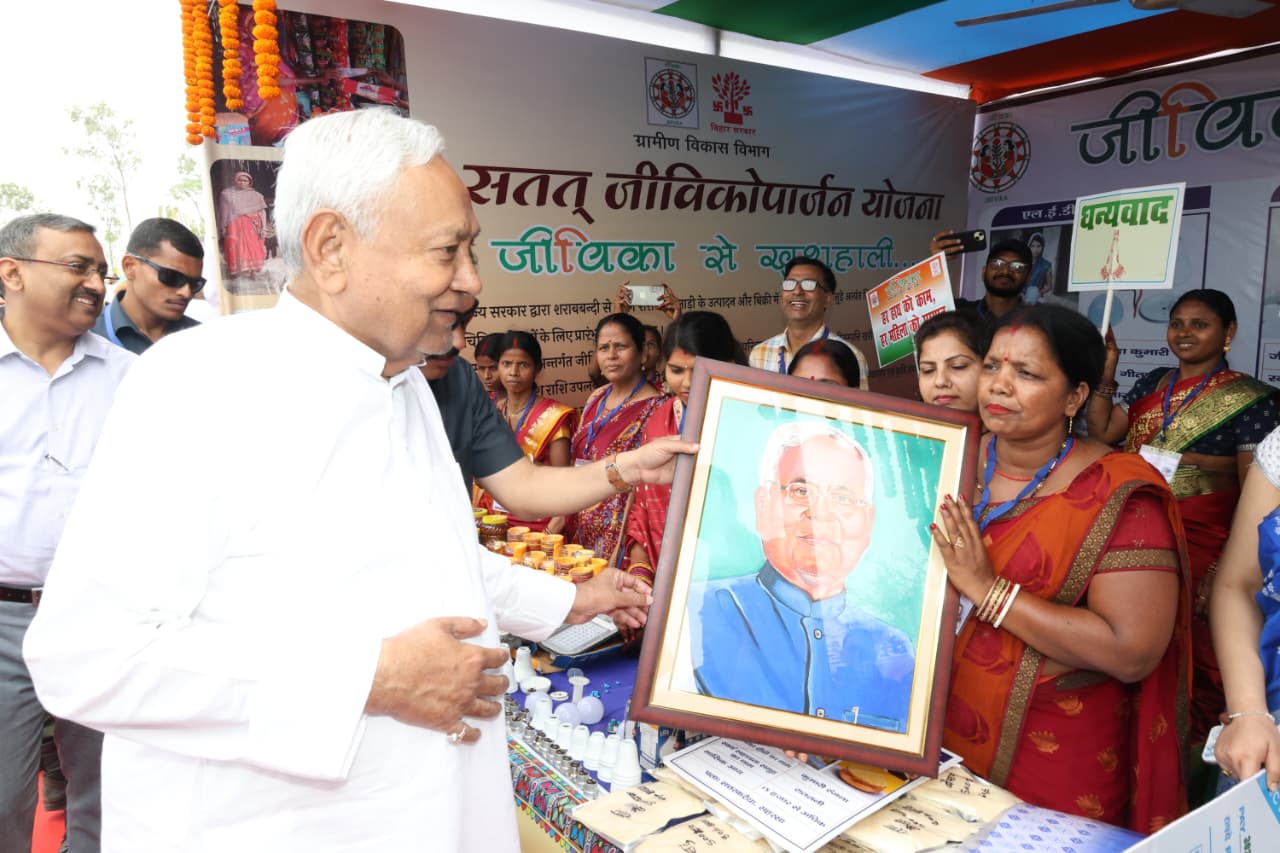
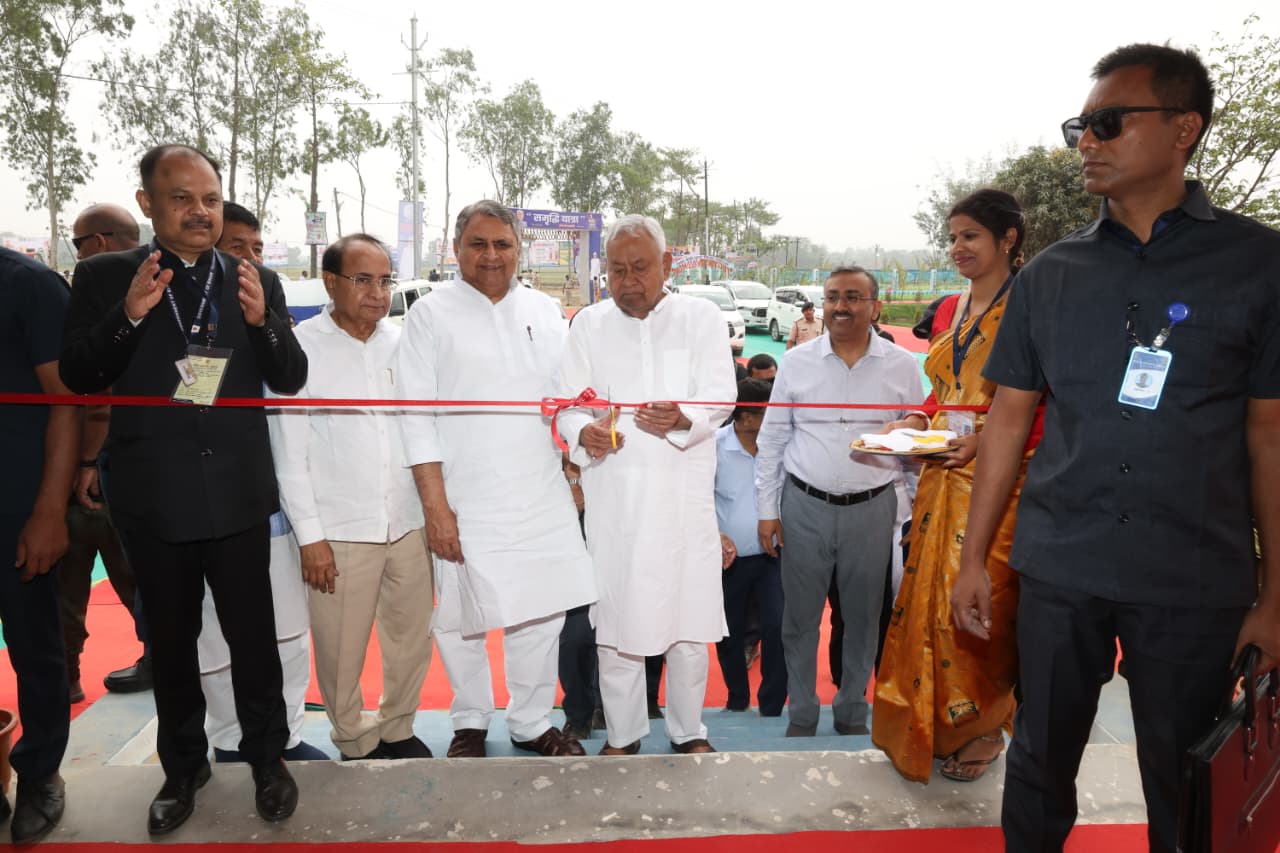
Saharsa/Patna: Chief minister Nitish Kumar visited Saharsa district on Friday as part of his ongoing Samriddhi Yatra, announcing development projects worth around Rs 500 crore for the region.

Addressing a public gathering during the visit, Nitish spoke about the changes in governance and infrastructure in Bihar since his government first came to power in 2005.
“Our government was formed in 2005. Do you remember the situation before that? People were afraid to step out after sunset,” he said. Nitish added that measures such as fencing graveyards helped reduce communal disputes in several areas.

He said development initiatives had been a priority since the beginning of his tenure and that the state had witnessed significant improvements in law and order.
“Since our government came to power, development work has been carried out continuously. There is no longer an atmosphere of fear,” the chief minister said.
Nitish also highlighted improvements in electricity supply in the state, noting that power connections had been extended to households across Bihar by 2018.
“Our government ensured electricity reached every household. Now the first 125 units of electricity are being provided free of cost,” he said.
Several senior leaders accompanied the chief minister during the visit, including deputy chief minister Samrat Chaudhary and minister Vijay Chaudhary.
Speaking at the event, Samrat Chaudhary said the tender for the Saharsa airport project would be issued within the next month.
He also highlighted ongoing efforts to expand the road network and strengthen connectivity in the region.
“People from Saharsa can now reach Patna in three to four hours because of improved roads,” he said, adding that work was underway on new routes linking areas such as Khagaria and Mansi to Saharsa.
Chaudhary also referred to infrastructure development in riverine areas such as Simri Bakhtiyarpur, where bridges are being constructed to improve connectivity.
He said Bihar’s road network had expanded significantly over the past two decades.
“Earlier the state had around 6,000 kilometres of roads. Today the network has grown to about 140,000 kilometres, which reflects the progress achieved under the chief minister’s leadership,” he said.