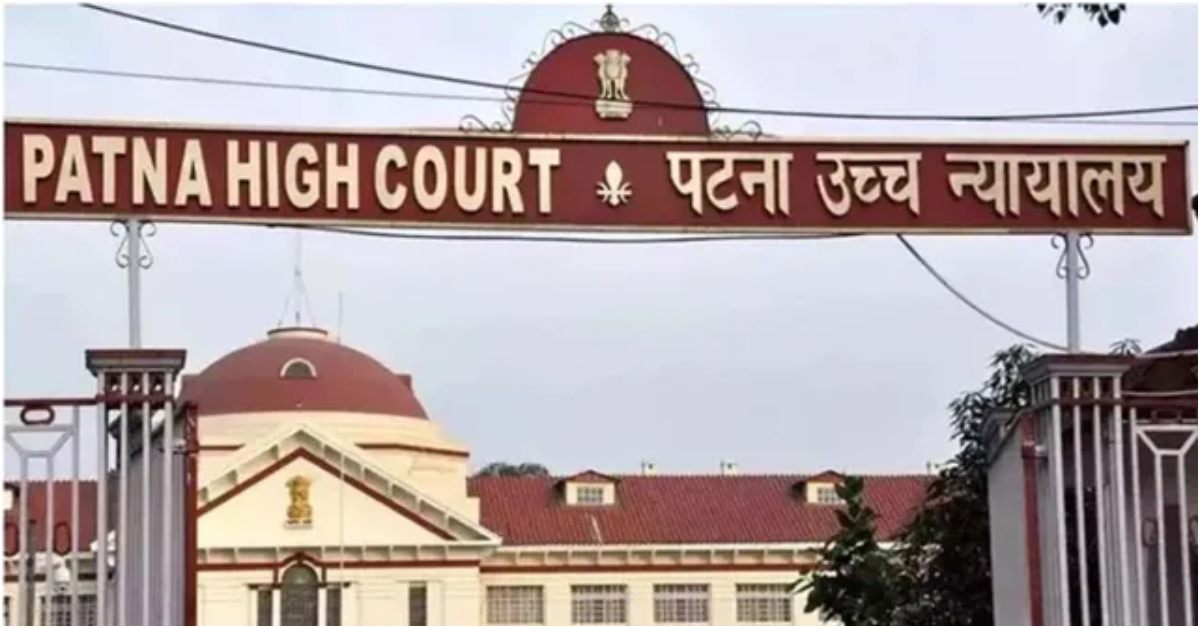
Patna: The Patna High Court has directed authorities to prepare an effective action plan to curb rising air and noise pollution in the Bihar capital, expressing concern over deteriorating air quality and poor enforcement of existing regulations.

Hearing a petition filed by Surendra Prasad, a single-judge bench led by Justice Rajiv Roy criticised lapses in monitoring and enforcement while reviewing reports submitted by local police stations. The court noted that reports filed by the station house officers of Gandhi Maidan, Pirbahore and Kadamkuan police stations failed to clearly state what action had been taken against DJs accused of causing excessive noise pollution.
It also observed that the station house officers of Rupaspur and Buddha Colony police stations had failed to submit their reports altogether, despite an earlier court order.

The bench directed the three police stations to file fresh reports detailing the measures taken to control noise pollution between November 15 and March 13, 2026. Officers from Rupaspur and Buddha Colony police stations have been ordered to appear in person before the court on April 10 to explain their failure to comply with the directive.
During the hearing, the court acknowledged the steps taken by the sub-divisional magistrate of Masaurhi and the senior superintendent of police in Patna to address noise pollution complaints. Government counsel Prashant Pratap informed the court that a helpline number – 0612-4575621 – had been launched to register complaints related to noise pollution, and that marriage halls and event venues had been asked to comply with provisions of the Bihar Loudspeaker Act, 1955.
Senior advocate Rajesh Singh, representing the Bihar State Pollution Control Board, told the court that the city’s air quality index data is currently being collected from only three locations: Danapur, the Planetarium and Patliputra.
The court directed the pollution control board to impose fines for violations related to both air and noise pollution, making it clear that penalties would apply equally to government agencies and private individuals. It also ordered strict compliance with directions issued by the National Green Tribunal and the Supreme Court of India banning the burning of garbage, dry leaves and paper in public spaces.
Neeraj Narayan, member secretary of the pollution control board, appeared before the court and was instructed to convene a meeting with officials and lawyers involved in the case to formulate a comprehensive action plan to control pollution in Patna. The plan is expected to be submitted at the next hearing, with the court emphasising that the measures should aim to develop the city as a model for pollution control.