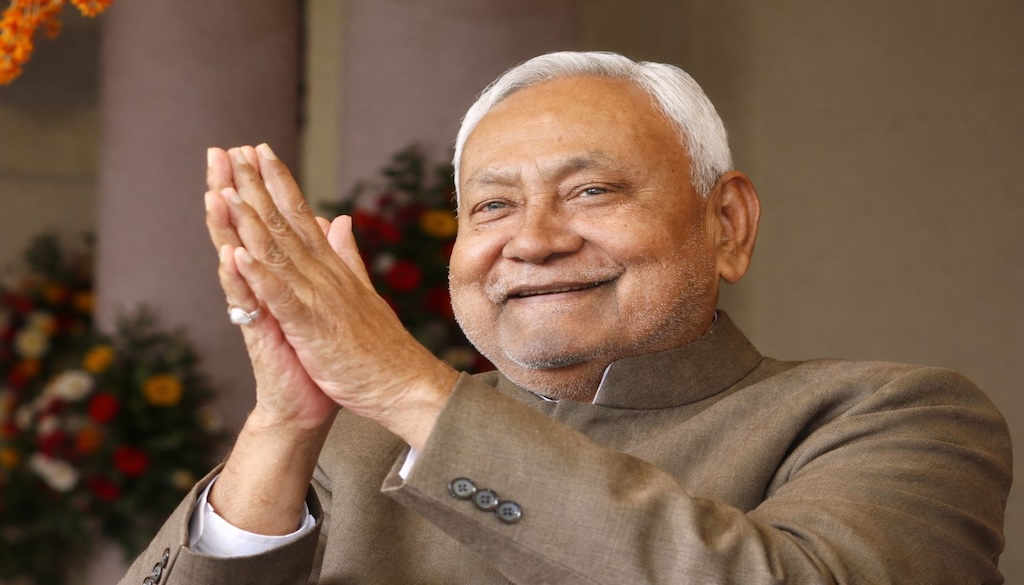
Patna: The possible shift of Nitish Kumar to national politics could mark a significant turning point in Bihar’s political landscape. The veteran leader, who has shaped the state’s politics for over two decades with a governance and social balance narrative, is widely expected to move to Delhi through the Rajya Sabha.

If that happens, the change may go beyond a leadership transition and could affect the ideological direction, policies and power equations in the state.
Here are five major changes that political observers say could follow.

1. Bihar may get its first BJP chief minister
If Nitish Kumar vacates the chief minister’s post after entering the Rajya Sabha, Bihar could see its first chief minister from the Bharatiya Janata Party since the party’s formation more than four decades ago.
Despite being a major political force in the state, the BJP has so far governed Bihar largely in alliance with the Janata Dal (United).
Several BJP leaders are being discussed as possible chief ministerial contenders, including:
-
Samrat Choudhary
-
Vijay Kumar Sinha
-
Nityanand Rai
-
Mangal Pandey
-
Janak Ram
Political analysts say the BJP leadership may prefer a leader from its own ranks rather than supporting another JD(U) candidate.
2. Shift from caste politics to stronger religious polarisation
Nitish Kumar has long positioned himself as a leader focused on governance, development and social justice, often balancing caste equations in Bihar politics.
His departure could change that balance. Under BJP leadership, issues such as cultural identity, religion and the politics associated with the Ram Mandir could gain greater prominence.
Observers say the state’s political discourse may shift from traditional caste alliances toward sharper ideological and religious polarisation.
3. Liquor prohibition law may be reviewed
Another major policy that could come under review is Bihar’s prohibition law introduced in 2016 by the Nitish Kumar government.
Senior leaders, including deputy chief minister Samrat Choudhary, have publicly discussed the economic costs of the law. According to government estimates cited in political debates, the ban results in revenue losses worth tens of thousands of crores annually.
Allies in the ruling coalition have also called for reassessing the law, suggesting it could be relaxed or amended if the political leadership changes.
4. JD(U) may face a leadership vacuum
The future of the Janata Dal (United) could become uncertain if Nitish Kumar shifts to national politics.
His son Nishant Kumar has recently stepped into public life, but analysts say the party still depends heavily on Nitish Kumar’s personal image and political authority.
Without his direct leadership, the party could face internal challenges and a possible shift of legislators toward stronger alliances.
5. Opportunity for Tejashwi Yadav and Prashant Kishor
Nitish Kumar has remained a central figure in Bihar politics for more than two decades, often acting as the decisive third force between rival blocs.
If he moves to Delhi, opposition leaders such as Tejashwi Yadav and political strategist-turned-leader Prashant Kishor could gain more political space.
Experts say sections of Nitish Kumar’s traditional support base — including backward communities and some minority groups — may realign depending on how the political transition unfolds.
A turning point for Bihar politics?
While the move to Delhi has not yet fully reshaped the political order, many analysts see it as a potential turning point. Whether the transition strengthens the BJP or opens the door for new opposition forces will likely depend on how alliances and leadership evolve in the coming months.