Madhubani/Patna: The Archaeological Survey of India (ASI) has begun a new phase of excavation at Balirajgarh, an ancient archaeological site in Bihar’s Madhubani district, officials said on Saturday.

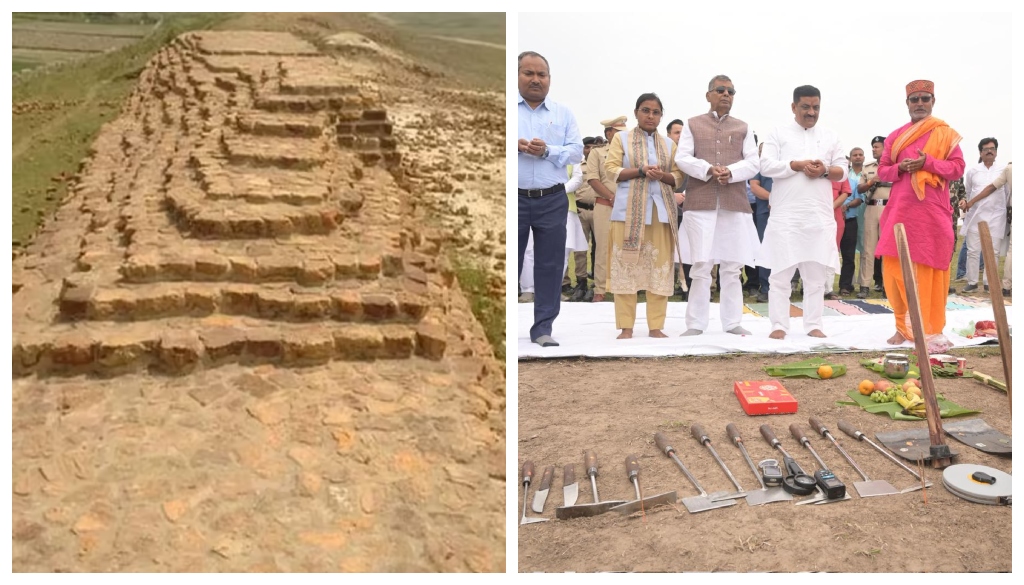
The excavation work at the site, located in the Babubarhi block about 35km from the district headquarters, was formally inaugurated by Rajya Sabha MP Sanjay Kumar Jha, Jhanjharpur MP Ram Preet Mandal and Babubarhi MLA Meena Kamat.
Rituals with Vedic chants were performed before the start of the excavation, after which the representatives symbolically initiated the work. District officials, including the district magistrate Anand Sharma and superintendent of police Yogendra Kumar, were also present.

Balirajgarh is believed to have been the capital of the Iron Age Videha civilisation and is known for its massive fortification walls dating to the Shunga, Kushan and Gupta periods.
The site was first identified in 1884 by George Abraham Grierson, then serving as a sub-divisional magistrate in Madhubani. It was declared a site of national importance by the ASI in 1938 under the Ancient Monuments Preservation Act.
Excavations have previously been carried out in phases between 1962 and 2014, though the last phase was halted midway due to environmental constraints and a high water table.
Inaugurated the excavation work at the protected site of Balirajgarh, undertaken by the Archaeological Survey of India, Patna Circle.
This is an important step towards uncovering the rich historical heritage of Mithila and preserving it for future generations.@ASIGoI… pic.twitter.com/0GNJWi2I76
— Sanjay Kumar Jha (@SanjayJhaBihar) March 28, 2026
Speaking at the event, Sanjay Jha described the excavation as a significant step towards highlighting Mithila’s historical and cultural heritage on a wider stage. He said findings from the site could provide new insights into the region’s past and contribute to academic research.
Officials said the renewed excavation is also expected to boost tourism potential in the area and generate economic opportunities for local communities.
The start of the excavation has generated enthusiasm among residents, with authorities expressing hope that the project will bring renewed attention to one of Bihar’s key archaeological sites.