New Delhi: India and Nepal have begun a joint survey of their international border in Bihar, in a coordinated effort to prevent encroachment and curb infiltration.

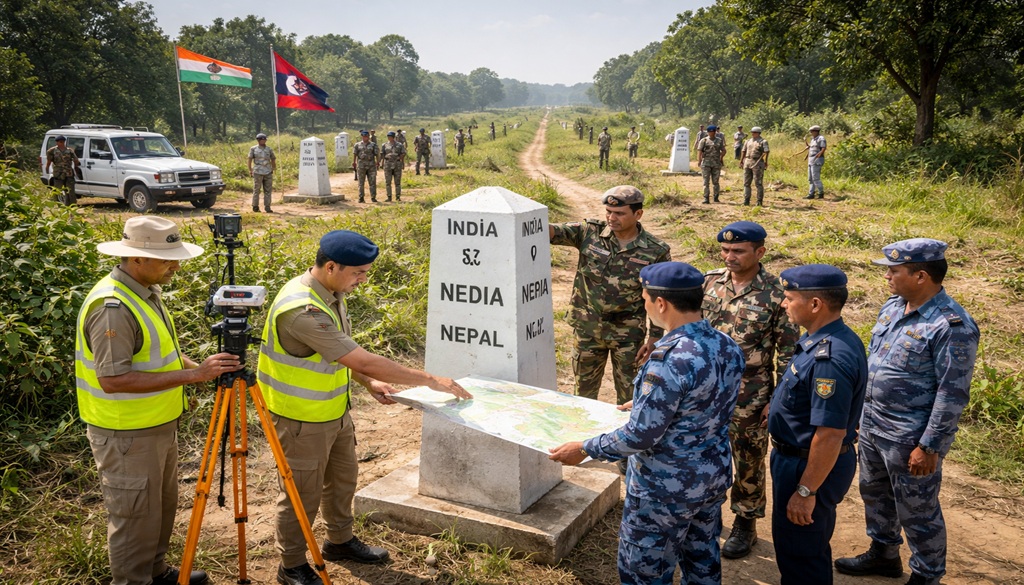
A joint Field Survey Team (FST), comprising officials from the Survey of India and the Survey of Nepal, started work on Saturday to assess the condition of boundary demarcation pillars and verify their positions in accordance with official standards.
The exercise is being supported by personnel from the Sashastra Seema Bal and Bihar Police on the Indian side. Authorities said the move is expected to strengthen surveillance and reduce illegal activities along the border.

Alongside the survey, encroachments in border districts are being removed and no man’s land is being cleared to preserve demarcation markers and ensure proper visibility of boundary lines.
Officials said the initiative is part of a broader plan approved for 2025-26 and is likely to take about a month to complete. The survey will cover border areas in districts including Kishanganj, Araria, Supaul, Madhubani, Sitamarhi, East Champaran and West Champaran.
The team is expected to submit an interim report within 15 days, which will guide further action and development measures in the region.
Experts said the joint effort would help both countries improve border management and enable security agencies to act more effectively against infiltration and cross-border crime.
The project also aims to accelerate the maintenance and reconstruction of border pillars, of which there are around 5,321 along the India-Nepal boundary.
The initiative follows a coordination meeting held on March 24 in Raxaul, East Champaran, where officials from both countries finalised the survey strategy. The meeting was chaired by district magistrate Saurabh Jorwal and included representatives from survey agencies, district administrations and security forces.
Authorities said continuous monitoring is underway and further steps will be taken after the final report is submitted, with a focus on strengthening security, improving land management and enhancing cooperation between the two countries.