Patna: India has stepped up efforts to identify and deport undocumented Bangladeshis and Rohingyas residing in Bihar, following renewed directives from the Union home ministry after political developments in Bangladesh.

According to officials, preparations are under way across Bihar to locate individuals living in the state without legal documentation. The move comes after a previous order from the Union home ministry, which has now gained urgency following a recent review of border district demographics.
Mohammad Shadab Mustaq, additional secretary in Bihar’s home department, has written to all district magistrates, senior superintendents of police (SSPs) and superintendents of police (SPs), instructing them to begin identification procedures. The directive emphasises coordination across districts to compile data on undocumented residents.

Authorities have been told to identify Bangladeshis and Rohingyas residing illegally and facilitate their deportation to Bangladesh and Myanmar. After identification, individuals will be handed over to border authorities of the respective countries.
The development follows a review reportedly conducted last month by the Union home minister, Amit Shah, focusing on demographic changes in Bihar’s border districts. Officials say the latest measures are part of a broader response to those findings.
Districts including Kishanganj, Araria, Purnia and Katihar have seen the most significant demographic shifts, which authorities attribute to undocumented migration. Smaller populations have also been reported in other parts of the state.
Officials estimate that between 2.5 lakh and 3 lakh undocumented Bangladeshis and Rohingyas may be living in Bihar, though these figures have not been independently verified. Despite similar directives issued last year, little progress had been made until recently, according to government sources.
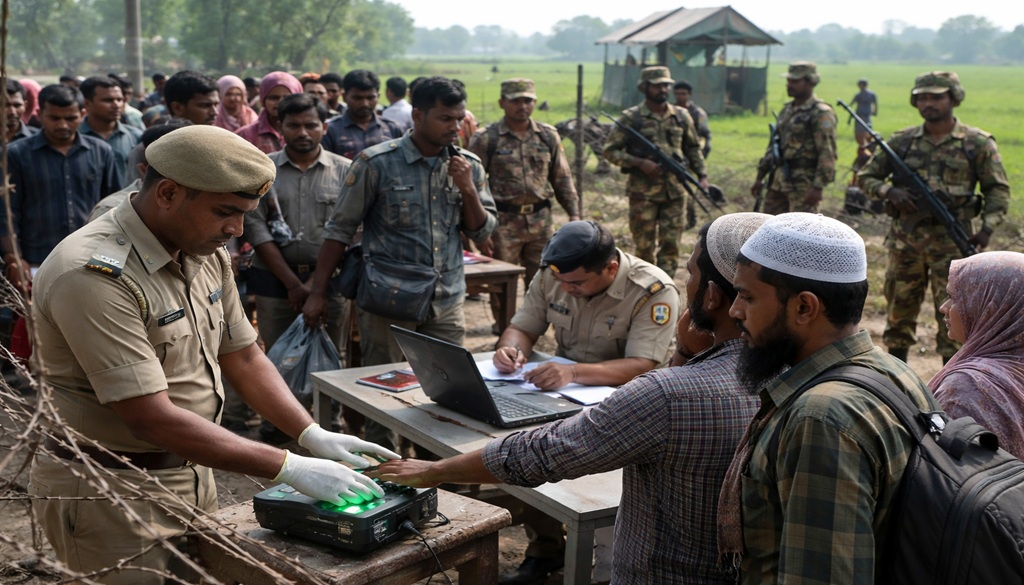
Under the new measures, biometric data of those identified for deportation will be collected and uploaded to a central database maintained by the home ministry. Authorities say this step is intended to streamline identification and prevent re-entry, though it may also complicate repatriation processes.
Special task forces are expected to be established in each district to oversee the identification and deportation process. These teams will submit monthly progress reports to the Union home ministry as part of ongoing monitoring.