Patna: The state capital is currently facing a serious dust pollution problem as multiple construction projects across the city continue without adequate compliance with environmental norms. The rising level of dust particles in the air has begun affecting public health, raising concerns among residents and experts.

Large-scale infrastructure works such as road construction, drainage projects, building activities and other civic works are underway simultaneously in several parts of Patna. However, many construction sites are reportedly ignoring basic dust-control measures such as installing green nets, sprinkling water regularly and covering construction debris.
As a result, dust clouds are frequently seen spreading to nearby residential areas, especially during strong winds. According to guidelines issued by the Bihar State Pollution Control Board, construction agencies are required to take adequate measures to prevent dust emissions at work sites. Despite these regulations, responsible agencies are often accused of failing to implement them effectively.

Delays in construction projects are also contributing to the worsening situation. Construction sites left open for long periods become continuous sources of dust pollution. In several parts of the city, including Patliputra Industrial Area and Rajiv Nagar, road and drainage construction work has remained incomplete for months. This has not only disrupted traffic movement but has also exposed nearby residents to constant dust.
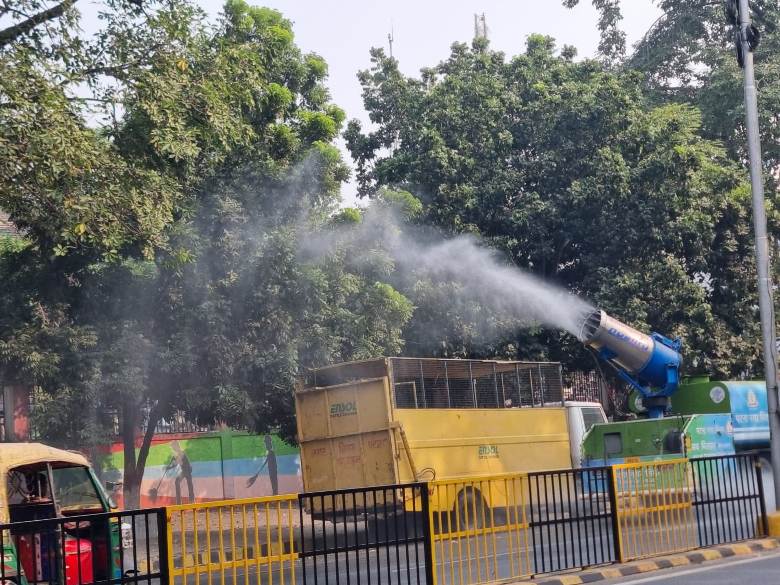
The Patna Municipal Corporation has been sprinkling water to control dust, but officials admit that the effort remains limited. Water spraying is mostly carried out in residential areas, while major roads, busy intersections and construction zones often receive little or no such treatment. Experts say that regular and uniform water spraying across the city is essential to effectively control dust pollution.
Dr Manish Shankar, Head of the Department and a pulmonologist at IGIMS, warned that fine dust particles present in the air can penetrate deep into the lungs and increase the risk of respiratory illnesses, allergies, asthma and heart-related diseases. He said the situation is particularly dangerous for children, elderly people and those already suffering from health conditions.
Experts also point to a lack of coordination among government agencies as a major factor behind the problem. While several directives are issued at the administrative level to control air pollution, their implementation on the ground remains weak. The municipal corporation, pollution control board and construction agencies often fail to work in coordination, and violations rarely lead to strict action.
An activist said that a multi-level strategy is required to tackle the growing dust pollution problem. This includes regular monitoring of construction sites, strict enforcement of environmental norms and strong action against violators.
He also suggested measures such as regular road cleaning, mechanised road sweeping, development of green belts and better traffic management. Experts have also recommended strengthening the city’s real-time air quality monitoring system to track pollution levels more effectively.
Under existing regulations, construction sites must be covered from all sides, debris should be properly covered and dumped only at designated locations, water should be sprinkled regularly, and construction materials must be transported in covered vehicles. Any soil or debris spilled on roads must be cleared immediately.
To improve air quality, the Patna Municipal Corporation is spending Rs 30.39 crore under the 15th Finance Commission grant for the financial year 2024–25. The funds will be used for several initiatives aimed at reducing dust pollution and improving the city’s environment.
Of the total amount, Rs 12 crore will be spent on daily mechanised dust removal from four-lane roads. Around Rs 10 crore will be used for dense plantation using the Miyawaki technique along the Ganga riverbank and around Gandhi Maidan. Another Rs 5 crore will be allocated for installing paver blocks on roadside open soil patches to prevent dust formation.
Additionally, Rs 3 crore will be used to install pollution control devices at crematoriums to reduce smoke emissions, while Rs 39 lakh will be spent on improving the reuse and processing system for construction and demolition waste.
Experts say strict enforcement of environmental norms, timely completion of construction projects and greater public awareness will be essential to bring Patna’s growing dust pollution problem under control.