
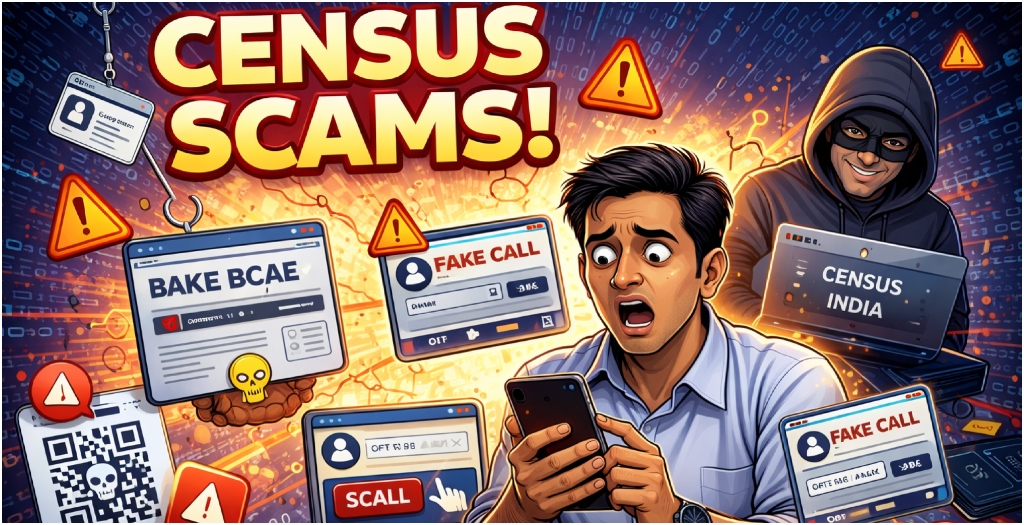
Patna: As the census process gathers pace across India, authorities are warning citizens to stay alert against a sharp rise in cyber fraud linked to the exercise. While the census is meant to collect basic demographic information about households, scammers are misusing it as a cover to deceive people. In recent weeks, several cases have been reported where individuals were targeted through fake phone calls, suspicious links and fraudulent websites, often leading to financial losses.

One of the most common methods used by fraudsters is the creation of fake websites that closely resemble official government portals. These websites look convincing, with similar designs and logos, making it difficult for ordinary users to tell the difference. When people enter their personal information on such platforms, it is directly accessed by scammers. This can later be used for identity theft or to gain access to bank accounts, putting victims at serious risk.
Another growing concern is fraud through phone calls and one-time passwords, or OTPs. Many people have reported receiving calls claiming that their census details need verification. The callers then ask for an OTP to “complete” the process. Officials have clearly stated that no OTP is required for the census, and any such request should be treated as a scam. Sharing an OTP can give fraudsters direct access to banking or other secure accounts.

Scammers are also trying to trick people into sharing bank details or scanning QR codes, claiming it is part of the census procedure. However, the census has nothing to do with financial information. Authorities have stressed that no official will ever ask for bank account numbers, card details or payments. In addition, people are being sent links through SMS and messaging apps that claim to lead to census forms. Clicking on these links can install harmful software on phones or steal personal data.
Officials have urged citizens to remain cautious and verify any information related to the census. Genuine government websites will always end with “.gov.in”, and any communication asking for money, OTPs or banking details should be ignored. Experts say that simple awareness and careful online behaviour can go a long way in preventing such frauds, especially at a time when cybercriminals are becoming increasingly sophisticated.