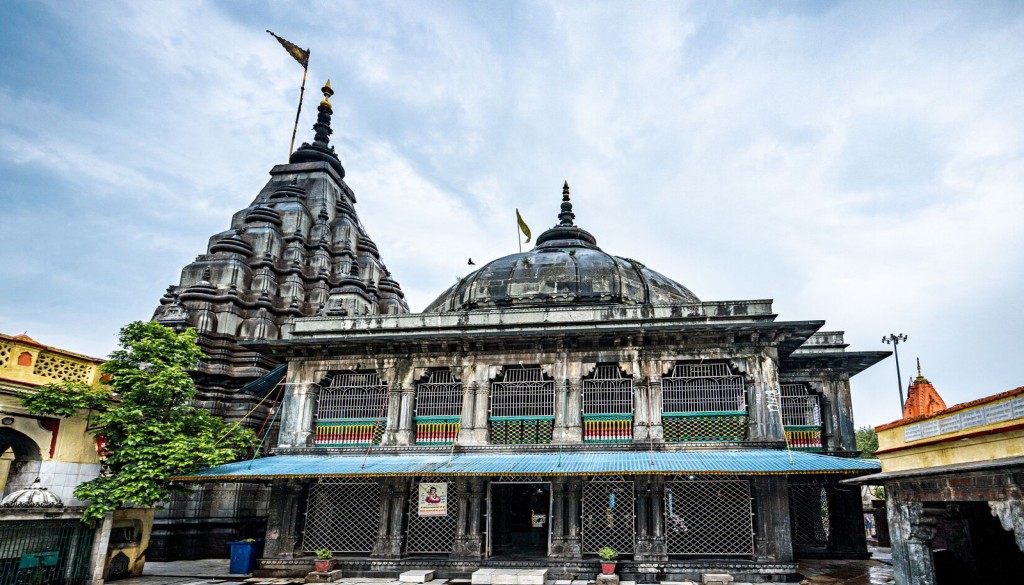
Gaya: Opposition to the proposed Vishnupad Corridor project in GayaJi has intensified, with members of the Gayapal Panda community, temple authorities and local residents expressing concerns over the possible impact on religious traditions, heritage structures and livelihoods.

The corridor project, planned on the lines of the Kashi Vishwanath Corridor in Varanasi, has triggered protests from stakeholders associated with the Vishnupad temple and the Falgu riverbank area.
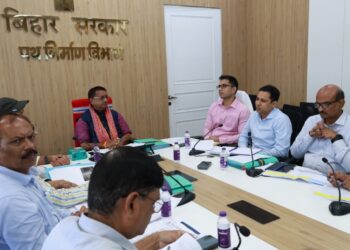
On Monday, the Shri Vishnupad Kshetriya Jan Jagran Manch organised a press conference at the Vishnupad guest house, where speakers criticised the proposed redevelopment plan. Representatives of the Shri Vishnupad Prabandhkarini Samiti and members of the local community also attended the press meet.

Concerns over sacred sites
Members of the Gayapal Panda community said the vedis, or sacred platforms, located around the Vishnupad temple and along the Falgu river are central to rituals such as pinddaan and shraddh performed by pilgrims visiting Gaya.
Protesters alleged that the proposed plan includes the relocation or removal of several historic vedis and dharamshalas, which they said could affect the religious character of the pilgrimage
Sources said a gazette notification related to the corridor project is also likely to be issued shortly, giving the plan formal shape. However, the process of marking houses has triggered confusion and concern among local residents.
People living in Karsilli locality, situated west of the Vishnupad temple, appear particularly worried. Residents said the administration has not yet made any detailed guideline or map public, making it unclear how far the corridor will extend and which properties are likely to be affected.
Locals questioned the decision to begin identifying houses without first issuing clear directions regarding the project. “The administration should have released a detailed map and guidelines before starting the marking process. This would have helped affected residents understand the situation and prepare accordingly,” a resident said.
Uncertainty also prevails over compensation and rehabilitation measures. Many residents said they are unsure whether their houses will come under the project area. Some also expressed apprehension over the compensation package and rehabilitation arrangements in case their properties are acquired.
The absence of official information has further added to anxiety among residents. While the administration has not yet shared detailed information on the project, sources said all necessary procedures related to the corridor are being completed in phases.
Officials believe the situation may become clearer after the gazette notification is issued. While the proposed Vishnupad Corridor has raised hopes of development in the historic area, the lack of clear guidelines has also created an atmosphere of uncertainty and concern among residents.
Temple committee withdraws support
Shambhu Lal Vitthal, president of the Shri Vishnupad Prabandhkarini Samiti, said the committee had initially supported the corridor proposal. However, he said concerns had emerged regarding its potential impact on the cultural practices and heritage of the Gayapal Panda community.
He urged the administration to reconsider the project in its present form.
Fears of displacement
Swami Shri Venkatesh Prapannacharya Ji Maharaj, patron of the forum and head of the Ramanuj Math, claimed that around 694 old structures within a proposed 200-metre radius could be affected by the redevelopment.
He said the move could impact families from the Panda community who have lived in the area for generations and called for reducing the project’s scope to minimise displacement and damage to religious properties.
Ramesh Lal Gayab, president of the forum, alleged that the corridor boundary was initially proposed at 75 metres and later expanded to 200 metres. He also claimed that local stakeholders were not adequately consulted and said there was no clear rehabilitation policy for affected residents.
Debate over religious identity and tourism
Opponents of the project argued that Gaya should primarily be viewed as a centre of spiritual and ancestral rituals rather than a tourism-focused destination.
They referred to religious traditions associated with pind daan and cited references to figures such as Lord Ram, Lord Balaram and Chaitanya Mahaprabhu visiting Gaya for ancestral rites.
Earlier disputes with state government
The latest disagreement adds to a long-standing dispute between the Gayapal Panda community and the Bihar government over the management of the Vishnupad temple.
Earlier, members of the Panda community had opposed the state government’s decision to bring the temple under the Bihar State Religious Trust Board (BSRTB), claiming the temple was the private property of the Panda samaj.
The matter was challenged in a Gaya court, which ruled in favour of the BSRTB. The Patna high court later upheld the lower court’s decision after hearing an appeal filed by representatives of the Panda community.
Warning of further protests
Vinod Lal Meharwar, secretary of the forum, said the Gayapal Brahmin community had preserved the region’s religious traditions for generations. He warned that protests would intensify if measures were not taken to safeguard cultural and religious sites linked to the Vishnupad area.
Several local religious and community representatives, including advocate Shakti Sunil and Dr Anil Kumar Gupta, were present during the press conference.