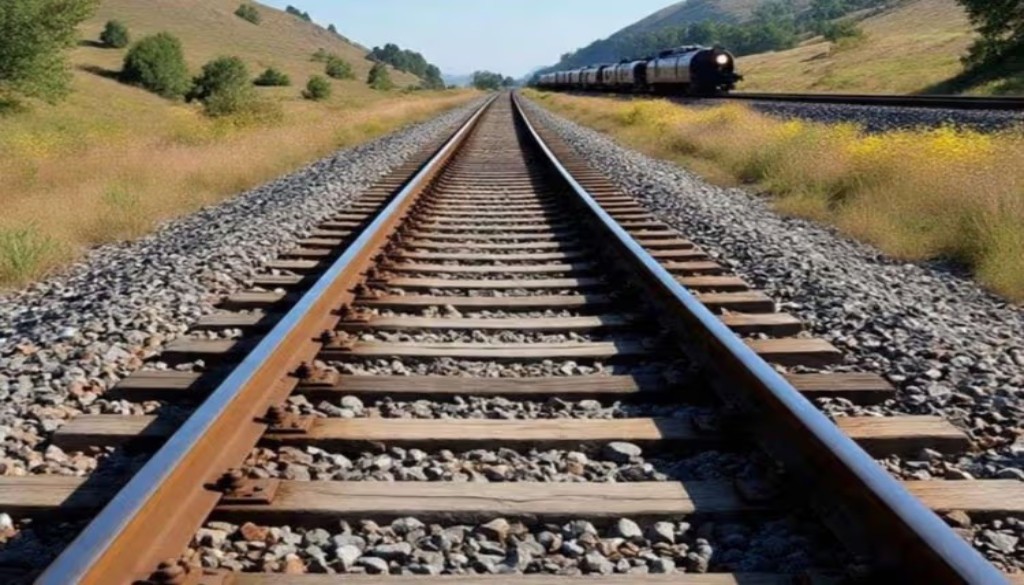
Patna: The Indian Railways has accelerated plans to expand rail infrastructure in Bihar, with work on the third and fourth rail lines between Pandit Deendayal Upadhyay (DDU) Junction and Jhajha expected to begin shortly.

Railway Board approval has been granted for laying nearly 28 km of additional rail lines between Bakhtiyarpur and Pandarak. Officials said construction is likely to begin in July after the tendering process is completed.
Design approvals for the project have already been cleared, and tenders are expected to be issued within the next 10 days.

The overall project, stretching around 400 km between DDU Junction, Patna Junction and Jhajha, has received an estimated sanction of Rs. 17,000 crore from the Railway Board.
Corridor divided into smaller sections
According to railway officials, the corridor has been divided into smaller segments to ensure faster and smoother execution of construction work.
The sections include:
- Pandit Deendayal Upadhyay Junction–Danapur
- Danapur–Fatuha
- Fatuha–Bakhtiyarpur
- Bakhtiyarpur–Punarkh
- Punarkh–Kiul
- Kiul–Jhajha
Officials said the phased approach is intended to streamline construction and land acquisition activities.
Approvals granted for first phase
East Central Railway Chief Public Relations Officer Saraswati Chandra said the Railway Board has approved the first phase of construction between Bakhtiyarpur and Fatuha.
The phase includes:
- Construction of a 24 km rail line at an estimated cost of Rs. 931 crore
- Acquisition of 6.6 hectares of land
In addition, approval has been granted for construction and land acquisition between Bakhtiyarpur and Punarkh over a 30 km stretch at an estimated cost of Rs. 392 crore.
Officials said approvals for other stretches are in the final stages. Construction between Punarkh and Kiul is expected to cost around Rs. 2,514 crore, while the Kiul–Jhajha section is estimated at Rs. 903 crore.
Aim is to ease congestion and improve speed
Railway experts said the expansion comes nearly 56 years after the original development of the DDU–Jhajha rail corridor, which was constructed during the 1860s and 1870s and later doubled.
Over the decades, both passenger and freight traffic on the route have increased significantly.
The additional lines are being developed alongside the Eastern Dedicated Freight Corridor to improve freight movement and reduce congestion on passenger routes.
Officials said the project is expected to improve operational efficiency and increase train speeds by 20–30 kmph. Express trains may be able to operate at speeds of up to 130 kmph, while Vande Bharat services are also expected to see higher operating speeds.