Patna: Across Bihar, the early hours of Saturday brought a familiar scene as married women gathered under banyan trees to observe Vat Savitri Vrat, one of the most widely followed rituals in north India. Dressed in bright red, yellow and traditional festive clothing, women arrived carrying prayer offerings including fruits, flowers, sweets and sacred thread. The ritual, held on the day of Jyeshtha Amavasya, is considered especially important for married women, who observe the fast while praying for the long life, health and prosperity of their husbands. Temples and public worship sites in towns and villages began filling from dawn, with prayers continuing through the morning.

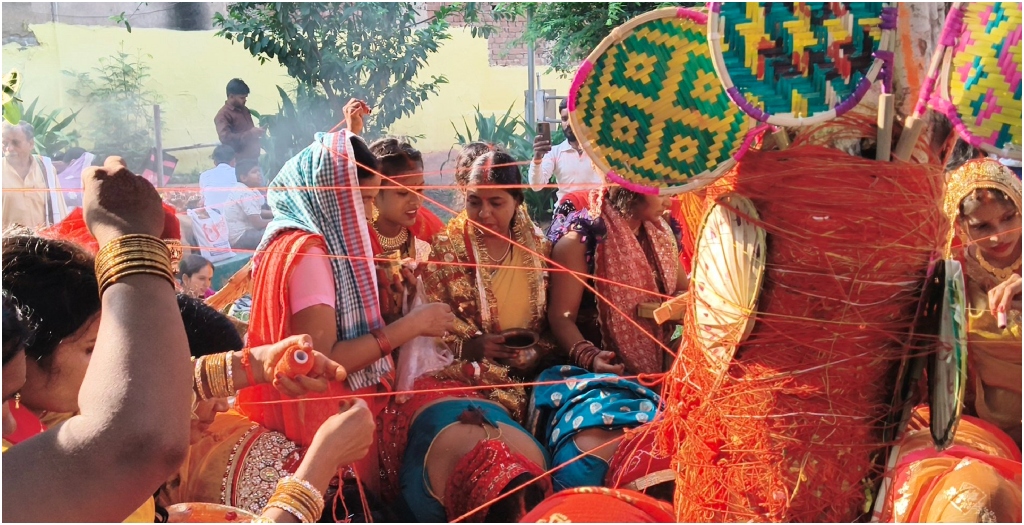
In Patna and surrounding areas including Masaurhi, large numbers of devotees gathered at banyan trees located inside temple compounds and village centres. Places such as Ram Janaki Thakurwadi Temple, Manichak Dham and several village shrines saw long queues from as early as 5am. Women moved around the banyan trees in prayer, wrapping red and yellow threads around the trunks while making offerings of vermilion, sacred rice and water. Priests recited traditional prayers, while groups of women sat together listening to the story of Savitri and Satyavan. In many places, the atmosphere took on the look of a small local fair, with families accompanying worshippers and stalls set up nearby.
The observance remains one of the strictest traditional fasts in the region, with many women keeping a nirjala vrat, abstaining from both food and water for the entire day. Religious teachers said this year’s most auspicious period for worship began in the early morning, and women were advised to complete bathing and prepare offerings before reaching the banyan tree. The rituals include pouring water at the roots, offering seasonal fruits, sweets and symbolic gifts, and circling the tree several times while praying for a long married life. After the worship, many touched the feet of elders, took blessings and distributed prasad, continuing a tradition passed down through generations.

The significance of the day comes from the ancient legend of Savitri, whose devotion to her husband Satyavan is said to have defeated death itself. According to Hindu belief, when Yama took Satyavan’s life, Savitri followed him and used her wisdom and determination to win her husband back. It is believed this miracle took place beneath a banyan tree, making it a sacred symbol of strength, faith and endurance. Even today, that story continues to shape the festival, as women gather each year not only to honour tradition but also to celebrate the bonds of marriage, family and shared faith.