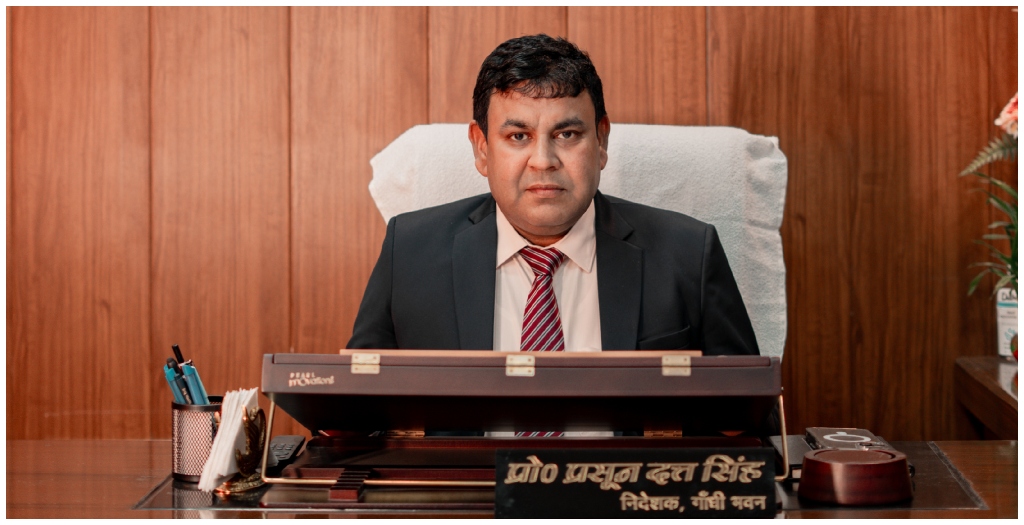
Patna: A major step has been taken in bringing Sanskrit research into the digital age after Prof. Prasoon Dutt Singh of Mahatma Gandhi Central University and Prof. Anil Pratap Giri of University of Allahabad received a design patent from the Government of India. The patent has been granted for a specially developed Data Processing Device for Digital Sanskrit Text Research, an innovation aimed at helping scholars study Sanskrit texts and manuscripts using digital tools. The achievement has drawn attention from academics as an important move in combining India’s ancient language traditions with modern research technology.

The newly developed device is expected to make the study of Sanskrit texts much easier for researchers. Sanskrit manuscripts are often difficult to analyse because of their complex grammar, sentence structures and context. Traditional research methods usually take a long time, especially when scholars work with handwritten manuscripts or large digital archives. The patented device has been created to quickly identify language patterns, grammar structures and contextual details in Sanskrit texts, allowing scholars to work more efficiently. Experts believe the technology could help preserve ancient manuscripts while also making them more accessible to researchers across the world.
The achievement has been welcomed by Prof. Sanjay Srivastava, vice-chancellor of the university, who said it reflects the growing importance of research and innovation in Indian universities. He said the invention shows how Indian languages and traditional knowledge systems can contribute to the country’s development. According to the university administration, the new device could strengthen efforts to connect India’s cultural heritage with scientific advancement, supporting the wider national goal of modernising education while preserving classical knowledge.

Prof. Singh is a well-known academic in Sanskrit studies and has worked in several leadership roles at the university. Apart from heading the Sanskrit department, he has also served as campus director, chief proctor and dean. His research focuses on Indian philosophy, Vedic literature, Sanskrit poetics and manuscript studies. Over the years, he has guided many doctoral scholars and organised national and international academic programmes. He has also written several books and research papers and has been recognised with honours such as the Sanskrit Bhushan Samman and the Sarvepalli Radhakrishnan Samman. University colleagues said the patent is expected to inspire more research in Sanskrit and bring wider global recognition to India’s ancient language heritage.