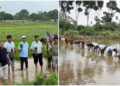
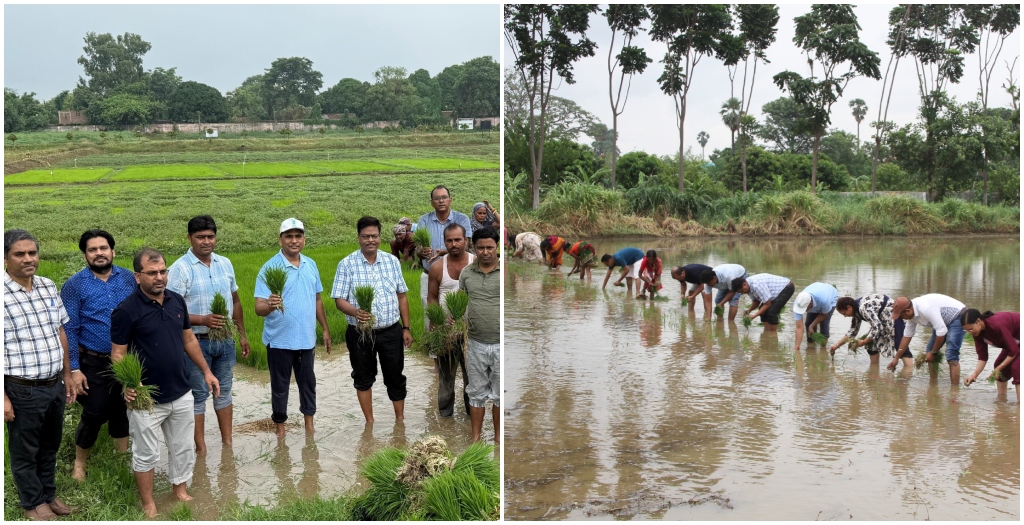
Patna: Scientists, officers, staff and farmers participated in a collective rice transplanting programme at the ICAR–Research Complex for Eastern Region (ICAR-RCER), Patna, on July 10. The initiative aimed to promote respect for agricultural labour, strengthen collaboration between researchers and farmers, and encourage scientific farming practices.

The programme, held at the institute’s Integrated Farming System (IFS) Unit, highlighted the importance of teamwork in achieving sustainable agricultural development. Participants jointly transplanted rice, underlining the role of close cooperation between the scientific community and farmers.
Rainfall Deficit Slows Transplanting

Addressing the gathering, Dr. Anup Das, Director of ICAR-RCER, said rice remains the principal Kharif crop in Bihar and eastern India. He noted that below-normal rainfall during the current season has affected the pace of transplantation.
According to Dr. Das, around 90% of the state’s rice nursery has been prepared, while transplanting has been completed in nearly 12% of the cultivated area. Despite the rainfall deficit, he said farmers are continuing field operations using available resources.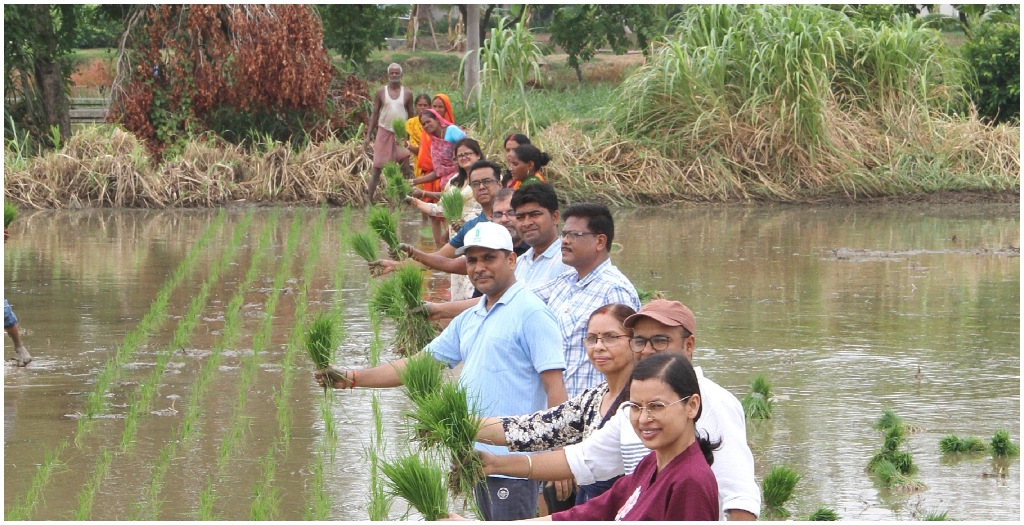
Focus On Climate-Resilient Farming
Dr. Das said the institute is promoting the Direct Seeded Rice (DSR) technique as an alternative to conventional transplanting in response to changing climatic conditions and uncertain monsoon patterns.
He said DSR requires less water, labour and production cost while supporting sustainable rice cultivation. Farmers were also advised to adopt short-duration, drought-tolerant rice varieties such as Swarna Shreya and Swarna Purvi Dhan-3.
Scientific Crop Management Encouraged
The director emphasised that improved productivity can be achieved through proper nursery management, line transplanting, balanced nutrient application, scientific water management, effective weed control and integrated crop management.
He added that transplanting seedlings at the recommended age helps reduce production costs while improving crop yields.
Integrated Farming System Demonstrated
The programme showcased the Integrated Farming System as a sustainable approach to improving food and nutritional security, increasing farm income and reducing the impact of climate-related challenges, including the drought-like conditions experienced this year.
ICAR-RCER said the initiative also aimed to encourage small and marginal farmers to adopt the Integrated Farming System to strengthen livelihoods and improve resilience against climate risks.
Sh. Umesh Kumar Mishra, Member Secretary (Media), ICAR-RCER, said women farmers sang traditional folk songs during the transplanting programme, contributing to an enthusiastic and vibrant atmosphere.