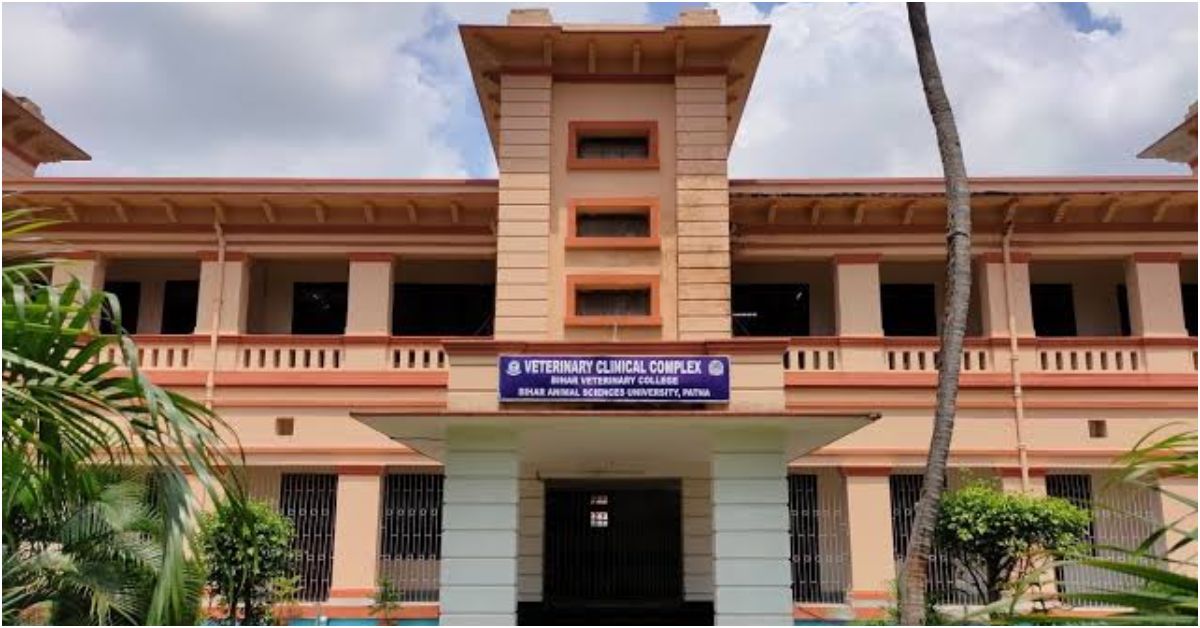
Patna: Bihar is set to establish Eastern India’s first dedicated animal blood bank as part of a new state-of-the-art veterinary hospital being built at the Bihar Veterinary College campus of Bihar Animal Sciences University (BASU). The facility is expected to become operational in 2027 and will support emergency blood transfusions for animals requiring critical care.

According to BASU, the blood bank will be housed within the under-construction veterinary clinical complex, which is being developed to strengthen veterinary education, research and specialised treatment services across the state.
Blood Bank to Support Emergency Animal Care

The proposed blood bank will enable timely blood transfusions for animals affected by road accidents, major surgeries, severe haemorrhage, anaemia, tick-borne diseases and childbirth-related complications.
Blood transfusion services are already available at BASU’s existing Veterinary Clinical Complex (VCC). The upcoming project will add a dedicated blood bank with specialised facilities for blood collection, testing, storage and transfusion.
University officials said the initiative is expected to improve emergency veterinary care while reducing dependence on informal donor networks during critical cases.
New Clinical Complex to Expand Veterinary Services
The new veterinary hospital will include intensive care units, separate advanced surgery units for large and small animals, ultrasonography, endoscopy, laparoscopy, electrocardiography (ECG), computerised radiography, online patient registration and biomedical waste management facilities.
The project is also designed to enhance practical training and research opportunities for veterinary students while improving healthcare services for farmers and livestock owners.
The existing Veterinary Clinical Complex at Bihar Veterinary College currently handles around 15,000 clinical cases annually across medicine, surgery, gynaecology and small animal departments. Its diagnostic laboratory processes approximately 5,000 samples every year.
Animals Also Have Different Blood Groups
Veterinary experts said animals, like humans, have distinct blood group systems, although these vary by species. Blood grouping and cross-matching are essential before every transfusion to minimise the risk of adverse reactions.
Dogs are classified under the Dog Erythrocyte Antigen (DEA) system, with DEA 1 considered the most clinically significant. Cats primarily have A, B and AB blood groups, making compatibility testing mandatory before transfusion.
Cattle have 11 recognised blood group systems, including A, B, C, F, J, L, M, R, S, T and Z, with the B system regarded as the most complex. Buffaloes have similar blood group characteristics.
Horses possess seven major blood group systems—A, C, D, K, P, Q and U—with incompatibility in some groups carrying a higher risk of transfusion reactions. Sheep and goats also have multiple blood groups that require compatibility testing before blood is administered.
Blood is Donated Within the Same Species
Veterinary specialists said blood transfusions are generally performed using donors from the same species. A cow receives blood from another cow, a dog from a dog, and a horse from a horse.
Potential donor animals undergo health screening, infectious disease testing, blood grouping and cross-matching before blood can be collected and used for transfusion.
Modelled on Mumbai Facility
According to BASU Vice-Chancellor Inderjeet Singh, the university plans to develop the blood bank on the lines of the Tata Trusts Small Animal Hospital in Mumbai.
A team led by the Dean of Bihar Veterinary College will visit the Mumbai facility to study its operational model before equipment procurement begins following the completion of the building.
Officials said the project is expected to strengthen veterinary emergency care in Bihar by improving access to safe blood transfusions for both livestock and companion animals while supporting veterinary education and research.