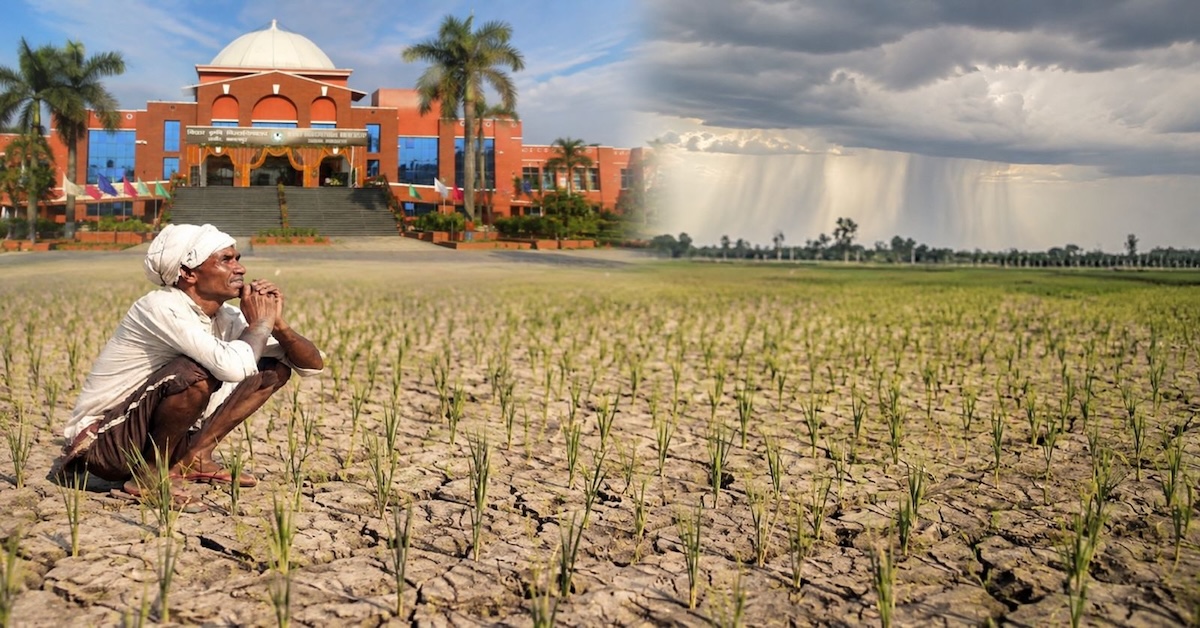
Sabour/Patna: As Bihar grapples with a 42% monsoon rainfall deficit and forecasts point to persistent El Niño conditions, Bihar Agricultural University (BAU), Sabour, has issued a detailed advisory urging farmers to adopt weather-based scientific farming practices to protect their Kharif crops.

The advisory has been prepared jointly by scientists from the University’s Directorate of Extension Education and Department of Meteorology under the guidance of Vice-Chancellor Dr D.R. Singh.
The university said timely scientific interventions could significantly reduce crop losses caused by erratic rainfall and prolonged dry spells.

Monsoon Deficit Raises Concern
According to BAU, Bihar received around 42% less rainfall than normal between the beginning of June and the end of July.
Weather forecasts indicate light to moderate rainfall across different parts of the state between August 4 and August 13. However, scientists cautioned that El Niño conditions over the equatorial Pacific Ocean remain active and are expected to persist during the remainder of the southwest monsoon season.
The university said farmers should adjust their crop management practices accordingly.
Complete Paddy Transplantation Without Delay
Scientists have advised farmers to complete paddy transplantation by the first week of August, warning that further delays could reduce yields by 15–20%.
The advisory recommends:
- Using healthy 18–25-day-old seedlings
- Maintaining a spacing of 15 × 15 cm
- Planting sufficient seedlings to offset losses caused by moisture stress
For weed management, farmers have been advised to apply Pendimethalin or Pretilachlor after transplantation, followed by Bispyribac-sodium 15–20 days later when weeds reach the two-to-three leaf stage.
The use of a cono-weeder has also been recommended wherever feasible.
Shift To Drought-Resilient Crops
The university has encouraged farmers in upland and water-scarce areas to diversify crops instead of relying solely on the traditional paddy–wheat system.
It recommended cultivating improved varieties of pigeon pea (Arhar), including Malviya-13, IPA-203, Pusa-992, UPAS-120, Rajendra Arhar-1 and Bahar.
Farmers have also been advised to:
- Increase seed rates by 15–20%
- Adopt the ridge-and-furrow method
- Practise intercropping, including pigeon pea with maize, sesame or black gram
The advisory also recommends drought-tolerant varieties of maize and ragi, along with seed treatment using Rhizobium, PSB and Trichoderma before sowing.
Focus On Water Conservation
To cope with the rainfall deficit, BAU has placed strong emphasis on water conservation measures.
The advisory recommends repairing and raising field bunds to retain rainwater and adopting the Alternate Wetting and Drying (AWD) method instead of continuously flooding paddy fields.
Other suggested measures include:
- Rooftop rainwater harvesting
- Farm ponds and percolation tanks
- Contour bunding and check dams
- Recharge pits and recharge wells
- Drip and sprinkler irrigation
- Raised-and-sunken bed systems
The university also advised farmers to conserve soil moisture through mulching, use organic manure such as vermicompost, apply urea in split doses and use foliar sprays of 2% urea or NPK (15:15:15) during periods of drought or nutrient stress.
Vigilance Against Pests And Diseases
Scientists urged farmers to monitor crops regularly for pest and disease outbreaks.
The advisory recommends installing pheromone and sticky traps and using chemical pesticides only when infestations become severe and in accordance with scientific recommendations.
‘Scientific Farming Is Farmers’ Best Protection’
Vice-Chancellor Dr D.R. Singh said climate change has made weather-based scientific farm management more important than ever.
“In this era of climate change, weather-based scientific agricultural management is the greatest safeguard for farmers,” he said.
He urged farmers to follow the university’s advisory and seek technical guidance from Krishi Vigyan Kendras (KVKs) and university scientists whenever required.
The university expressed confidence that timely adoption of these recommendations would help farmers reduce the impact of El Niño and improve Kharif crop productivity despite challenging weather conditions.