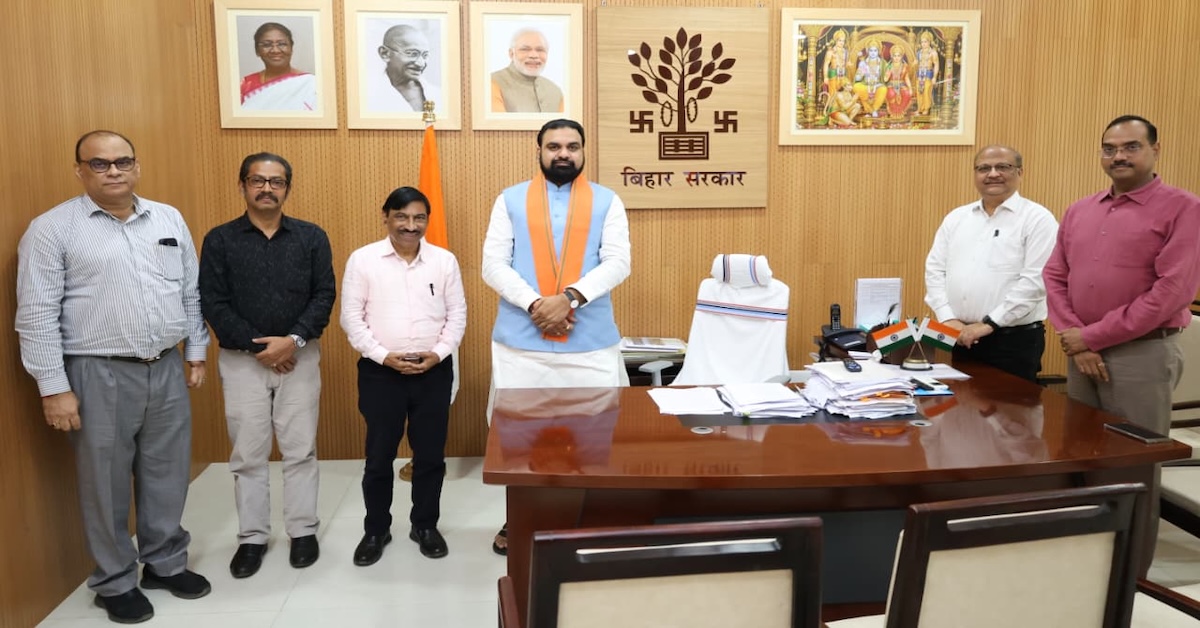
Patna: Bihar is preparing an ambitious push to uncover and preserve its ancient heritage, with Chief Minister Samrat Choudhary directing officials to prepare a comprehensive action plan for the scientific survey, excavation, conservation and integrated development of several of the state’s most significant archaeological sites.

The initiative will focus on heritage destinations including Bodh Gaya, Sultanganj, Mandar and the Kesaria Stupa, with the government aiming to restore their historical significance and promote them as major national and international tourist attractions.
Experts Present Survey Findings

The decision followed a meeting on Tuesday in which a delegation of senior archaeologists and heritage experts presented the findings of a detailed survey of the Maa Mundeshwari Temple complex in Kaimur district and its surrounding areas.
According to the experts, thousands of ancient remains scattered across the temple complex can be scientifically documented, conserved and restored, potentially transforming the region into an important centre of India’s archaeological heritage.
The Chief Minister directed officials to prepare a phased action plan based on the recommendations submitted by the expert committee.
Kaimur Heritage Circuit Under Consideration
The meeting also reviewed proposals for the integrated development of Tilhar Kund and Karkatgarh, two sites of archaeological and ecological importance in the Kaimur region.
Located about four kilometres from the Varanasi–Kolkata Expressway, the sites possess significant natural, prehistoric and archaeological value, experts said.
They suggested that, following scientific conservation and planned development, the region could emerge as a new heritage and eco-tourism circuit and potentially qualify for inclusion in UNESCO’s World Heritage Tentative List.
LiDAR And GPR Survey Planned For Bodh Gaya
The Chief Minister also directed officials to undertake a scientific survey of the Mahabodhi Temple complex in Bodh Gaya and nearby areas using Light Detection and Ranging (LiDAR) and Ground Penetrating Radar (GPR) technologies.
The advanced techniques will allow archaeologists to identify potential buried structures and archaeological remains without disturbing the ground through excavation.
Fresh Focus On Kesaria Stupa
The meeting also reviewed plans for the conservation and integrated development of historically significant sites in Sultanganj and Mandar.
The Chief Minister instructed officials to undertake scientific excavation of the remaining portions of the Kesaria Stupa, one of the world’s largest Buddhist stupas.
Only part of the monument has been excavated so far. Archaeologist Dr K.K. Muhammed, who played a key role in its earlier excavation and conservation, was among the experts present at the meeting.
Heritage Conservation And Local Economy
The Chief Minister said Bihar still holds numerous archaeological treasures beneath its soil, and that their scientific identification and conservation could reveal new chapters in the state’s history.
He said the initiative would not only strengthen Bihar’s cultural identity but also boost heritage tourism, local employment and the regional economy.
The meeting was attended by Padma Shri Dr K.K. Muhammed, Prof. Rajat Sanyal, Prof. Anil Kumar, Dr Hariom Sharma, Development Commissioner Mihir Kumar Singh, Pranav Kumar, Secretary of the Department of Art, Culture and Building Construction, and other senior officials and heritage experts.