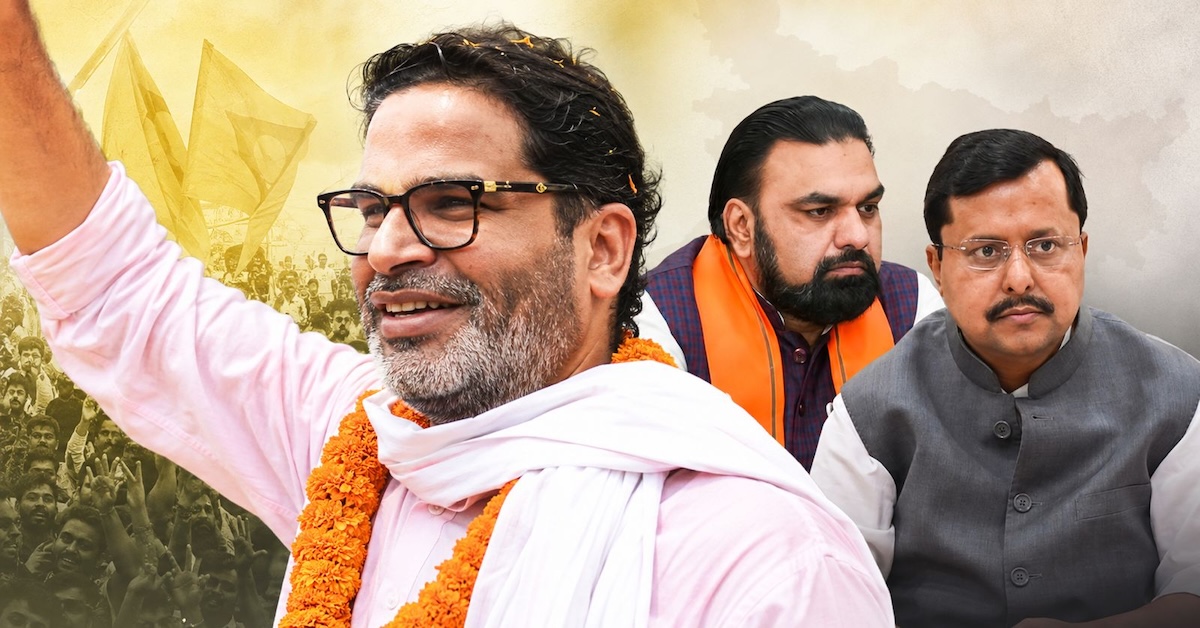
Patna: Jan Suraaj founder Prashant Kishor registered a stunning victory in the Bankipur Assembly by-election, defeating the BJP by 19,323 votes in a result that could significantly alter Bihar’s political landscape ahead of the 2027 Assembly elections.

The victory marks a dramatic turnaround for Jan Suraaj, which had secured only 7,717 votes in the constituency during the 2025 Assembly election. In less than a year, the party’s vote tally surged more than eightfold to 64,151 votes, while both the BJP and the Rashtriya Janata Dal (RJD) suffered major setbacks.
Vote Share Sees Dramatic Shift
In the November 2025 Assembly election, BJP candidate Nitin Nabin had won the seat with 98,299 votes and a margin of 51,936 votes. In the 2026 bypoll, BJP nominee Neeraj Sinha secured 44,827 votes, a decline of 53,472 votes compared to the previous election.

Jan Suraaj emerged as the biggest beneficiary. After polling just 7,717 votes in 2025, Prashant Kishor received 64,151 votes in the by-election, adding 56,434 votes to the party’s tally.
The RJD also witnessed a sharp decline. Its candidate Rekha Gupta, who had finished second in 2025 with 46,363 votes, managed only 14,273 votes this time, losing more than 32,000 votes and forfeiting her security deposit.
Voter turnout also dropped from 41.39 percent in the 2025 Assembly election to 34.30 percent in the bypoll, with nearly 26,000 fewer votes cast.
BJP’s Traditional Support Base Shows Signs of Erosion
Political observers believe several factors contributed to the BJP’s defeat in its long-time urban stronghold.
The party initially announced Abhishek Kumar Sinha as its candidate but later replaced him with Neeraj Sinha. The late change reportedly created confusion among party workers and voters.
Analysts also noted that Bankipur’s urban electorate, comprising professionals, traders, government employees and educated middle-class voters, appeared to favour a candidate with stronger public communication skills and a wider political profile.
Sources within political circles suggested that differences between sections of the BJP’s state and central leadership over candidate selection may also have affected campaign coordination. In addition, reports of reduced enthusiasm among grassroots workers and lower voter mobilisation were seen as factors behind the party’s poor performance.
Despite campaigning by senior BJP leaders, including Nitin Nabin, Samrat Choudhary, Ravi Shankar Prasad and Ram Kripal Yadav, the party reportedly trailed in nearly 400 of the constituency’s 422 polling booths.
Youth Vote Emerges as a Key Factor
The bypoll highlighted the growing influence of young voters. Around 14 percent of Bankipur’s electorate is below 29 years of age.
Political observers believe issues such as student protests, alleged police action against demonstrators, examination-related concerns and unemployment resonated strongly among younger voters. Jan Suraaj actively targeted this demographic through outreach at coaching centres, cafes, parks and gyms while using social media content and podcasts to engage first-time and young voters.
Campaign Focused on Civic Issues
Unlike traditional caste-centric campaigns, Prashant Kishor centred his campaign on urban civic issues, including poor drainage, waterlogging, traffic congestion, sanitation, infrastructure, education and migration.
His campaign projected him as a leader capable of raising local issues from the Assembly to the national level. Jan Suraaj workers conducted extensive door-to-door outreach and public meetings across the constituency.
Political observers believe this issue-based campaign helped attract voters cutting across caste and community lines.
RJD Struggles to Retain Core Vote
The by-election also exposed challenges for the RJD.
Despite fielding Rekha Gupta for a second consecutive election, the party failed to retain a substantial section of its traditional support base. Political analysts pointed to organisational weakness in the constituency and limited campaigning by senior leader Tejashwi Yadav as factors that may have contributed to the party’s poor performance.
Many opposition voters also appeared to view Jan Suraaj as the stronger challenger to the BJP, resulting in tactical voting in favour of Prashant Kishor.
Political Significance Beyond Bankipur
The outcome is being viewed as more than just a by-election result.
For the BJP, the defeat signals that traditional social equations and organisational strength alone may not guarantee victory, particularly in urban constituencies where candidate selection and local issues matter.
For the RJD, the result raises fresh questions about its ability to retain its traditional support base and emerge as the principal opposition force in urban Bihar.
For Jan Suraaj, the victory provides its first legislative breakthrough and could serve as a launchpad for expanding its political footprint ahead of future elections.
Political analysts also believe the result indicates that Bihar’s electorate may be increasingly willing to consider alternatives beyond the state’s traditional political players.
A senior journalist described the result as a warning for the BJP, arguing that voters had rejected political overconfidence and embraced a third alternative. He also said the growing political participation of Gen Z voters was evident in the by-election.
Senior journalist Indra Bhushan said that if Prashant Kishor continues to focus on public issues while building a stronger organisational structure, Jan Suraaj could emerge as a significant third political force in Bihar.