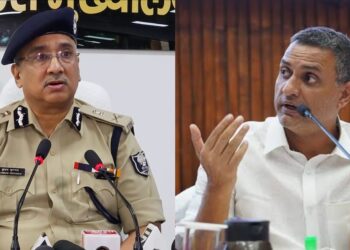
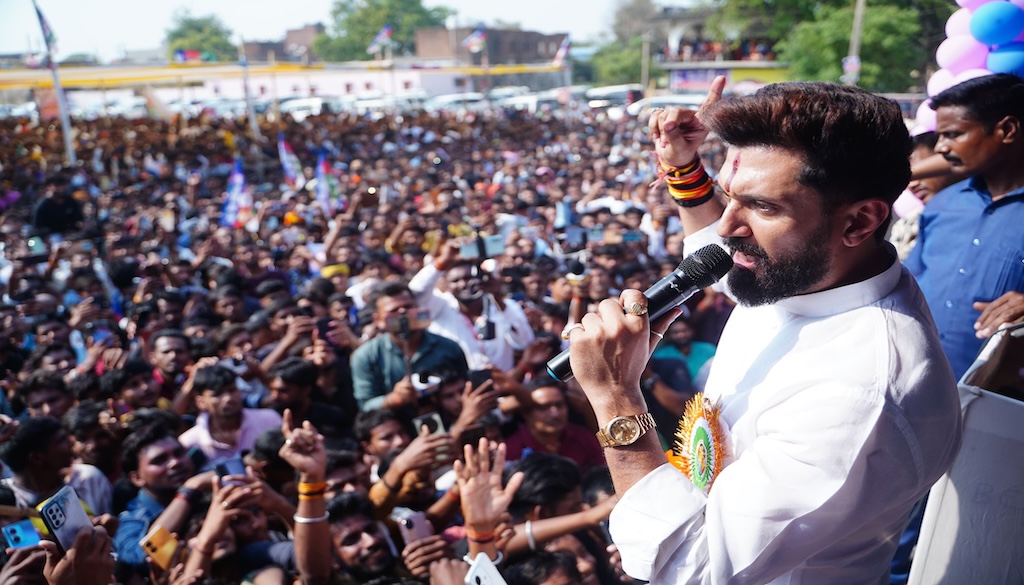
Patna: Union minister and Lok Janshakti Party (Ram Vilas) chief Chirag Paswan has called for a review of Bihar’s prohibition law, saying the ban has not been fully implemented even a decade after it was introduced.

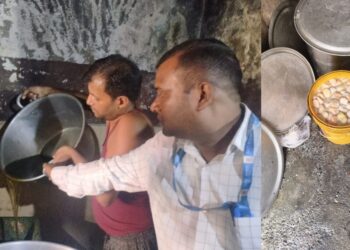
Speaking to reporters at Patna airport on Friday, Paswan said illicit liquor continued to be produced in parts of Bihar and alcohol was being smuggled into the state from elsewhere.
His comments put him at odds with the Bihar government, which said a day earlier that there was no need to amend or review the prohibition law.

‘Need To Honestly Assess’ Ban
Paswan said the government should assess whether the objectives behind the prohibition policy had been achieved and, if not, identify the changes needed to make it effective.
He also argued that people needed to be made more aware of the intended benefits of prohibition.
“We have not succeeded in achieving the vision with which the ban was implemented,” Paswan said, adding that consultations should be held with NDA alliance partners before any changes were introduced.
He said the government would need to examine the extent to which the policy had achieved its objectives and address shortcomings in its implementation.
Government Rules Out Changes
Paswan’s remarks came a day after Madan Sahni, Bihar’s prohibition, excise and registration minister, said the government had no plans to change the law.
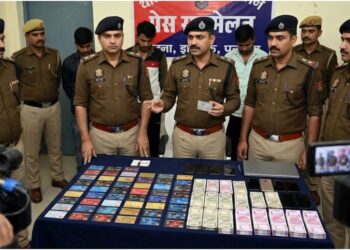
Sahni said the prohibition policy remained in force and would continue. He also pointed to ongoing seizures of illicit liquor and action against drugs as evidence of enforcement efforts.
Bihar introduced prohibition in 2016 under then chief minister Nitish Kumar, banning the sale, production and consumption of alcohol in the state.
The policy has periodically faced calls for amendment or repeal, including from leaders within the ruling alliance.
Manjhi Backs Gujarat-Style Approach
The debate has also drawn comments from Jitan Ram Manjhi, chief of the Hindustani Awam Morcha and an NDA ally.
Manjhi has argued that prohibition is a worthwhile objective but criticised its implementation in Bihar. He has advocated what he described as the “Gujarat model”, under which alcohol can be obtained through permits in specified circumstances.
He has also alleged that poor people are being harassed in the enforcement of Bihar’s prohibition law.
NCAER Study Fuels Political Debate
The controversy has intensified following a study attributed to the National Council of Applied Economic Research (NCAER), which questioned the impact of prohibition on violence against women and said illicit liquor and drug trade had increased after the ban.
The study recommended that Bihar consider resuming regulated liquor sales and estimated that this could increase government revenue by 14-15%.
The findings have been rejected by JD(U) leaders. JD(U) spokesperson Neeraj Kumar questioned the impartiality of the research and said the party was considering sending a legal notice to the organisation.