Patna: The All India Institute of Medical Sciences (AIIMS), Patna conducted a multi-agency, full-scale live mock drill at Karamchat Dam in Rohtas district to assess and strengthen preparedness for disasters and mass-casualty incidents.

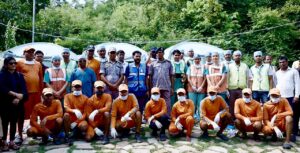
Located nearly 200 kilometres from AIIMS Patna, the exercise brought together the National Disaster Response Force (NDRF), Health Emergency Operations Centre (HEOC), district administration, police, fire and emergency services, NGO volunteers and medical and support teams from AIIMS Patna.
Simulated Explosion and Stampede Scenario

The drill simulated a stampede following a hypothetical explosion at Karamchat Dam, where more than 150 people were assumed to be present. Around 70 simulated casualties, including children, adults and elderly people, were created to replicate a mass-casualty situation.
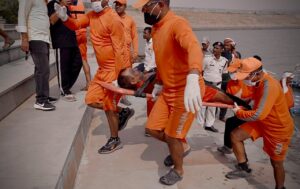
The exercise included the triage and management of 25 simulated Red Zone casualties and 45 Green Zone casualties. A separate water rescue scenario was also conducted involving two simulated victims who had fallen into the dam.
Incident Command System Put to Test
The exercise was led by Prof. (Dr.) Anil Kumar, Professor and Head of the Department of Trauma Surgery and Critical Care at AIIMS Patna, who served as the Incident Commander.
The drill tested the Incident Command System, triage, patient movement, resuscitation, emergency treatment, resource management, safety, communication and coordination among multiple agencies.
BHISHM Cube Demonstrates Emergency Medical Capabilities
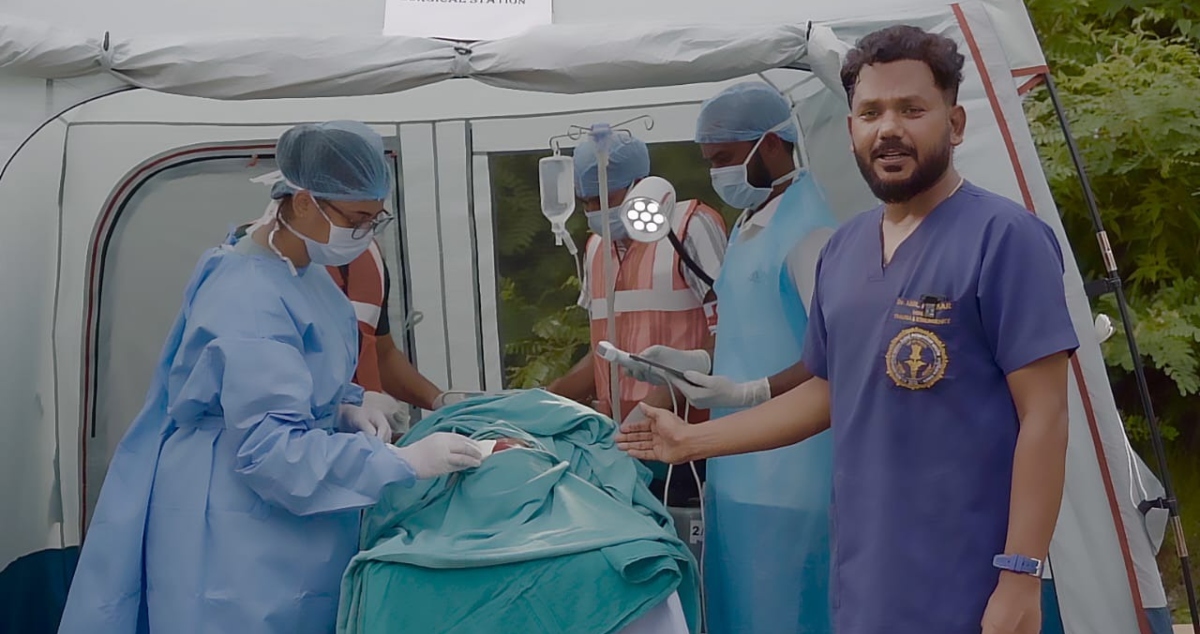
One of the key highlights was the rapid deployment of the BHISHM Cube, which demonstrated its ability to provide essential medical equipment, diagnostic facilities and life-saving interventions in remote and resource-constrained locations.
Emergency procedures including chest tube insertion, pelvic stabilisation, splinting, tourniquet application, wound dressing, pain management and suturing were simulated during the exercise.
NDRF Conducts Water Rescue Operation
The simulated water rescue involved two people falling into the dam. The NDRF team, led by Dr. C. B. Narayan, carried out a technical rescue operation.
In the simulated scenario, one casualty was declared dead, while the second was successfully rescued and provided resuscitation and emergency medical care.
Volunteers Help Create Realistic Disaster Scenario
Around 30 volunteers from the Arjun Foundation participated as simulated casualties and role players. Their involvement helped create a realistic disaster environment and allowed participating agencies to assess their operational preparedness under conditions resembling an actual mass-casualty incident.
Mock Drill Followed July Tabletop Exercise
The full-scale field exercise was preceded by a Tabletop Exercise at AIIMS Patna on July 24, 2026. Participants discussed potential disaster scenarios, the Incident Command System, resource deployment and coordination mechanisms among different agencies.
The field exercise subsequently provided an opportunity to translate those plans into an operational response involving multiple agencies.
Debriefing Identifies Areas for Improvement
Following the drill, a detailed debriefing session was conducted to assess operational gaps and challenges.
Key lessons included advance site reconnaissance, early coordination with local authorities, efficient patient flow, robust communication systems and timely deployment of resources.
AIIMS Patna Plans More Full-Scale Drills
Prof. (Brig.) Dr. Raju Agarwal, Executive Director of AIIMS Patna, appreciated the coordinated efforts of all agencies and teams involved in the exercise.
He said AIIMS Patna remains committed to strengthening its disaster preparedness and institutional capacity to respond effectively to mass-casualty incidents and emergencies.
Prof. (Dr.) Anil Kumar said AIIMS Patna would work towards conducting regular full-scale mock drills. He added that conducting such exercises across different districts of Bihar could further strengthen disaster medical response, inter-agency coordination and operational readiness.
Focus on Preparedness Before Disaster Strikes
The mega mock drill demonstrated the importance of advance preparedness, structured triage, rapid rescue, mobile emergency medical capabilities and seamless coordination between different agencies.
AIIMS Patna said such exercises provide an opportunity to identify operational gaps before an actual disaster occurs and improve the ability of emergency teams to respond quickly and effectively.