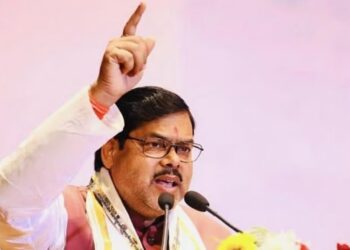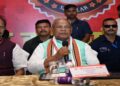

Patna: Union Minister and Hindustani Awam Morcha (Secular) patron Jitan Ram Manjhi has been admitted to Medanta Hospital in Patna for a routine medical check-up, according to party leaders.

The party said Manjhi is in good health and was admitted only for a routine examination. Doctors are conducting the necessary tests, and his reports are said to be normal.
Party leaders urged people to disregard rumours or misleading reports about his health, saying there was no cause for concern. They added that Manjhi is expected to return to his public engagements after completing the check-up.

Manjhi recently commented on reservation
Manjhi’s hospitalisation comes days after his remarks on the issue of reservation sparked political discussion.
The debate followed a statement by LJP (Ram Vilas) chief Chirag Paswan, who said reservation was a constitutional right rather than charity and that any attempt to weaken or abolish the reservation system would not be accepted.
Responding to the controversy, Bihar minister Santosh Suman said that interpreting a call for reviewing the reservation system as a demand for its abolition was incorrect. He maintained that reservation is a constitutional right for Dalits, Adivasis and other marginalised sections.
Manjhi backs sub-categorisation
Manjhi subsequently argued that backward castes should receive separate reservation within the existing quota.
He said Chirag Paswan was not understanding Santosh Suman’s position and suggested that Chirag should resign first.
Citing the example of Punjab, Manjhi said that before sub-categorisation of quotas, around seven to eight castes were allegedly receiving about 95% of the benefits, while their share fell to around 45% after sub-categorisation, allowing other groups that had previously received fewer benefits to access reservation.
He also referred to the distinction between Dalit and Mahadalit categories in Bihar.
Manjhi said reservation should be sub-categorised in accordance with the Supreme Court’s order so that communities among the most disadvantaged, which have not been able to adequately benefit from the existing system, can receive a greater share of its benefits.