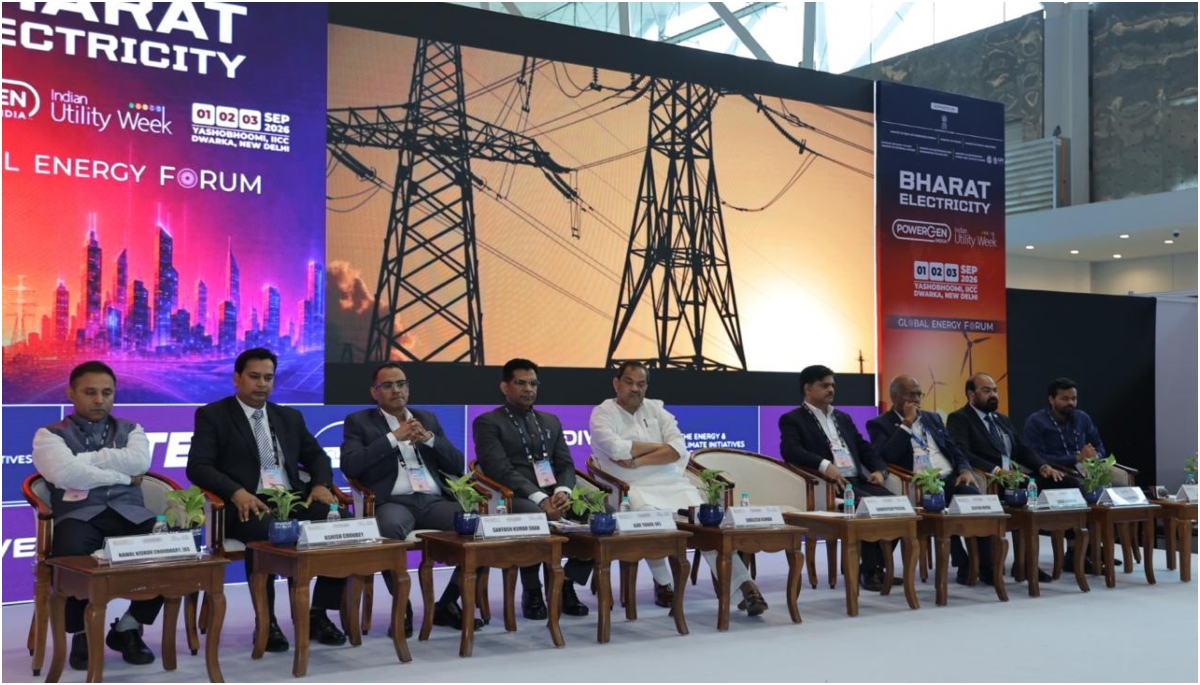
Patna: Bihar has proposed a Rs 1,38,541 crore investment pipeline in the power sector over the next five years, with the state government pitching opportunities across generation, transmission, distribution, renewable energy and energy storage at Bharat Electricity 2026 in New Delhi on September 2.

The proposal was presented during the Bihar Focus State Session, titled “Viksit Bharat, Samriddh Bihar: Investment, Innovation & Growth”, where Energy Minister Shailesh Kumar invited private companies and industry leaders to invest in the state’s expanding power infrastructure.
Kumar said Bihar was seeking to strengthen its energy sector as part of its wider economic growth strategy. He said the government would support investors through industry-friendly policies, infrastructure and administrative facilitation.

Investment Across Power Sector
According to Energy Secretary-cum-CMD of Bihar State Power Holding Company Ltd (BSPHCL) Ajay Yadav, the proposed investment pipeline includes Rs 82,679 crore for generation, Rs 24,683 crore for transmission, Rs 28,809 crore for distribution and Rs 2,370 crore for maintenance and upkeep.
The state plans to expand capacity through thermal power, solar energy, battery storage, pumped storage and other emerging technologies.
Major projects highlighted at the session included the 2,400 MW Pirpainti Thermal Power Project, 1,440 MW Nabinagar Thermal Power Project Stage-II, the Kajra Solar Project with battery energy storage, additional battery storage capacity, solar parks, rooftop solar projects and the Intra-State Green Energy Corridor.
Power Demand Expected To Rise
Bihar’s peak power demand has increased from 6,627 MW in FY 2022 to 9,475 MW, according to the presentation. The state expects demand to reach nearly 11,747 MW by 2030.
Yadav said the state’s two distribution companies had moved from a combined loss of Rs 2,218 crore in FY 2022 to a provisional profit of Rs 2,375 crore in FY 2026.
Aggregate technical and commercial losses also declined from 29.27% to 11.54% during the period, while the ACS-ARR gap moved into a surplus of Rs 0.43 per unit, according to the state government.
More than 94 lakh smart prepaid meters have been deployed across Bihar, strengthening digital metering and revenue collection, officials said.
Renewable Energy And Storage
Bihar is targeting nearly 24 GW of renewable energy capacity and 6 GWh of energy storage by FY 2030 under its Renewable Energy Policy 2025.
The state is also pursuing rooftop solarisation, solarisation of agricultural feeders, solar-plus-storage projects and pumped storage projects.
The government has signed memorandums of understanding for around 2,400 MW of pumped storage project capacity, while additional potential is under evaluation.
Kumar said Bihar was seeking to combine solar generation with storage capacity to address variations in electricity demand, particularly during evening peak hours.
Investment Ecosystem
Yadav said Bihar’s growing electricity market, infrastructure development, young workforce and improving connectivity were creating opportunities for investors.
The state is also expanding road, rail and air connectivity and developing infrastructure around National Waterway No. 1. The government is planning 13 greenfield satellite townships as part of its wider economic development strategy.
At the session, Kumar also invited companies to explore opportunities beyond power generation, including solar equipment manufacturing and other energy-related infrastructure.
The session was attended by senior Bihar government officials and representatives from the power and energy industry, including BSPTCL managing director Nawal Kishor Choudhary, BSPGCL managing director Vishal Raj, BSES representative Vishnu Shankar Srivastava, Genus Power COO Sushil Agarwal, L&T vice-president and head of renewable energy Deepak Nayak, Adani Green Energy head of project development for hydro and pumped storage Ashish Choubey, and Oswal Pump president for strategic business development Harish Valecha.
Kumar said Bihar was seeking long-term partnerships with investors as it expands its power infrastructure and works towards meeting the state’s projected energy demand.