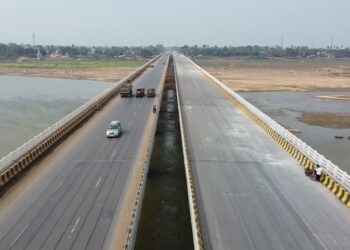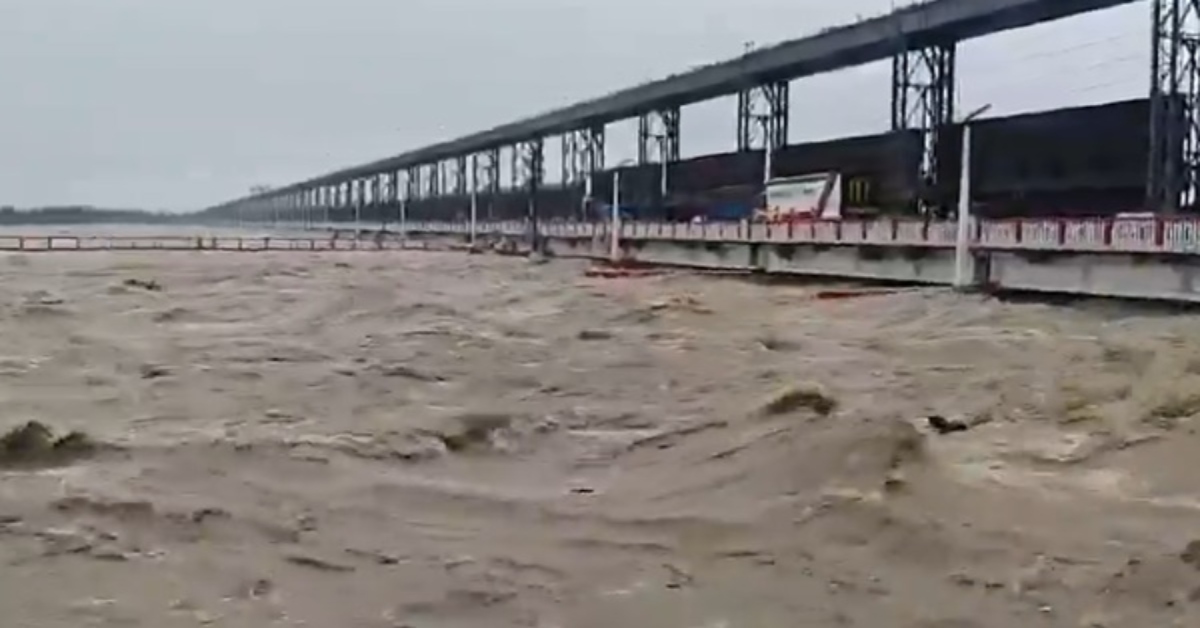
A section of the ring embankment at Akhilabad in Bihar’s Vaishali district breached on September 6 as rising water levels in the Gandak river increased pressure on the structure.

Local residents said around 25 feet of the embankment gave way, allowing floodwater to move towards nearby settlements. Around 400 houses have reportedly been affected, with residents shifting towards higher ground.
The breach has also caused extensive damage to banana plantations in the area, adding to the losses faced by local farmers.

Water Moves Towards Residential Areas
Residents said the situation worsened after the embankment breach, with water spreading towards houses and agricultural land.
Several families reportedly began moving their belongings and livestock to safer, elevated areas as the water level increased.
Local accounts suggest that more than 10,000 people live in the affected area, although the exact number of people directly impacted by the breach will need to be assessed by authorities.
Residents Raise Concerns Over Seepage
People living near the embankment said water had been seeping through the structure for around two days before the breach.
Residents claimed that the seepage had been reported to the local administration but alleged that timely preventive measures were not taken.
These allegations could not be independently verified from the source material.
The sudden breach has prompted renewed concerns over the monitoring and maintenance of flood-protection structures during periods of high river levels.
Banana Crop Damaged
The floodwater has also affected banana plantations around Akhilabad.
Farmers said large quantities of standing banana crops were damaged after water entered agricultural areas. They described the losses as significant, citing the investment and labour involved in cultivating the crop.
The agricultural damage could further increase the economic impact of the flooding for families dependent on farming.
Residents Move To Higher Ground
Following the breach, residents in vulnerable areas began moving towards higher ground.
People also took steps to move livestock away from areas where water was accumulating. Residents said their immediate concern was to protect families and animals as the water continued to spread.
The situation remains closely watched in low-lying areas, where further increases in water levels could lead to additional inundation.
Concern Over Flood Risk Around Hajipur
Residents have also expressed concern about the possible impact on areas around Hajipur if Gandak water continues to rise.
The breach has increased anxiety among people living in vulnerable settlements, particularly those located close to the river and its flood-control structures.
Any further rise in the river level or expansion of water through the breached section could increase pressure on nearby communities.
Questions Over Administrative Response
The incident has also led residents to question the response to the reported seepage before the breach.
Local resident Naresh Kumar alleged that no significant relief or rescue operation had reached the affected area immediately after the embankment broke, saying that only the local village head had visited.
Another resident, Rajiv Kumar, alleged that authorities had been informed about the seepage but that no effective action was taken before the breach.
The allegations represent the residents’ account and could not be independently verified from the source report.
Focus On Relief And Flood Protection
With hundreds of homes affected, the immediate priority is the safety of residents and livestock in vulnerable areas.
Authorities will also need to assess the breached portion of the embankment, monitor the movement of floodwater and take measures to prevent further erosion or breaches.
The incident highlights the importance of continuous surveillance and timely maintenance of embankments during periods of high river discharge, particularly in flood-prone parts of north Bihar.