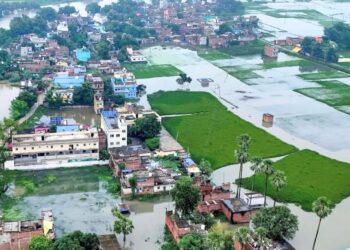
Patna: Bihar is set to undertake a major overhaul of its irrigation and water-management systems with a Rs 4,415-crore project designed to improve irrigation facilities, strengthen flood and river-erosion management and prepare farmers for growing climate-related challenges.

The project is being implemented with joint participation from the World Bank and the Bihar government. Under the funding arrangement, the World Bank will finance 70 per cent of the total project cost, while the remaining 30 per cent will be contributed by the state government.
Agriculture Minister Vijay Kumar Sinha said changing weather patterns have made it increasingly important to protect agriculture from climate-related risks. He stressed the need for scientific water management, modern irrigation facilities and greater adoption of climate-resilient farming methods.

The initiative will bring together the Water Resources Department, Agriculture Department and Rural Development Department for coordinated implementation.
What Will the Rs 4,415-Crore Project Do?
The project has been divided into four major components, covering everything from irrigation infrastructure to flood management and institutional reforms.
Irrigation systems to get a major upgrade
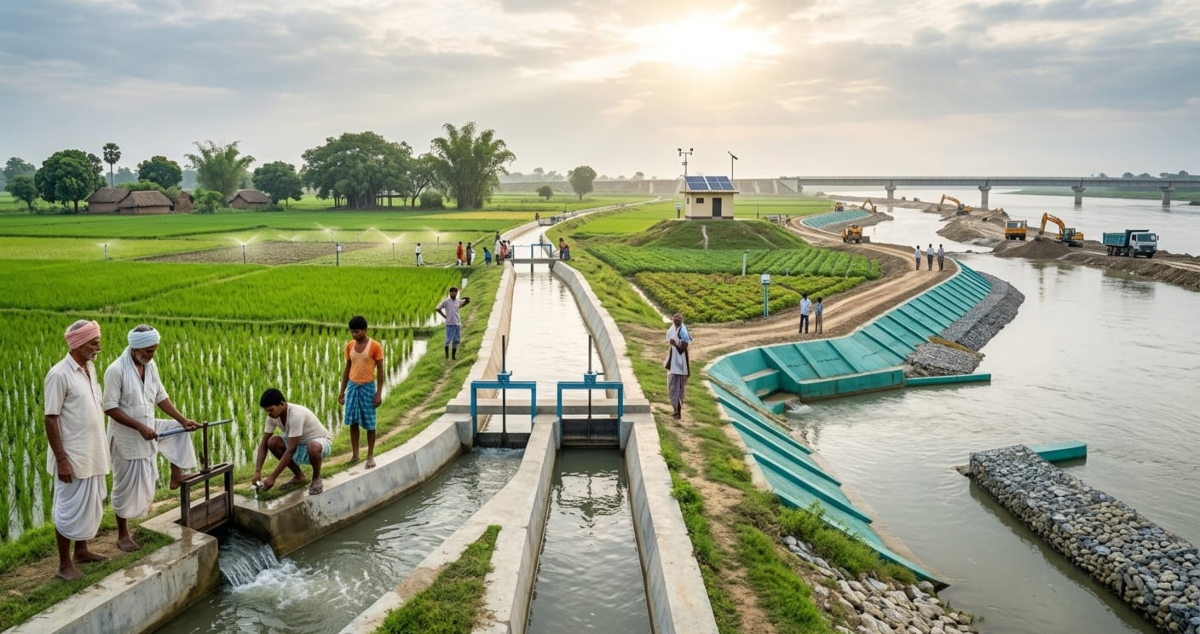
The first component will focus on rehabilitating and modernising existing irrigation systems and improving their operation and maintenance.
It will also promote climate-resilient agriculture through farmer training, capacity building and improved farming practices.
Stronger protection against floods and erosion
The second component will target vulnerable embankments and riverbanks. Measures will be taken to improve flood and erosion management, including the use of blue and green infrastructure solutions.
New focus on water policy and information systems
The third component aims to strengthen technical and human-resource capabilities. A Hydrology and Agriculture Information Support Centre (F-MISC) is also proposed under the project.
The initiative will further support the preparation of a Bihar State Water Policy and the establishment of the Bihar State Water Regulatory Authority.
How will the project be monitored?
The fourth component will focus on project implementation, monitoring and evaluation, along with financial management to ensure effective use of the funds.
Why These 11 Blocks Matter
The government has identified 11 blocks for Climate-Resilient Agriculture activities based on their command areas.
These include areas associated with the Sone Western Command Area in Rohtas, Buxar and Kaimur, the Kosi Command Area in Madhubani and Gopalganj, and the Saran Command Area in Siwan.
The broader objective is to connect better irrigation with stronger flood and erosion protection and farming practices that can withstand changing climatic conditions.
For Bihar, where agriculture remains highly dependent on water availability and vulnerable to floods and extreme weather, the project could mark a significant shift towards more sustainable and climate-resilient farming.