
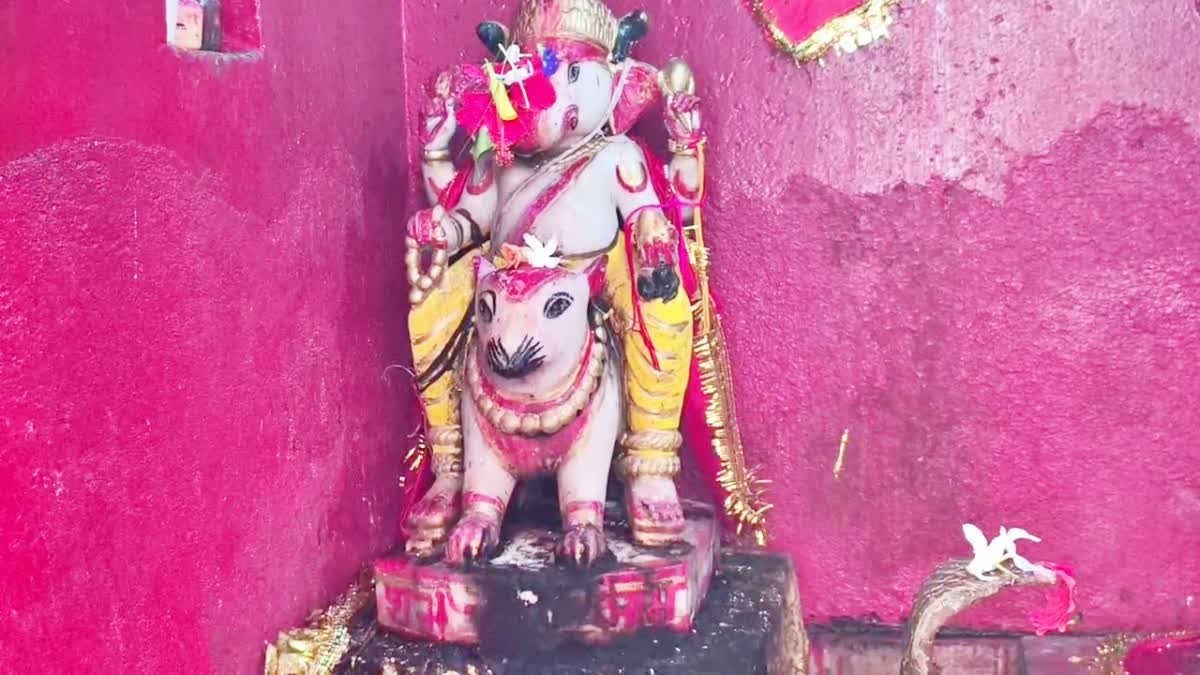
Nalanda/Patna: As devotees across India celebrate Ganesh Chaturthi with elaborate decorations and public festivities, the festival takes on a distinctive character in Silao, Nalanda, where an ancient idol of Lord Ganesh spends most of the year inside a police station.

Known locally as ‘Budhwa Ganesh’, the rare idol remains under tight security at the Silao police station for 355 days each year. It is brought out only for the 10-day Ganesh Chaturthi festival, when it is installed at Silao Chowk and worshipped by devotees.
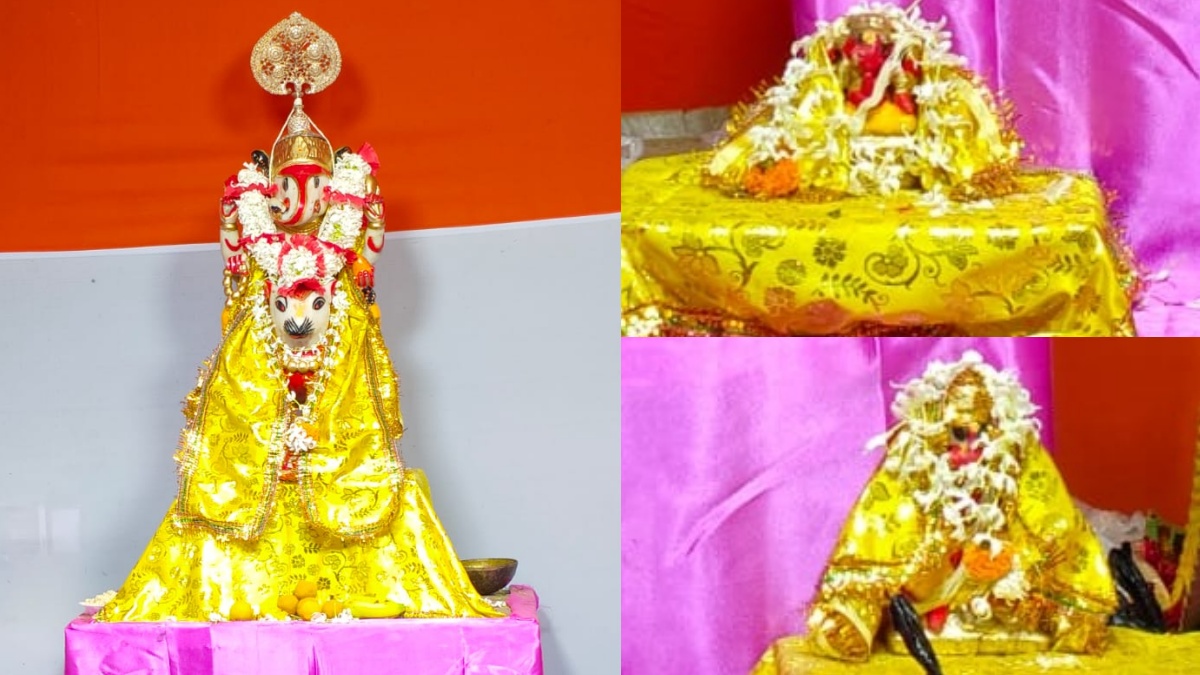
What makes the tradition even more unusual is that the temporary shrine is not located in a conventional temple. For 10 days every year, a hardware shop is completely shut down and transformed into a puja pandal for the deity.

From attempted theft to police protection
According to local elder Bal Govind Rai, the idol was originally made of clay before being replaced by a stone idol. It was earlier housed at Silao’s famous Shyam Sarovar Thakurbari.
Decades ago, thieves allegedly attempted to steal the valuable stone idol. Local residents caught the alleged thieves and recovered the idol.
Following the incident, residents and the puja committee decided to keep the rare idol in a temple within the Silao police station complex for security. The arrangement has continued for nearly three decades.
A four-foot idol carved from a single stone
Local resident Dilip Kumar said the idol is carved from white Lohia stone and stands around four feet tall.
The idol is carved from a single block of stone, without joints or seams, and is extremely heavy, requiring several people to lift it.
The deity is widely revered in the region, with devotees believing that sincere prayers before Budhwa Ganesh bring their wishes to fruition.
Hardware shop turns into a shrine
The most unusual part of the tradition unfolds at Silao Chowk Bazaar, where Budhwa Ganesh is installed for the 10-day festival.
The site is normally a hardware shop owned by Sanjeev Prasad Bhadani, selling household items such as pressure cookers, mixers and stoves.
Bhadani said he has operated the shop for around 25 to 30 years. Before his family took over the premises, it was used for a textile business.
According to him, a condition and a vow were associated with the purchase of the shop: as long as Lord Ganesh resides at the location during the festival, the deity will not be moved from the designated spot.
“On the day before Chaturthi, the shop is completely cleared out. Business operations stop for the next ten days and the shop is transformed into a grand puja pandal,” Bhadani said.
He resumes business immediately after the idol’s immersion.
Idol returns to police station after immersion
The idol is brought to the market from the police station with the participation of devotees and members of the puja committee, accompanied by music and traditional celebrations.
After 10 days of darshan and worship, the idol is taken out for immersion on Anant Chaturdashi. It is subsequently returned to the Silao police station, where it remains for the rest of the year.
Silao police station SHO Dharmendra Kumar said the arrangement was maintained primarily for security reasons.
“This tradition has been followed for many years. Senior members of the puja committee inform the police station before taking the idol. For the ten-day period, the idol of Lord Ganesha has been installed at Silao Market Chowk, located 500 metres away from the police station premises,” he said.
Plans for a permanent temple
The puja committee has submitted a written request to the police station regarding the construction of a permanent temple for Budhwa Ganesh.
Until such a temple is built, the police station remains the deity’s year-round place of security and worship, while the hardware shop becomes its temporary shrine during the annual festival.
SHO Dharmendra Kumar said the idol is kept inside the police station for security and is installed at the market for the 10-day festival before being brought back after immersion.
The unusual arrangement has become an enduring part of Silao’s religious tradition, blending faith, community participation and an unusual legacy of security around one of the region’s most revered idols.