Patna: Hartalika Teej is being observed on Monday, September 14, 2026, as married women undertake the traditional fast and worship Lord Shiva and Goddess Parvati. According to Hindu religious belief, the fast is observed for marital happiness and the long life of the husband.

Hartalika Teej is observed annually on the Tritiya Tithi of the Shukla Paksha in the month of Bhadrapada. The festival is associated with the devotion of Goddess Parvati towards Lord Shiva.
Hartalika Teej 2026 Puja Muhurat

According to the timings provided for this year’s festival, the Tritiya Tithi began at 7:08 AM on September 13 and will end at 7:06 AM on September 14.
The morning puja muhurat for Hartalika Teej is from 6:26 AM to 7:06 AM on September 14.
Devotees traditionally use this period to perform the main worship of Lord Shiva and Goddess Parvati.
Hartalika Teej Puja Rituals
Devotees are traditionally expected to wake early, bathe and wear clean clothes before taking the Sankalp, or formal vow, to observe the fast.
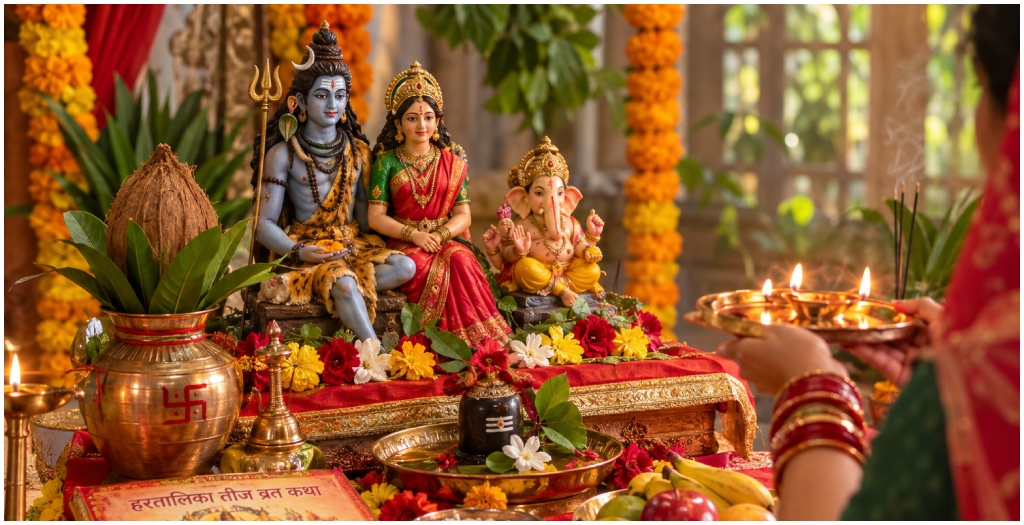
A clean worship area is prepared with a red or yellow cloth spread over a wooden chowki. Idols of Lord Shiva, Goddess Parvati and Lord Ganesha are made from clay or sand and placed on the platform.
A Kalash filled with water, a betel nut and a coin is also placed near the worship area. Mango leaves and a coconut are traditionally kept over the Kalash.
The worship begins with Lord Ganesha, followed by the Shodashopachara Puja of Lord Shiva and Goddess Parvati. Shiva is offered water for Jalabhishek, along with Bhasma, Belpatra, Dhatura, Janeu and garments.
Goddess Parvati is offered Roli, Akshat, fruits, flowers and items associated with Solah Shringar. Devotees then listen to or read the Hartalika Teej Vrat Katha while holding flowers and Akshat.
Aarti And Night Vigil
The puja concludes with Aarti for Lord Shiva and Goddess Parvati using camphor and incense. Devotees traditionally offer prayers seeking forgiveness for any errors or omissions during the rituals.
Religious practice associated with Hartalika Teej also discourages sleeping during the day. Ratri Jagaran, or staying awake at night, is considered significant, with devotees traditionally spending the night singing Bhajans and Kirtans.
Breaking The Fast
On the following morning, devotees traditionally bathe and perform the prescribed worship before concluding the fast. The fast is then broken according to the family’s customs and religious practices.