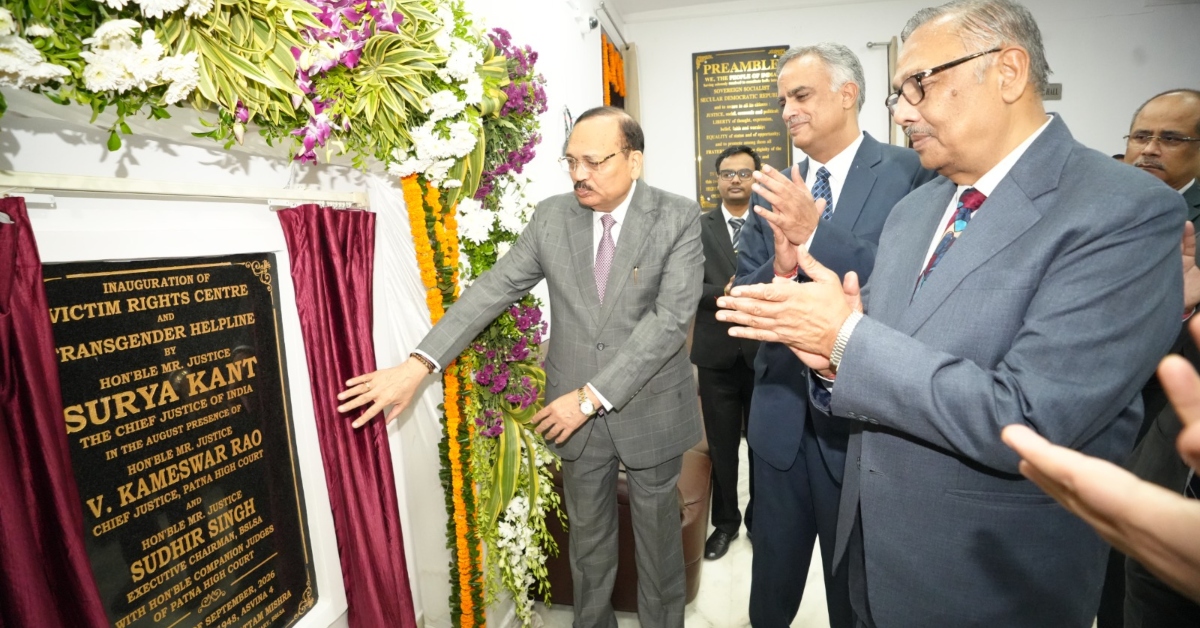
Patna: Chief Justice of India (CJI) Justice Surya Kant on Saturday inaugurated the first Victim Rights Centre (VRC) in Bihar which will work as single window mechanism for victims of crimes.

Justice Surya Kant also flagged off Multi-Utility Vehicle besides launching a tansgender helpline and releasing a book on VRC.
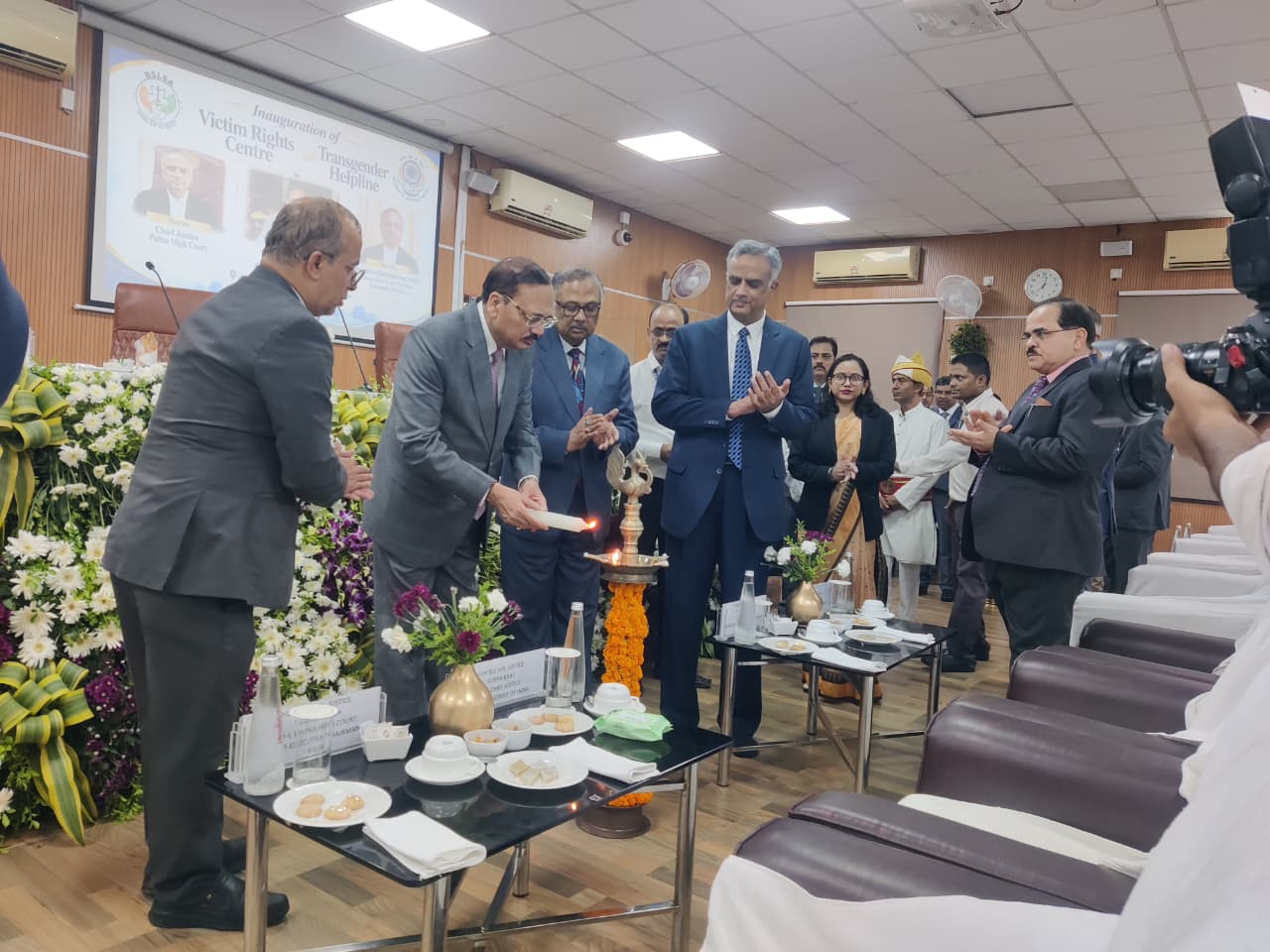
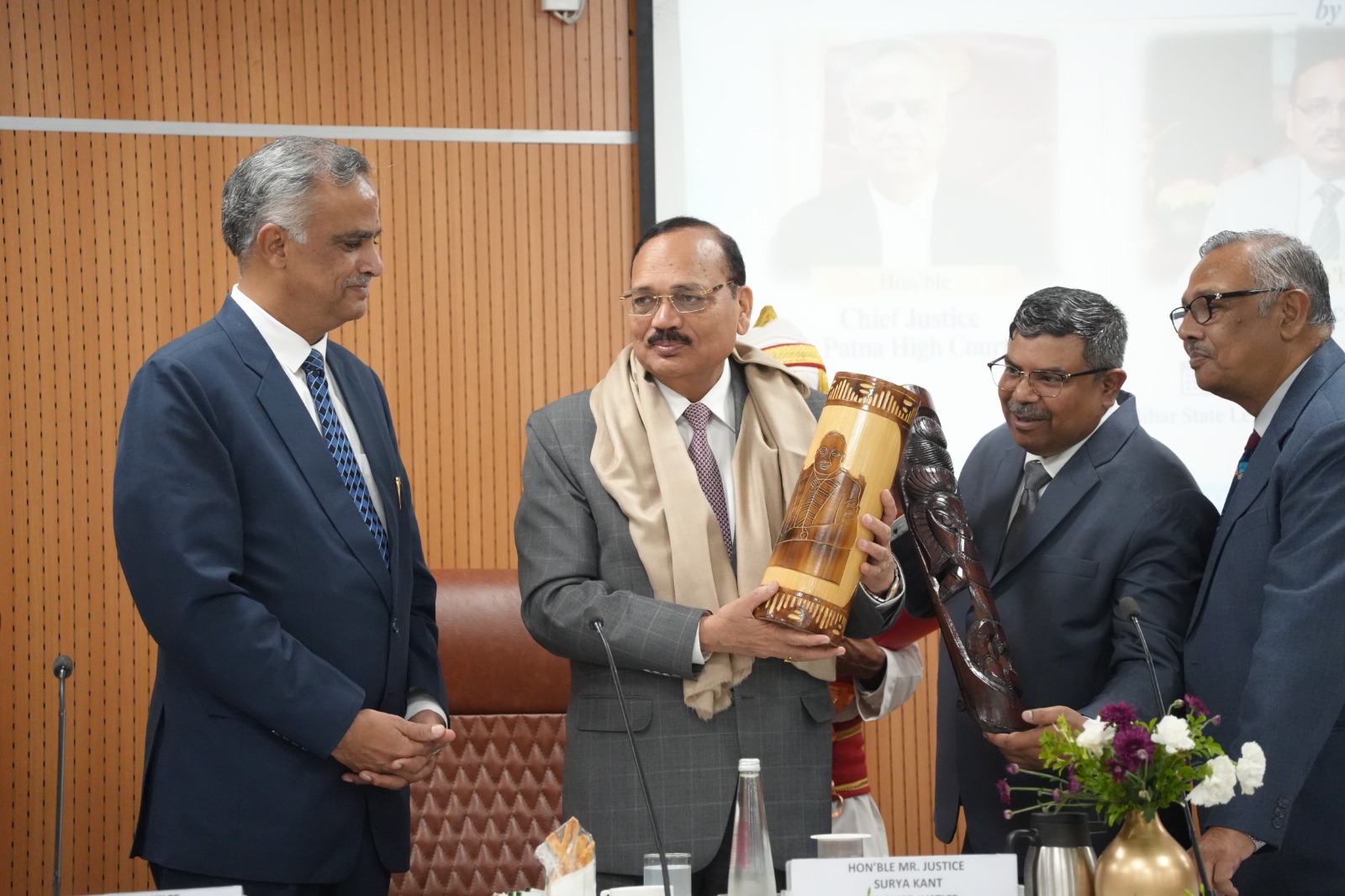
The CJI inaugurated the four initiatives in the presence of the Patna high court Chief Justice V Kameshwar Rao, also Patron-In-Chief of Bihar State Legal Services Authority (BALSA), Patna high court senior most Judge and Executive Chairman of BALSA Justice Sudhir Singh, Judges of the Patna high court and other senior officials of the high court, district judiciary and members of the bar at function was held at BALSA premises here in the state capital.

Speaking at the launch of the initiatives, CJI Justice Surya Kant said that the justice must not remain confined to the walls of a courtroom but must reach to those who are vulnerable, unheard or unable to navigate the legal system on their own.
The initiatives launched in Patna include a Victims’ Rights Centre (VRC), a booklet documenting the Centre’s work, a helpline for the transgender community, and multi-utility vehicles intended to take legal assistance and awareness beyond the courtroom and into villages and settlements while the release of a book on VRC seeks to create greater awareness regarding victim rights, available legal assistance.
Though designed to address different needs, the four initiatives are united by a common principle, the CJI said: “Justice must not wait for the citizen to find it; the justice system must find its way to the citizen.”
VRC to provide single-point support to victims
Explaining the significance of the Victims’ Rights Centre, the CJI said a victim should not have to understand the law in order to access benefits that the law already guarantees, including compensation, legal and medical assistance, counselling, protection and rehabilitation.
Although these entitlements may exist across different statutes, departments and institutions, their fragmentation can make them difficult for victims to access.
The VRC, he said, seeks to bridge this gap by receiving a victim at a single point, identifying the entitlements available to the person and pursuing each requirement to its conclusion.
Helpline seeks to lower barriers for transgender community
The CJI also highlighted the helpline launched for the transgender community, noting that members of vulnerable and historically marginalised communities can face barriers even before a legal case is formally initiated.
The new helpline is intended to provide a single point of access to legal aid, counselling and protection, reducing the need to approach multiple offices or repeatedly recount distressing experiences.
Mobile vehicles to take legal aid beyond courtrooms
The multi-utility vehicles launched as part of the programme will take legal awareness, documentation support and first-point assistance to villages and settlements that may be beyond the immediate reach of courts and legal institutions.
“When people cannot easily reach the system, the system must be prepared to reach them,” the CJI said.
Access to justice is not complete merely because an institution opens its doors, he said adding that it is complete when people who need assistance can actually find their way to those doors.
‘Measure these initiatives by what happens afterwards’
The CJI said the four initiatives should not be judged by the inauguration ceremony but by their impact on people’s lives.
Their success would depend on whether calls for help are answered effectively, promised entitlements actually reach beneficiaries, victims are spared the unnecessary repetition of painful accounts, and legal assistance reaches communities that have limited access to courtrooms, Justice Kant said.
Step towards making justice more accessible & responsive Patna HC CJ
Congratulating BALSA, Patna high court Chief Justice V Kameshwar Rao described the Victim Rights Centre as an important step towards making justice more accessible and responsive to those who have suffered because of crime.
Justice Rao said that discussions around criminal justice often focus on the state and the accused, covering investigation, evidence, trial, conviction and acquittal. However, somewhere in this process is a human being who has actually suffered because of the crime and whose concerns must also remain central.
“That person must not be invisible in the process,” the judge said.
Referring to the constitutional framework, Justice said Article 14 guarantees equality before the law, Article 21 protects life and personal liberty, while Article 39A reflects the constitutional commitment to ensuring that the legal system promotes justice on the basis of equal opportunity and that lack of financial or other resources does not prevent access to justice.
Justice is meaningful only when it reaches the person who needs it the most
Justice Sudhir Singh underlined that the success of such initiatives would depend not merely on institutional arrangements but also on the sensitivity with which people approaching the justice system are treated.
“There is a difference between emotion and sensibility. Emotion is a response; sensibility is a discipline,” Justice Singh said adding it is what ensures that the system does not become an additional burden upon someone who has already suffered.
“The essence of our endeavour today can be expressed in one simple thought ‘nyay tabhi saarthak hai jab wah wyakti tak pahunche, jise uski sabse adhik awashyakta hai (Justice is meaningful only when it reaches the person who needs it the most), Justice Singh said.
He also highlighted the flagging off of nine Mobile Utility Vehicles, which will take legal awareness and legal aid closer to people living in remote and underserved areas across Bihar.
Secretary General of Supreme Court of India, Bihar government’s Law Secretary Balram Dubey , Patna high court Registrar General Rupesh Deo, Bihar State Legal Services Authority (BALSA) Member Secretary Purushottam Mishra, Patna Principal District Judge Anamika T. and other Judicial Officers, senior advocates and members of the Bar and other office bearers and para legal volunteers of BALSA were also present on the occasion.
Sakshi Prakhar, Judicial Officer of Bihar Judicial Service, moderated the programme while (BALSA) Member Secretary Purushottam Mishra gave a vote of thanks on the occasion.